Category Page entertainment

Eden Everhart

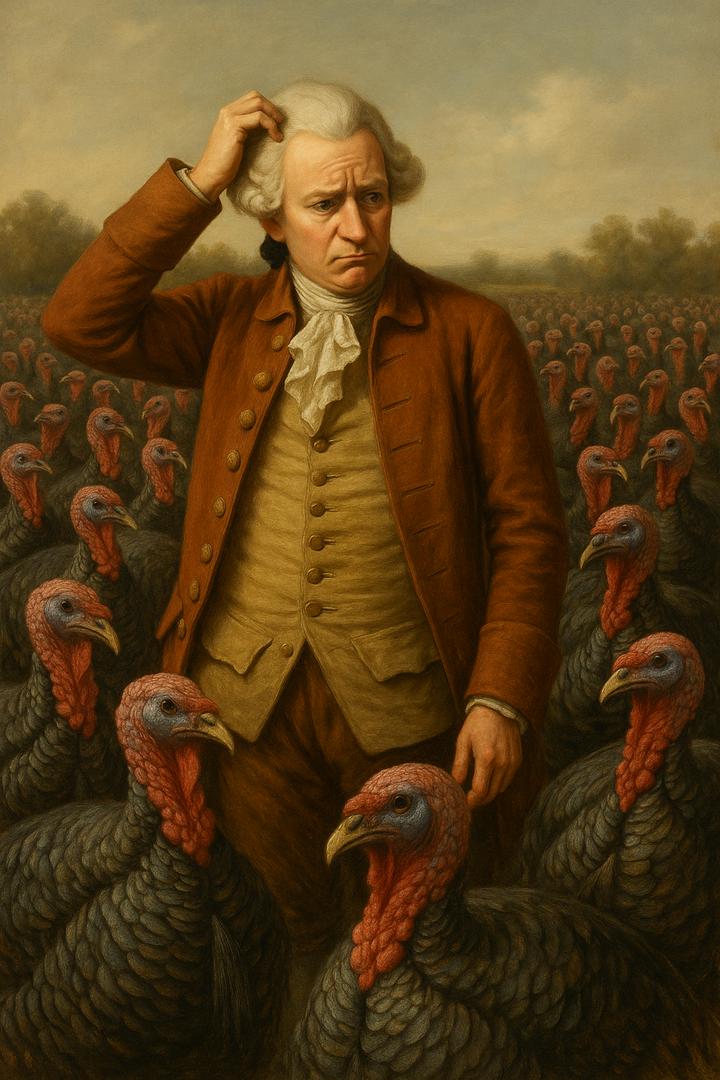
26 November 2025 The Secret the Founders Never Intended Us to Know THE COURTYARD CHRONICLE There are certain truths the realm never meant for us to hear, and none more astonishing than the real beginning of the Ceremony of Gratitude. A retired Keeper of the King’s Bench confessed it after too much brandy, whispering that the entire tradition began with Lord Thaddeus Bramblewick, a nobleman whose ambition far exceeded his wisdom. Bramblewick sailed to the new world with an enormous flock of turkeys, certain he could sell them to traveling performers. He imagined them dancing, balancing on barrels, tapping rhythms with their beaks. Instead, they shrieked, wandered, and refused every command. His scheme collapsed instantly. Desperate, he pushed the birds upon cooks as delicacies. They refused. The creatures were oversized, tough, and stubborn in every way. Plates returned untouched. His humiliation grew by the hour. Cornered, Bramblewick created a solution so bold it became legend. He declared the turkey a noble emblem of the new world and insisted it be honored with an annual Ceremony of Gratitude. Settlers, moved by his confidence, embraced the proclamation without hesitation. Size became grandeur. Difficulty became virtue. The noble tribes watched in disbelief, for they had long considered the turkey a last-resort bird for harsh winters, not celebration. Those who remember the scandal left behind a single whispered confession. If truth was served at the table, it would be the smallest dish. And so the Ceremony of Gratitude was born not from unity or reverence, but from one lord’s pride and a flock he could neither sell nor train. SOCIAL FOOTNOTES AND WHISPERED REMARKS Some say Bramblewick died smiling at the realm honoring his mistake. Others swear cooks still curse his name each autumn. Another claims tradition is simply a clever disguise for an old blunder. Tell me, dear reader. When you join the Ceremony of Gratitude, do you honor history, or merely help
LataraSpeaksTruth

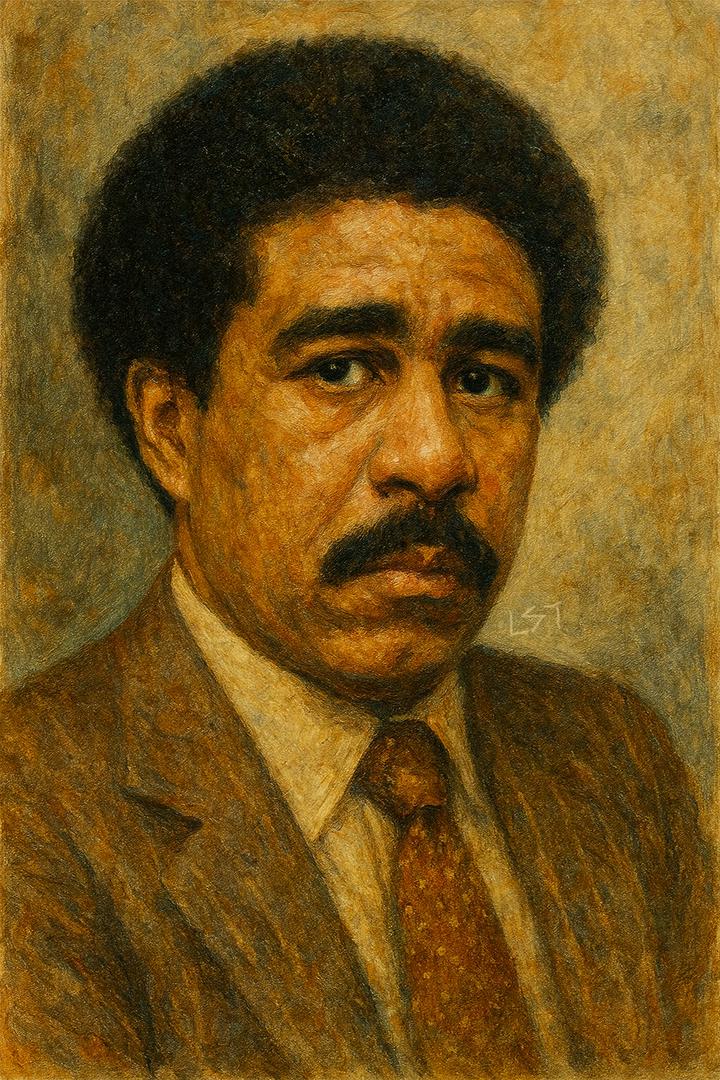
Richard Pryor did not just tell jokes. He cracked open the world and forced people to look at the parts they liked to pretend were not there. On December 10, 2005, the stage lost a voice that reshaped modern comedy. Pryor died in Los Angeles at sixty five after years of health struggles, but the mark he left behind did not fade. It grew. He rose during a time when honest conversations about race, pain, addiction, and survival were pushed into silence. Pryor rejected that silence. He turned his life into storytelling that felt like sitting with an elder who refuses to sugarcoat anything. He was sharp and vulnerable at the same time. He made people laugh while making them think harder than they expected. He spoke on racism, poverty, violence, and joy with a rhythm that felt almost musical. It was raw, real, and unforgettable. His career shifted the culture. His stand up specials became blueprints for everyone who came after him. His film and television work showed he could move between comedy and drama without losing the spark that made him Richard Pryor. Even with fame, he never hid his flaws. He owned his mistakes and spoke them aloud before anyone else could twist them. That honesty inspired generations of comedians who learned that authenticity is stronger than perfection. On this day we remember a man who refused to hide. A man whose voice opened doors for countless performers. A man who showed that humor can be healing and truth telling at the same time. His chapter ended, but his legacy is still loud, still powerful, and still shaping the stage today. #RichardPryor #OnThisDay #ComedyHistory #BlackHistory #LegendsLiveOn

justme

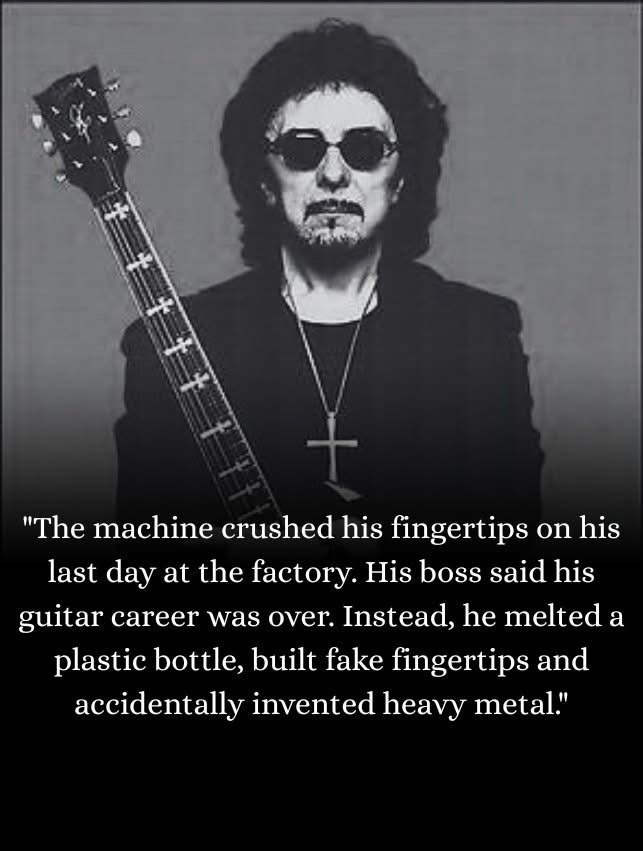
"The machine crushed his fingertips on his last day at the factory. His boss said his guitar career was over. Instead, he melted a plastic bottle, built fake fingertips—and accidentally invented heavy metal. "December 1965. Birmingham, England. Tony Iommi was seventeen years old, working his last shift at a sheet metal factory. It was supposed to be his final day. He'd been offered a professional music gig—a real paying job as a guitarist. He was finally escaping the factory, escaping the grinding industrial monotony of working-class Birmingham. One more shift. Eight more hours. Then freedom. At 4:30 PM—thirty minutes before the end of his shift—Tony was operating a metal press. A massive machine that stamped and cut sheet metal. He was tired. Distracted. Thinking about his new life as a musician. The machine came down. Tony's right hand was underneath it. The press severed the tips of his middle and ring fingers on his right hand—his fretting hand. Blood everywhere. Bone exposed. The fingertips were gone. Crushed beyond repair. When Tony woke up after surgery, heavily bandaged, the first thing he thought about wasn't the pain. It was his guitar. And the second thought: My life is over. For a guitarist, losing fingertips on your fretting hand is catastrophic. Those are the fingers that press down on strings, that create chords, that make music possible. Without fingertips, you have no sensitivity. No control. No ability to feel where the strings are. Tony's factory foreman visited him in the hospital. "Look on the bright side," the foreman said. "At least you weren't going to make a living with your hands anyway. "Tony stared at him. "I'm a guitarist. "The foreman went pale. "Oh. Well... I suppose you'll have to find something else to do. "Tony went home to his parents' house, his hand wrapped in bandages, his dreams destroyed. He was seventeen

Donnie Brooke

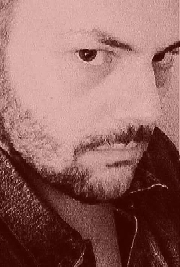
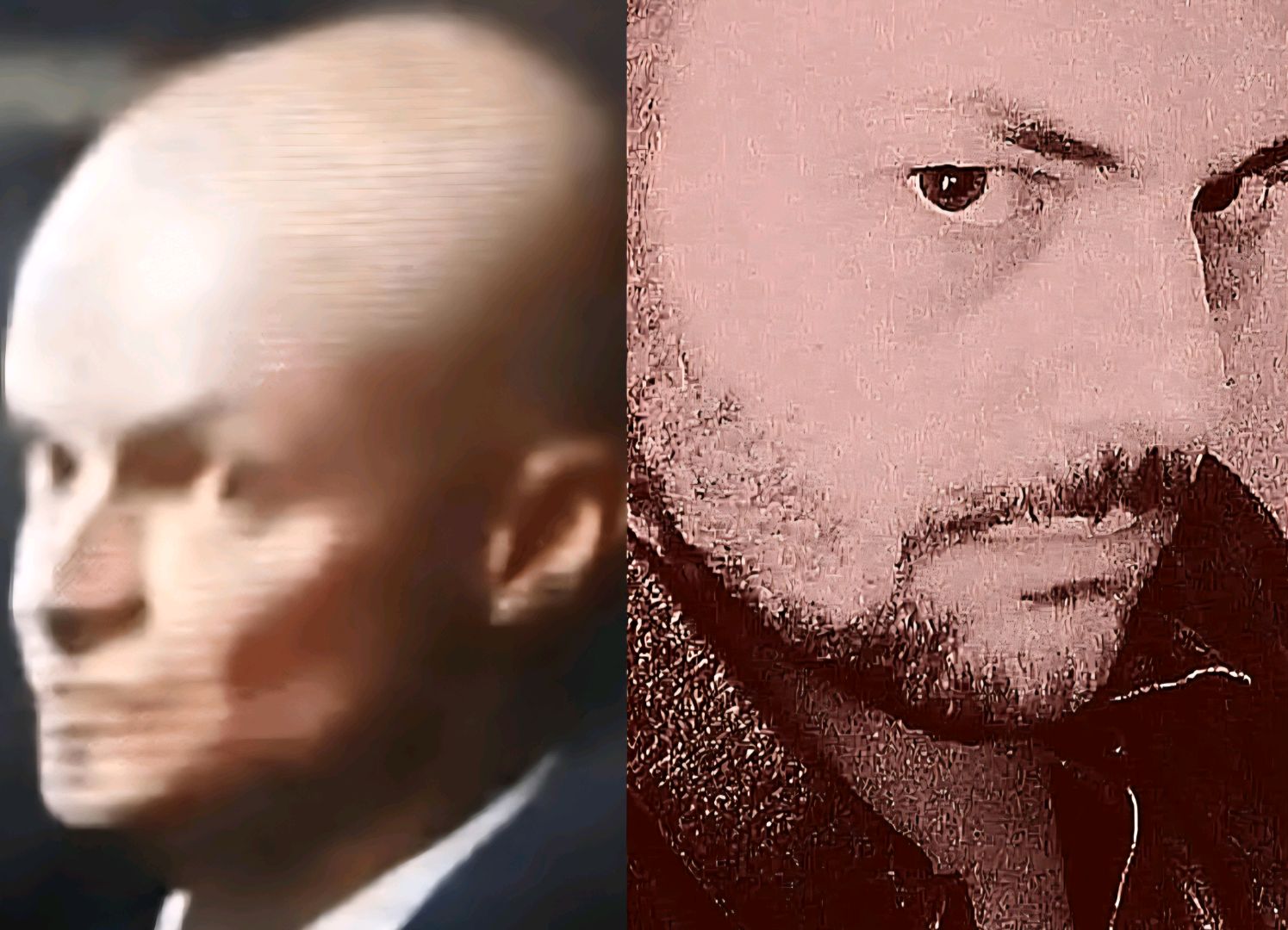
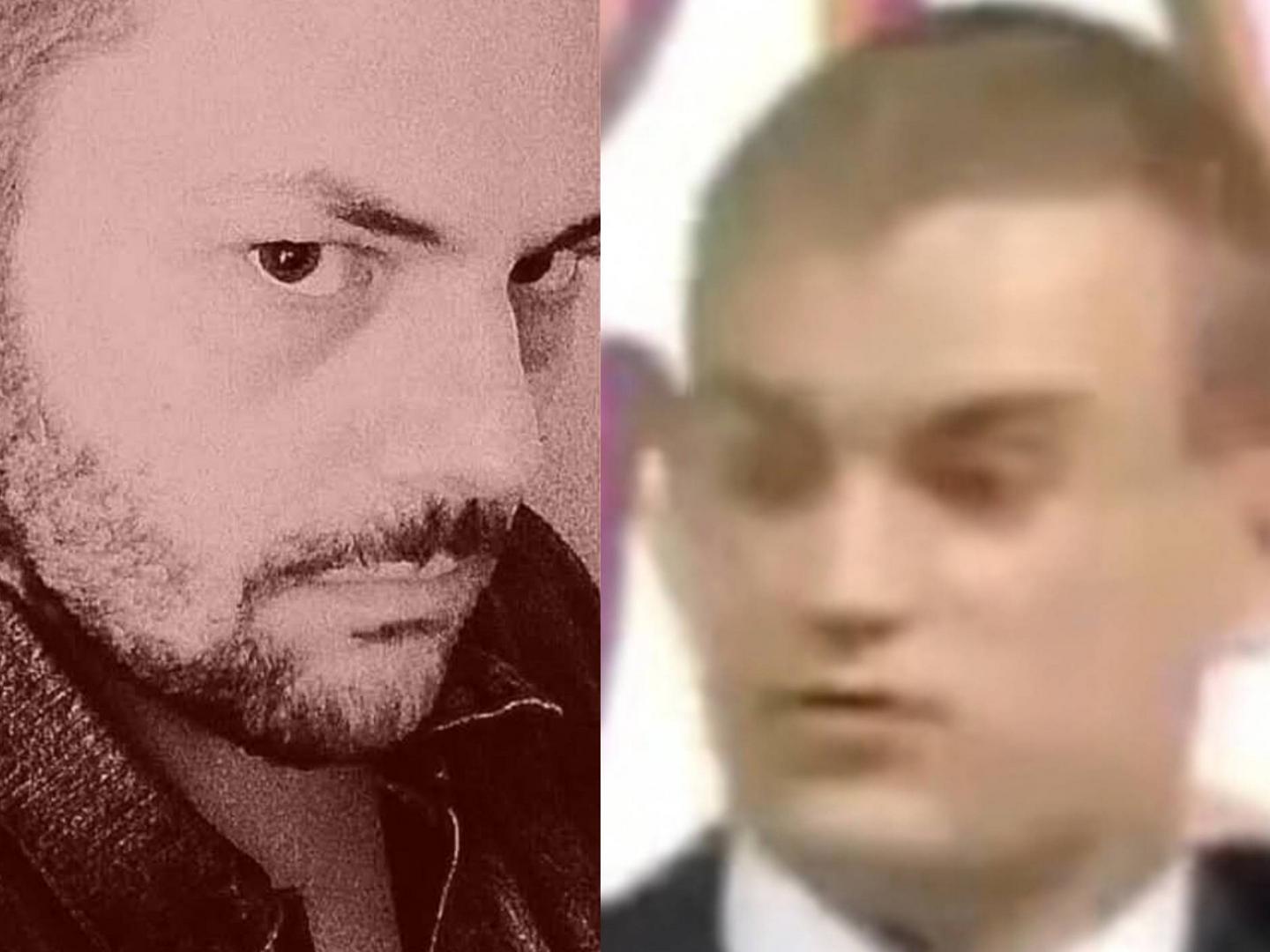
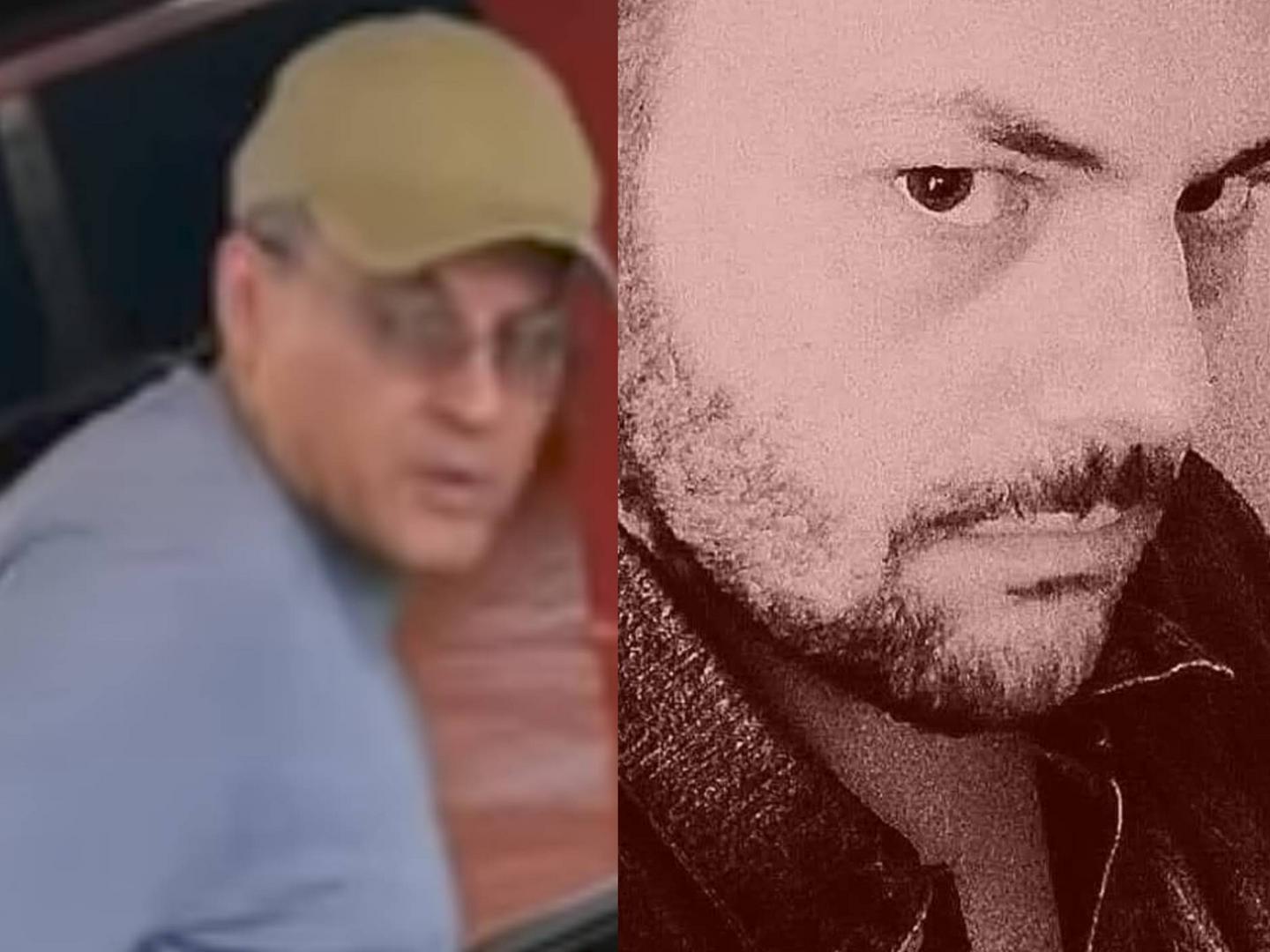
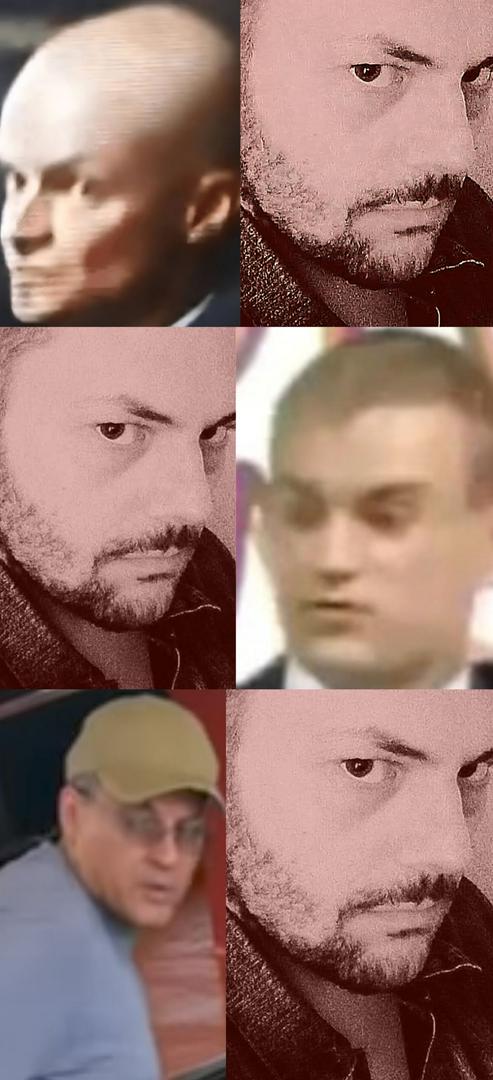
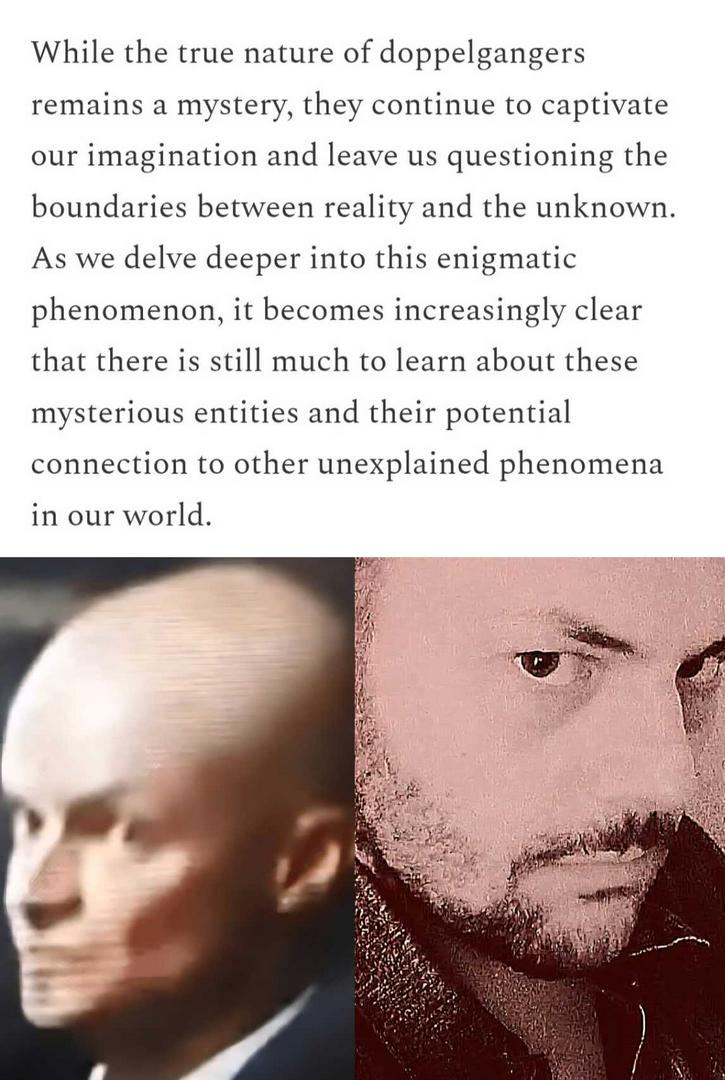
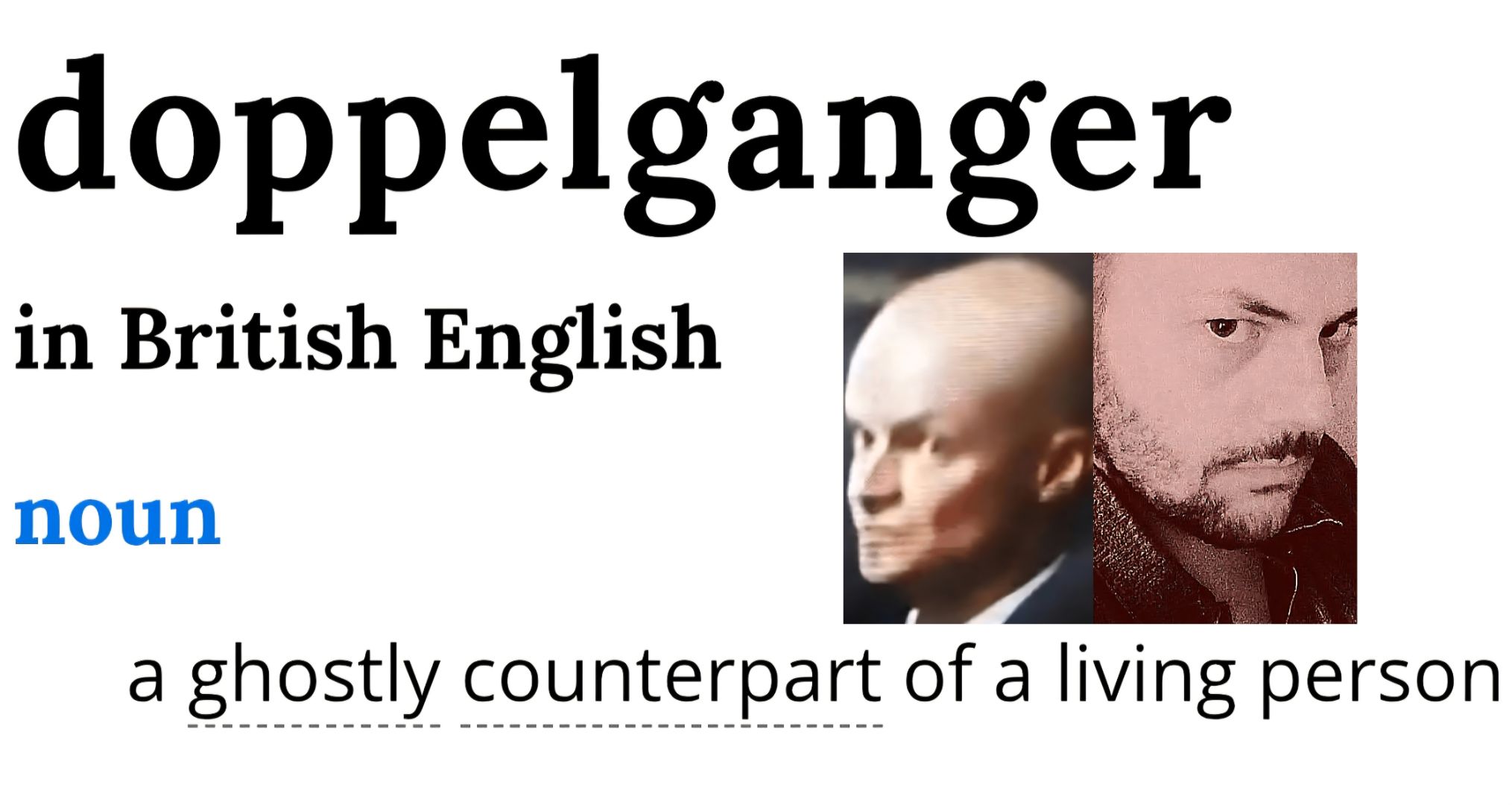
A doppelgänger is a German term meaning "double-walker," referring to a ghostly double of a living person, often seen as an omen of bad luck or death, but today also commonly used for any unrelated person who looks strikingly like you (a "twin stranger"). These uncanny look-alikes can be benevolent, sinister, or simply a fascinating phenomenon explored in folklore, literature (like Naomi Klein's book Doppelganger), and pop culture, representing themes of identity, duality, and distorted reality. In The First Image, My "Doppelganger" Is The Person On The Left - He Isn't Human - He Is Reptilian - Pay Close Attention To His Eyes. In The Second Image, My "Doppelganger" Is Person On The Right - This Person Is Also Not Human - He Is Reptilian. In The 3rd Image, My "Doppelganger" Is The Person On The Left - This Person Is Human. I Was Born September 8, 1972 - Adopted A Short Time Later When I Was Still A Baby. I Am Wondering If The Person In The Blue Shirt & Cap Is Me From Another Timeline (❓️), A Long Lost Sibling. I Am A Starseed. That Is Why All This Is Happening. Donnie Brooke, 4721 Bantry Rd., Grovetown, Ga. 30813, USA 🇺🇸. 706-840-8639. donnie.brooke@mail.com. *Pass This Along.

JESUSWILLRETURN

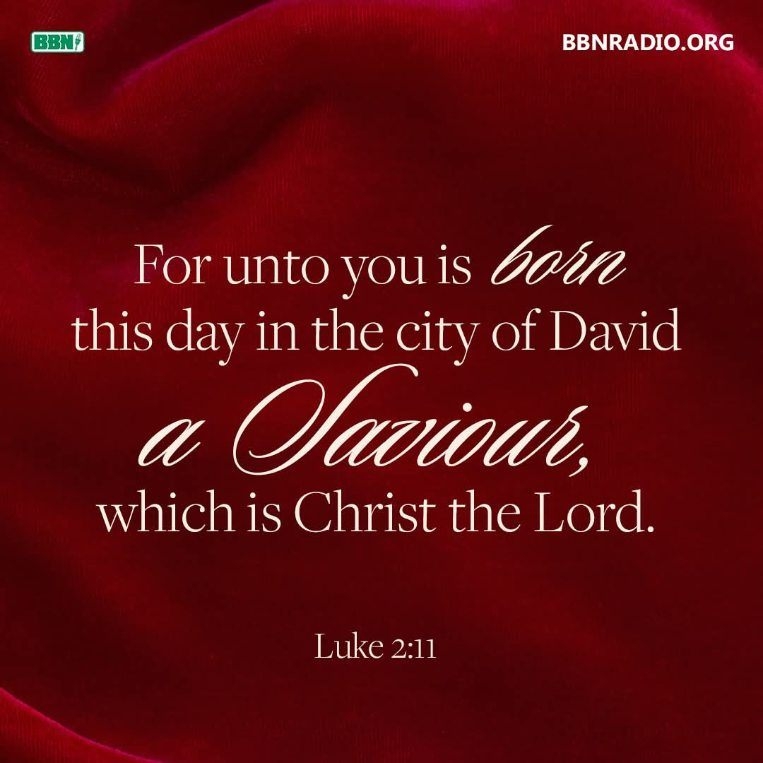
A Christmas Carol Share In the bleak midwinter, frosty wind made moan, Earth stood hard as iron, water like a stone; Snow had fallen, snow on snow, snow on snow, In the bleak midwinter, long ago. Our God, Heaven cannot hold Him, nor earth sustain; Heaven and earth shall flee away when He comes to reign. In the bleak midwinter a stable place sufficed The Lord God Almighty, Jesus Christ. Enough for Him, whom cherubim, worship night and day, Breastful of milk, and a mangerful of hay; Enough for Him, whom angels fall before, The ox and ass and camel which adore. Angels and archangels may have gathered there, Cherubim and seraphim thronged the air; But His mother only, in her maiden bliss, Worshipped the beloved with a kiss. What can I give Him, poor as I am? If I were a shepherd, I would bring a lamb; If I were a Wise Man, I would do my part; Yet what I can I give Him: give my heart. ~Christina Rossetti

Category: Entertainment - Page 24 | LocalAll