Category Page news

Urieta_Doyle_Chisolm

Flock Cameras Remain Active While Linked to Ongoing Police Investigations, Raising Privacy Concerns Flock Safety cameras installed throughout communities are drawing increased scrutiny as questions emerge about how surveillance footage is collected, accessed, and retained while investigations remain ongoing. The automated license plate recognition (ALPR) cameras are designed to capture vehicle license plates, timestamps, locations, and other identifying information. Law enforcement agencies use the technology to assist with investigations involving stolen vehicles, missing persons, criminal incidents, and other reported offenses. However, concerns are growing over what happens when cameras remain operational while their collected information is connected to active or ongoing investigations. Unlike traditional surveillance systems that require investigators to manually review footage, Flock technology can make searchable vehicle data available to authorized agencies. This creates questions about how long information remains accessible, which agencies can access it, and what safeguards prevent information collected for one investigation from being used for unrelated purposes. Privacy advocates argue that continuous vehicle monitoring can create a detailed record of people’s movements without requiring them to be suspected of wrongdoing. Residents may have their license plates captured simply by driving through their neighborhoods, visiting businesses, or traveling to work. Another concern involves transparency. Many residents are unaware of where cameras are positioned, how information is shared between agencies, or whether their vehicle information has been connected to an investigation. Police departments and municipalities using the technology face increasing pressure to explain their policies, including data-retention periods, access permissions, audit procedures, and procedures for handling investigative requests. The central question is not simply whethe

Urieta_Doyle_Chisolm

Flock Cameras Remain Active While Linked to Ongoing Police Investigations, Raising Privacy Concerns Flock Safety cameras installed throughout communities are drawing increased scrutiny as questions emerge about how surveillance footage is collected, accessed, and retained while investigations remain ongoing. The automated license plate recognition (ALPR) cameras are designed to capture vehicle license plates, timestamps, locations, and other identifying information. Law enforcement agencies use the technology to assist with investigations involving stolen vehicles, missing persons, criminal incidents, and other reported offenses. However, concerns are growing over what happens when cameras remain operational while their collected information is connected to active or ongoing investigations. Unlike traditional surveillance systems that require investigators to manually review footage, Flock technology can make searchable vehicle data available to authorized agencies. This creates questions about how long information remains accessible, which agencies can access it, and what safeguards prevent information collected for one investigation from being used for unrelated purposes. Privacy advocates argue that continuous vehicle monitoring can create a detailed record of people’s movements without requiring them to be suspected of wrongdoing. Residents may have their license plates captured simply by driving through their neighborhoods, visiting businesses, or traveling to work. Another concern involves transparency. Many residents are unaware of where cameras are positioned, how information is shared between agencies, or whether their vehicle information has been connected to an investigation. Police departments and municipalities using the technology face increasing pressure to explain their policies, including data-retention periods, access permissions, audit procedures, and procedures for handling investigative requests. The central question is not simply whethe

ARIES NEWS

SAVANNAH CHRISLEY IS PREGNANT — BUT HER FIANCÉ’S PAST HAS EVERYONE TALKING 👀 The reality TV star is expecting her first child, but the identity and history of her fiancé have sparked major online conversation. Savannah Chrisley is entering a new chapter of her life! The 29-year-old reality star recently announced that she is pregnant with her first child alongside her fiancé, Jason Galanis. But there’s more to the story than the baby announcement. WHO IS HER FIANCÉ? 🤯 Galanis, 56, is a businessman with a controversial past. According to reports published on October 28, he was convicted in connection with multimillion-dollar securities fraud schemes and had his prison sentence commuted by President Donald Trump in 2025. In another surprising connection, Galanis and Savannah’s father, Todd Chrisley, reportedly spent time at the same federal prison camp in Florida. HOW DID THEIR RELATIONSHIP BEGIN? ❤️ Savannah has said that Galanis first contacted her in June 2025 to congratulate her on advocating for her parents’ release from prison. Their conversations eventually became romantic, and they began dating the following month. Now, with a baby on the way, the couple is preparing for a major life change. Their relationship has already attracted attention because of their 27-year age difference and Galanis’s past. What do you think? Should people focus on Savannah’s pregnancy announcement, or is it fair to question her fiancé’s controversial history? Drop your thoughts below! 👇 #SavannahChrisley #News #CelebrityDrama

justme

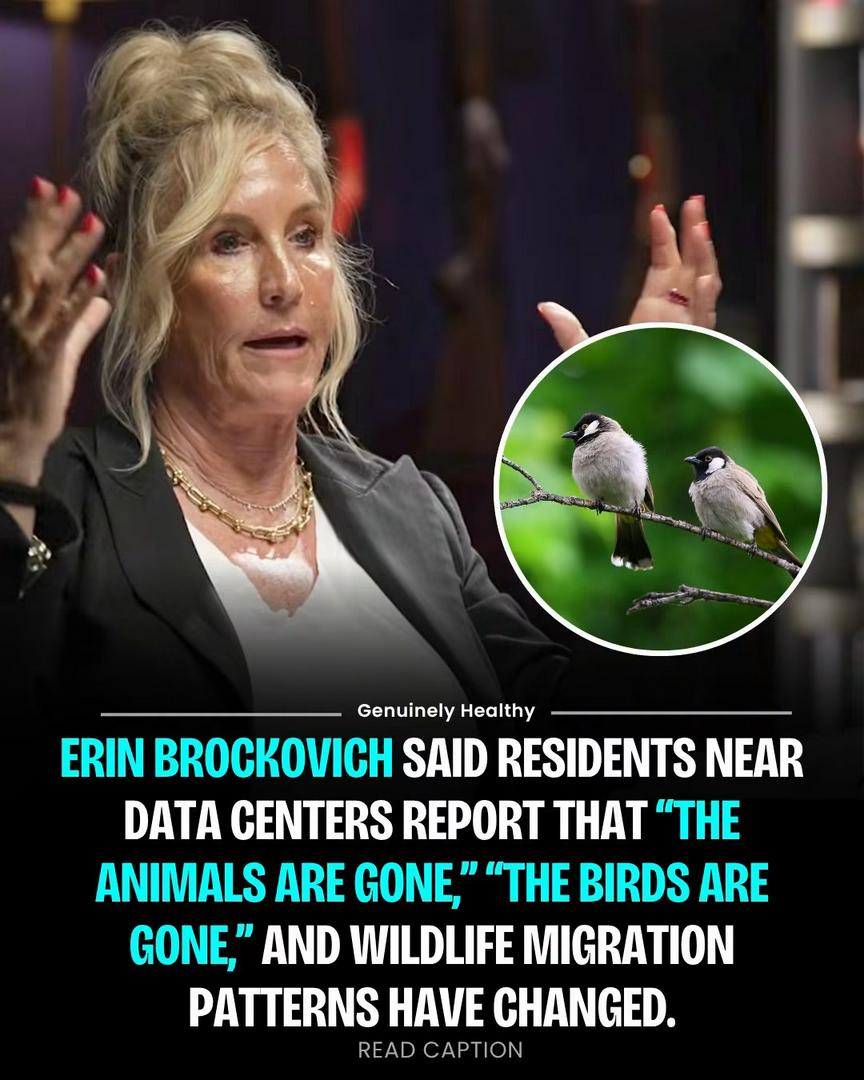
Erin Brockovich said residents living around some data centers have reported noticeable changes in local wildlife. According to the accounts reaching her, people have told her that “the animals are gone” and “the birds are gone.” She also said residents have reported changes in established wildlife migration patterns around areas where large data-center developments have been constructed. Brockovich connected these observations to the broader environmental changes surrounding construction, including large-scale land clearing, removal of trees, continuous noise, and changes to local water conditions. She raised concerns about how these disruptions could affect surrounding ecosystems, but the interview did not establish that data centers directly caused the reported wildlife declines or migration changes.

You've reached the end!
Category: News | LocalAll