❤️ Sometimes You Have to Lose Everything to See Who Was Really There
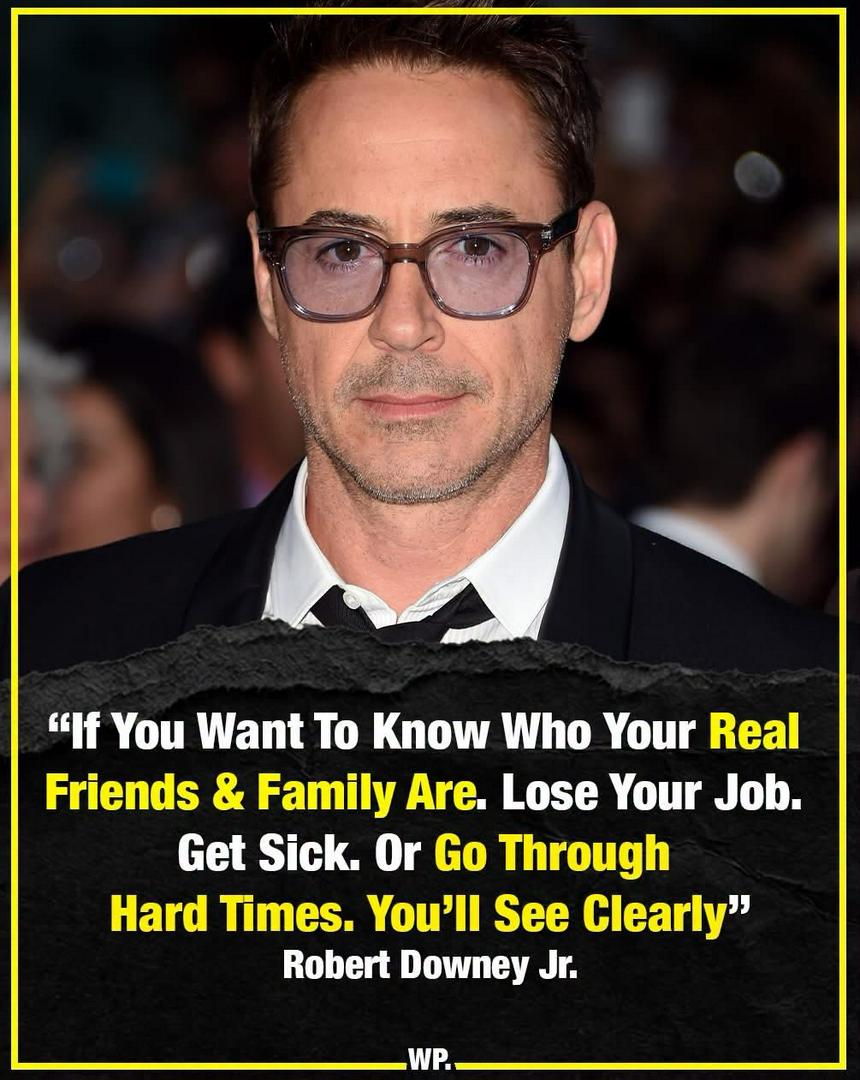
There’s a quote circulating online that is often attributed to Robert Downey Jr.:
“If you want to know who your real friends and family are, lose your job, get sick, or go through hard times. You’ll see clearly.”
Whether or not those exact words came from Downey himself, the message hits hard.
Because most of us know what it feels like to wonder who would still be standing beside us if everything we had suddenly disappeared.
When life is going well, it can be difficult to tell the difference between people who genuinely love you and people who simply enjoy being around the version of you that is successful, happy, generous, useful, or easy to be around.
But hard times have a way of removing the distractions.
You lose a job, and suddenly some people stop calling.
You get sick, and you discover who checks in without being asked.
You go through a financial crisis, a divorce, grief, addiction, failure, or some other difficult chapter, and you may discover that the crowd around you becomes much smaller.
And sometimes, that hurts.
But sometimes, it also becomes incredibly clear.
Robert Downey Jr. knows something about falling from a place where everything seemed possible.
His career was once in serious jeopardy because of years of substance abuse, arrests, imprisonment, and repeated struggles with addiction. At one point, he was considered such a risk that getting insurance for film work became a major obstacle.
Then came sobriety, recovery, and a second chance.
In 2008, he stepped into the role of Tony Stark in Iron Man—a role that transformed his career and helped launch one of the biggest franchises in movie history.
But perhaps the most powerful part of a comeback isn’t becoming successful again.
It’s remembering who stayed when you weren’t.
Who answered the phone.