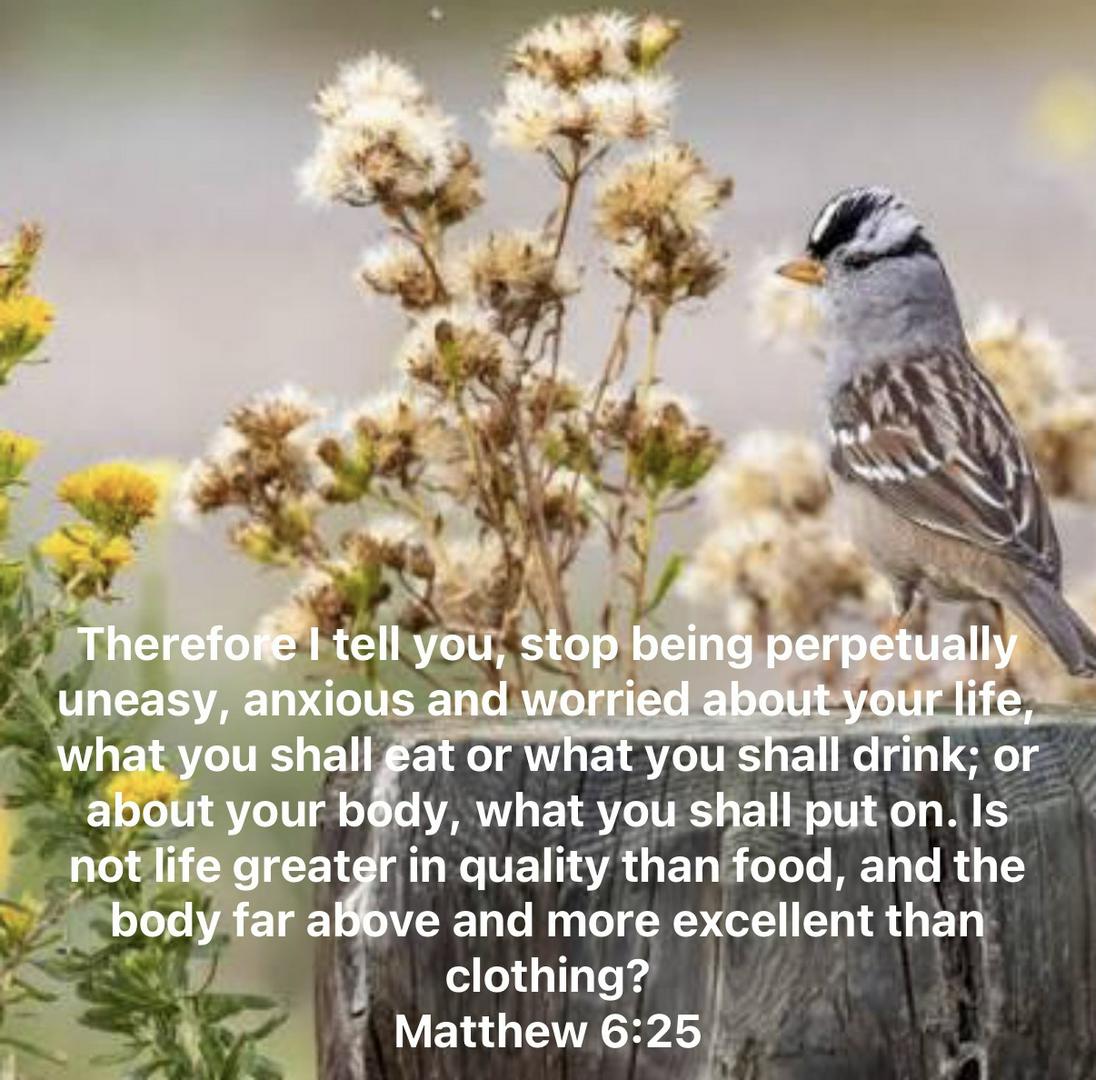
Matthew 6:25 Imagine, sitting on the side of the mountain, with Him. We’re part of a crowd listening to a teaching like we’ve never heard before. A teaching spoken with such power and authority. A teaching of Righteous character with heavenly rewards, forgiveness and judgment, generosity and love, hypocrisy and sin. Then He opens the door to a personal relationship with God by teaching us how to pray to Him, beginning with adoration, moving to confession and Thanksgiving then supplication. So many things to consider…to understand about our separation from the world to God through surrender and trust. He tells us to give up our love for money and to stop being anxious. There’s something telling us ‘that’s impossible’! We now recognize it…It’s the voice of the enemy in a last ditch effort to keep his ‘room’ in our heart. We may not want to admit it, but Anxiety and Worry are symptoms of a deeper, unsettling spiritual condition where Pride and Doubt have their boots on the necks of Trust and Faith. Jesus tells us He’s our Provider, our Protector. He uses examples of the small things, beautiful things by nature. Things that aren’t worried about being better than others or having more than needed, but rather focus on the gift of life itself, doing what they’re created to do. Rather than striving for things that aren’t important for life Jesus tells us to seek, to aim at and strive after first of all His kingdom and His Righteousness, His way of doing and being right. In doing so, all the things we need will be given to us by God. Lord, we fall short. We’re anxious about many things. Help us to be intentional in our trust in You. Remind us to seek Your way instead of our own. Remind us, heavenly treasures are eternal and earthly ones…are not.