1/1
Sex vs Gender
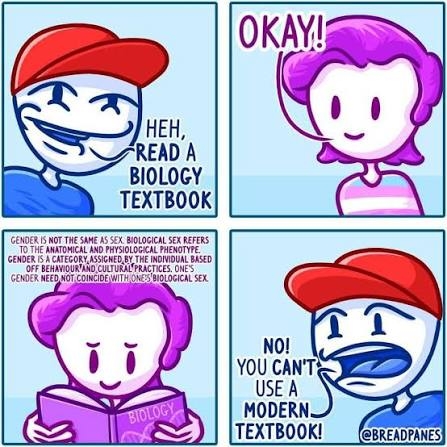
According to the Institute of Medicine, sex is typically used as a biologic classification system and expressed as a chromosomal pattern, like XX for females or XY for males. Gender has more to do with self-representation, is typically defined by various behaviors and roles and is expressed by terms like “woman,” “man” or “non-binary.” The presentation of each gender can vary from one culture or time period to another. For example, a 1918 article published in The Infant’s Department stated that baby boys should be dressed in pink, “a more decided and stronger color,” and girls in the “more delicate and dainty” color of blue. Parental abuse and rejection of transgender or gay children are common, leading to disproportionately high rates of abuse, mental health issues, and homelessness for LGBTQ+ youth. Research shows that family rejection can motivate abuse, even if parents believe they are acting out of "concern," and the emotional and psychological consequences on a child are severe. Gender is understood as a social and cultural construct-referring to the roles, behaviors, and identities society assigns to males and females. While biological sex is determined by physical and genetic factors, gender expectations involve how a person is supposed to behave according to their assigned sex. For instance, wearing a wig and dress does not biologically change a man into a woman, but it can be seen as a behavior not aligned with societal expectations for men. This reflects the cultural aspect of gender roles, which vary across societies and times. Thus, dressing contrary to societal male norms does not make one female biologically, but challenges social gender role expectations. In short, gender roles are about societal expectations, not biology. Cross-dressing or gender nonconforming behavior may conflict with these expectations, but biological sex remains distinct from gender expression or identity.
2025-10-06

Zzzzz
So what is a woman and what is a man?
10-07
Leander, TX
Reply(82)
3

A-C Jackson
The etymology of the words sex and gender go back over 2000 years to ancient latin. "Sexo" (meaning male or female) and "genero" (meaning the type of something) both entered middle french about 800 ad and then middle english around 900ad. By 1100ad, they had morphed into "sexe" and "genere" - still meaning male/female and type of something. By the 1300s, they were being used together as "sexe genere" to specifically indicate male/female....as in 'male/female sex-type'. By the 1400s, "genere" began to morph again, becoming two different words: genre and gener. Genre continued to mean type of thing, but gener was used exclusively in medical texts as part of the same old phrase "sexe gener". By the 1500s it gained a "d" and became sexe gender. Sexe lost its e in the 1600s, and since then - the last 400 years - the phrase "sex-gender" has been used as either "sex" or "gender".
10-06
Reply(66)
3

thewaythetruthandthelife
Lord have mercy 🙏
10-07
Charlotte, NC
Reply(43)
5

Megatron
The roles stem from the differences in physicaly and mentally between male and female. In today's day and age no one in the western world is forced into gender roles legally. The report from the WHO( in the early 2000s) that stated that gender dysphoria was not a mental issue was made so as to continue research, as they said its classification was an obstacle to real research. There was no new science, nor evidence, that lead to its new classification. Sure you can live your life wearing dresses and pretending to be the other gender, but you arent. You were born with all the physical traits of the other gender, therefore you can not experience life at all as the opposite gender. All you can do is be a simulation of what you think they are like. It's why drag queens dress so outlandish when dressing as women, its why butch kings all look like a lumberjack. It's harder to pretend to be something than just be who you were made to be.
10-06
Brooklyn, NY
Reply(19)
12

None Business
If gender is a social construct then don't be surprised when part of society doesn't see you as what you think you are. Either pull off the charade fully or deal with being "misgendered".
10-06
Chillicothe, IL
Reply(17)
8

DevilDogDi
Lies, research the history of the two words.
10-06
Reply(16)
5

libtards are trash
Only two genders 💯
10-06
Hardtner, KS
Reply(9)
10

Rosalind Johnson-Pezze
I disagree. Gender is derived from gene, thus determined by genes. Sex is determined by genes. Identity originates in our brain and determines how we want to express that identity.
10-06
Iron River, WI
Reply(15)
3

StellaLuna
Should a man be allowed in the womens bathroom becuase he identifies as a woman?
10-07
Lansing, MI
Reply(18)

Greg
I don't care what adults do to themselves until they infringe on the rights of those who have accepted their genetic gender. For gender based sports it should be genetic gender not desired gender.
10-06
Reply(2)
9
More comments ...
write a comment...