1/1

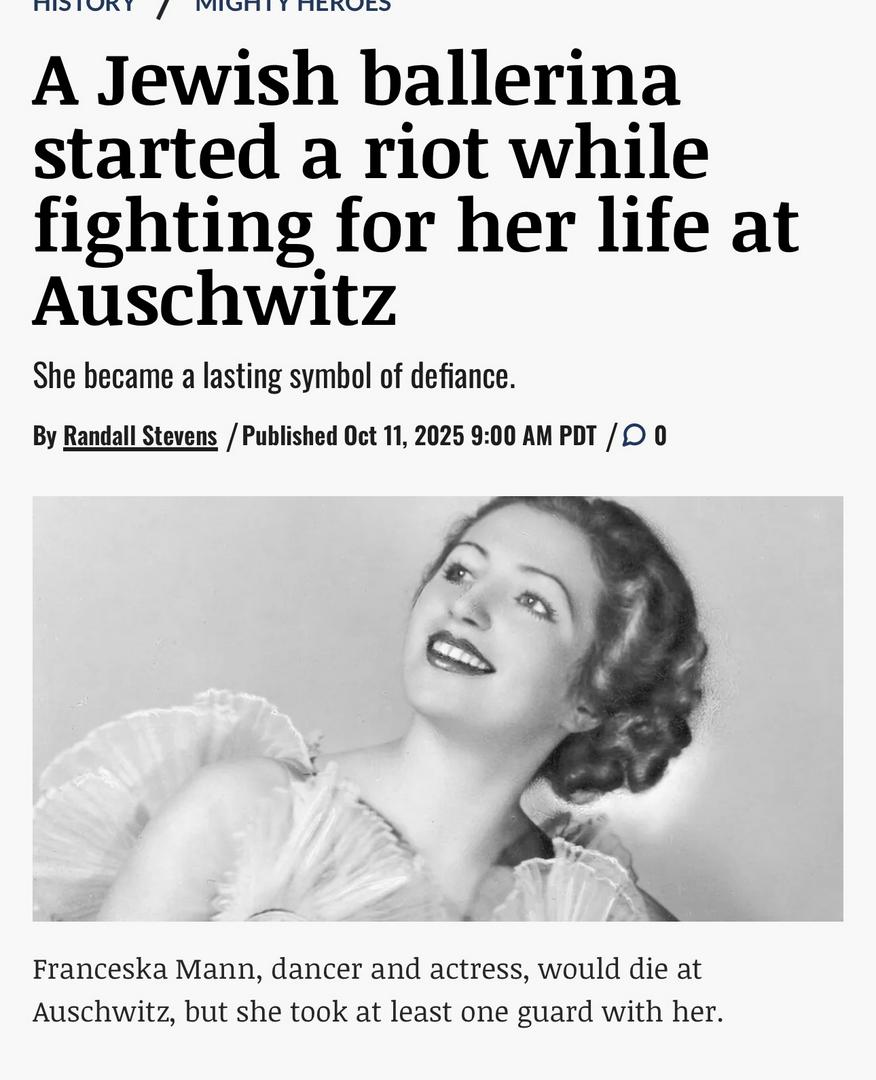
The phrase "she danced to the gas chamber" refers to the story of Franceska Mann, a Polish-Jewish ballerina who staged an extraordinary act of defiance at the Auschwitz concentration camp in October 1943. Upon arrival at Auschwitz, Mann and other Jewish prisoners were deceived into believing they were going to be disinfected and would then continue their journey to Switzerland. In the undressing room of Gas Chamber II, as the women were ordered to strip, Franceska Mann began to undress provocatively, using her dancer's grace to captivate and distract the SS guards. Seizing a moment of distraction, she snatched a pistol from the holster of a Nazi officer, Josef Schillinger, and shot him dead. She fired a second shot, wounding another SS sergeant, Wilhelm Emmerich. Her act of bravery sparked a brief riot among the other female prisoners, who began to attack the guards with their bare hands. Reinforcements were called in and, in the ensuing chaos, all the women, including Franceska Mann, were killed by machine-gun fire or forced into the gas chamber. Schillinger died from his wounds shortly after the incident. While accounts of the exact details vary, the core story of Franceska Mann's defiance became a legend among camp inmates, providing a powerful symbol of resistance and proving that the SS officers were mortal
2025-11-12

Germaine O'Donnell
God bless her immortal soul.
30d
Bay St Louis, MS
Reply
2

Paul Smith
Thats today's liberal when Starbuck raises its prices.
21d
Reply

Remove Yourself
LMMFAO!!!
11-13
Reply
More comments ...
write a comment...