1/1
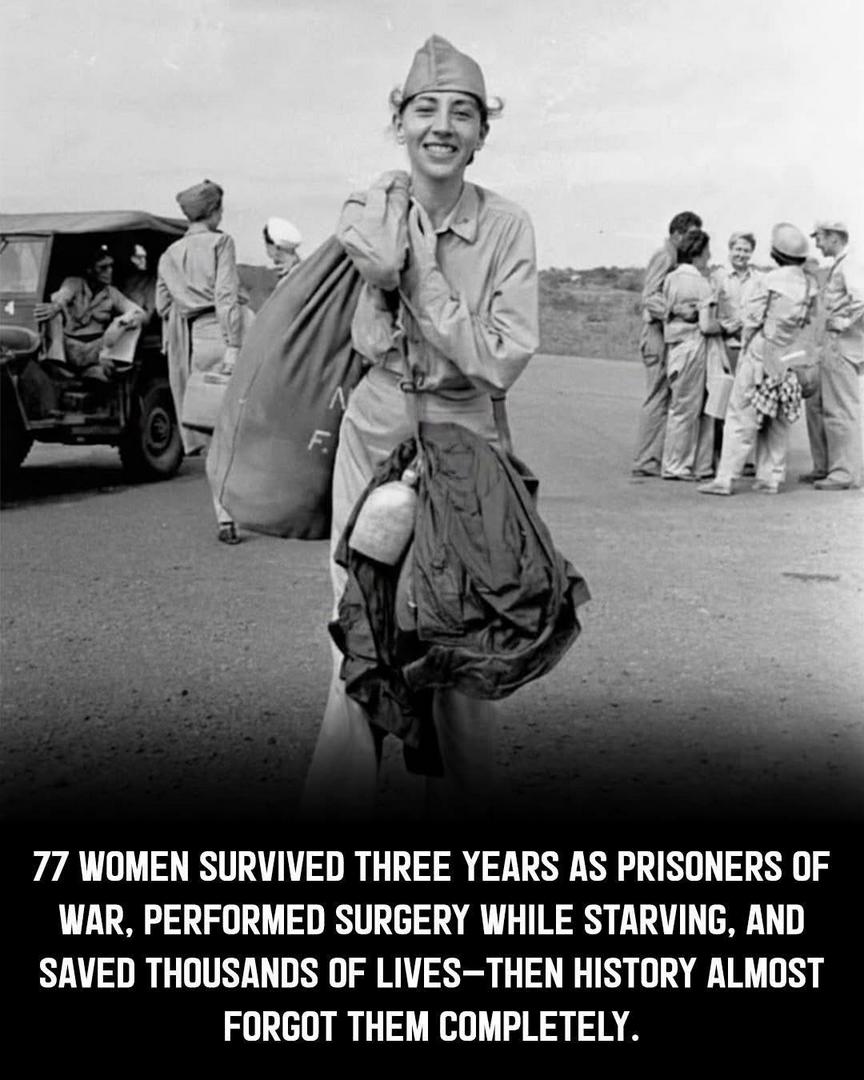
Seventy-seven women saved thousands of lives under enemy fire, survived three years as prisoners of war, and came home to a country that forgot their names. They were called the Angels of Bataan—but history treated them like ghosts. In December 1941, when Japan attacked the Philippines just hours after Pearl Harbor, 66 Army nurses and 11 Navy nurses found themselves on the front lines of World War II. They weren't supposed to be there. Military doctrine didn't envision women in combat zones. But war doesn't wait for doctrine to catch up. Within weeks, Manila fell. The nurses evacuated to the Bataan Peninsula, where they set up field hospitals in the jungle—open-air wards with no walls, no protection, just mosquito nets and determination. Japanese bombers flew overhead daily. Artillery shells screamed through the trees. And still, the wounded kept coming. Thousands of them. The nurses worked 20-hour shifts in suffocating heat, performing surgeries under jungle canopies, treating soldiers for combat wounds, malaria, dysentery, and tropical diseases they'd never encountered in their training. Medical supplies dwindled. They sterilized bandages by boiling them. They rationed morphine until there was none left. They held dying men's hands when there was nothing else they could do. One nurse later recalled: "We stopped thinking about comfort, about fear, about ourselves. There was always another soldier who needed us more than we needed sleep." By April 1942, Bataan was collapsing. The nurses were evacuated to Corregidor, a fortified island in Manila Bay that was being bombed into rubble. They moved their hospital deep underground into the Malinta Tunnel—a dark, stifling labyrinth where they treated the wounded by flashlight while the island shook from constant bombardment above. The air inside was thick and suffocating. Dust from explosions filtered down constantly. They could hear the war happening overhead, feel the concussive force of bombs landing closer
2025-11-23

Diane Barry
Heros we don't hear about 🙏🙏. Thank you all for your services!@
11-23
Cape Coral, FL
Reply(1)
42

Marie Santoro
unsung heroes. WHY ISN'T THEIR A MONUMENT TO THE NURSES WHO SERVED UNSELFISHLY & HEROICALLY IN EVERY WAR SINCE THE REVOLUTION? THEY WERE ADORED BY THE GRUNTS BUT TREATED AS IF INVISIBLE
11-25
Atco, NJ
Reply(3)
32

eagle 🦅
And no one in Trumps was ever a member of the military just a family of draft dodgers
11-23
Reply(15)
21

Ronald Shelton
Military nurses will never be forgotten as long as I live. I do love my nurses. Thank you Ladies, God Bless.
11-24
Raeford, NC
Reply
29

Dwyer Jones
The book about these remarkable nurses is called We Band of Angels.
11-26
Princeton, NJ
Reply
25

Anabelle
A great story about great women. I'm glad I learned about them today.
11-25
Bowling Green, VA
Reply
23

Ginny Best
All should be reminded… of the bravery.. these women faced!!! That’s what women do!!! Take care…🙏🏼
11-25
Dobbs Ferry, NY
Reply(1)
20

Maddog
Selfless in the face of danger!! That is a primary heroic quality
11-24
Sandy Springs, GA
Reply
20

Judy Fleming Herman
Awesome story.!Thank you for what you did and your service.
11-24
Shawnee, KS
Reply
20

Robert Caruolo
Thank God they were there
11-24
Reply
20
More comments ...
write a comment...