1/1

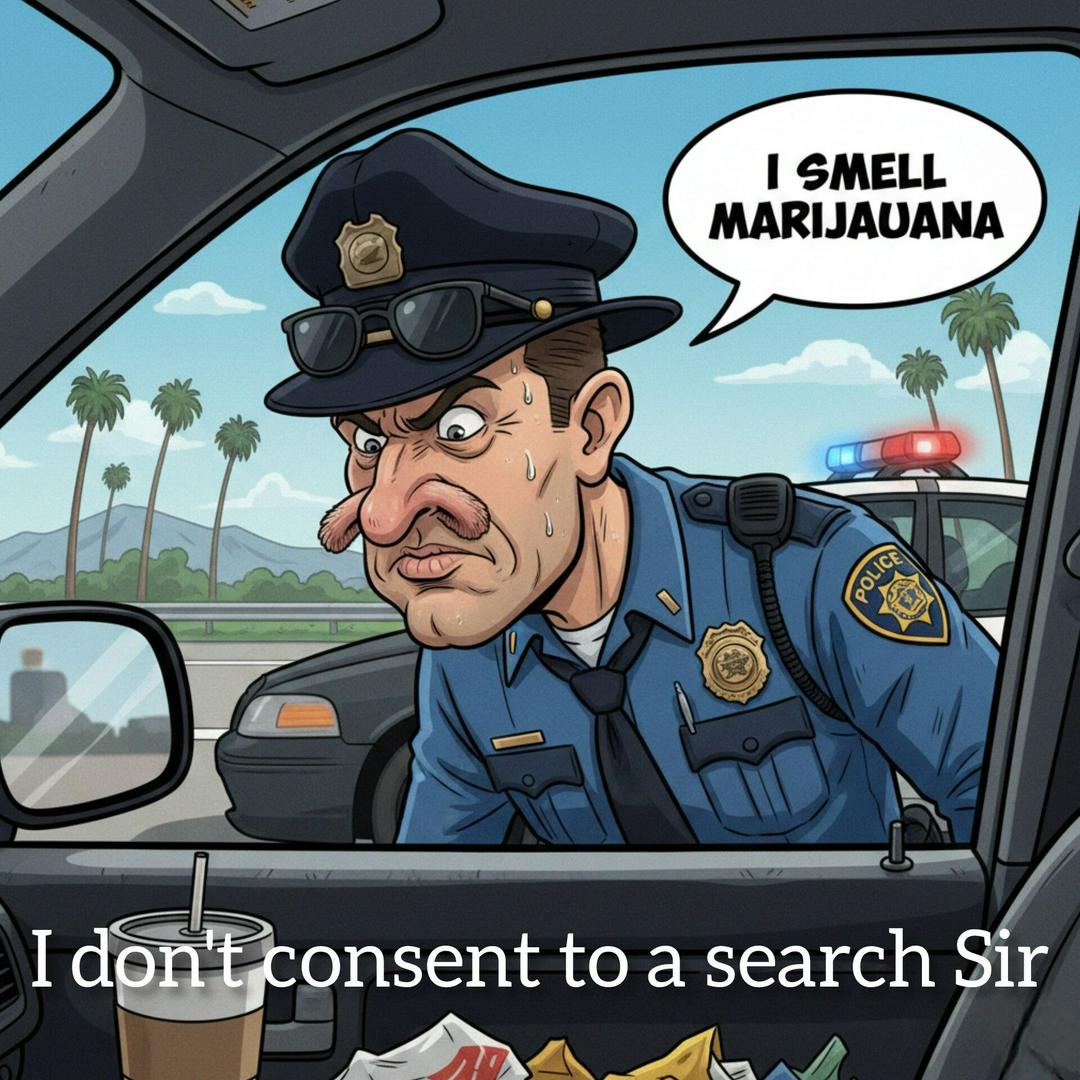
They Said They Smelled Weed — Here’s Why That’s Wrong When a cop says, “I smell marijuana,” your stomach drops. I’d seen it hundreds of times in county and federal lockups: sniff, tone change, search. Back inside, it could mean months or years. Outside, it could ruin a job, a family, a life. It always felt like theater — a shortcut to trouble. On my first probation violation, I was on 6 West with James Talley. He faced heavy charges — a 922(g) felon-in-possession and a 924(c) stacked on top. If the gun search survived in court, he faced a 10-year mandatory minimum. He was terrified. Talley’s lawyer didn’t press the search hard enough, so I wrote a motion. I hammered through the facts, missing probable cause, the scent-as-pretext angle. Talley filed it. And the judge did something a lot of people don’t realize: he threw out the evidence. Not because marijuana is legal, but because the search didn’t meet the Constitution. Federal law can’t fix an illegal state search. Here’s what most people miss: after California’s Prop 64, smelling marijuana alone is not probable cause. It could come from a legal joint, a friend’s hoodie, or even a neighbor. Courts have confirmed this repeatedly. The cops need something more than a nose. Under Health & Safety Code § 11362.1(c): > Legal possession of cannabis cannot be the basis for detention, search, or arrest. That means if weed is legal and you’re within possession limits, the smell alone cannot justify a search. What does give cops the right to search now? Real, observable signs of crime: • Someone visibly impaired while driving • Open containers or illegal quantity • Minors in the vehicle • Other concrete evidence of an offense If a cop says, “I smell marijuana,” here’s what to do: don’t consent to a search, film the interaction if possible, ask if you’re being detained, keep your hands visible, and get a lawyer if they violate your rights. The cops default to scare tactics if they're wrong, but if you know, you know
2025-11-27

Got this...
the argument happens in court, with judges and attorneys. NOT on the side of the road with the cops. comply and prove your point later. ...and yes, I have been arrested, MANY, many times, and I've done a decade in prison. COMPLY, if it's wrong, it will get fixed but not by you. this is where patience comes in.
11-27
Littleton, CO
Reply(32)
8

Larry Rigsby
Yes it’s wrong, I’ve had it happen driving my wife’s vehicle and neither one of us smoke. I’ve also been pulled over for an expired tag and they call a canine drug sniffer who they say alerted on drugs in the vehicle, which there wasn’t….
11-27
Milton, FL
Reply(11)
10

Dug E
No longer a legal reason for stop in certain states with legalization
11-27
Reply(10)
7

Rabblerabblerabble
Cops do what they want and constantly lie
11-27
Reply(2)
11

Robert Downey
If they smell marijuana that is probable cause to search if you are in control of a vehicle. Just like the smell of alcohol.
11-28
Rancho Cordova, CA
Reply(11)
2

Mojo
I did 15 days in jail for legal weed and had to pay a $800 fine too.
11-27
Deadwood, SD
Reply(8)
4

vdrhnnvdd
In some states simply claiming they smell it automatically makes it legal for them to search your property, which means cops can simply lie to search your stuff instead of providing a valid reason.
11-27
Gentry, AR
Reply(4)
5

Marc Mills
70 percent of positive alerts are false. look it up
11-27
Easton, MD
Reply(2)
5

John New
it pours out of every 3rd car at intersections
11-27
Canal Winchester, OH
Reply(2)
5

Jude Conig
end this stupid and failed drug war.
11-27
North East, MD
Reply
6
More comments ...
write a comment...