1/1

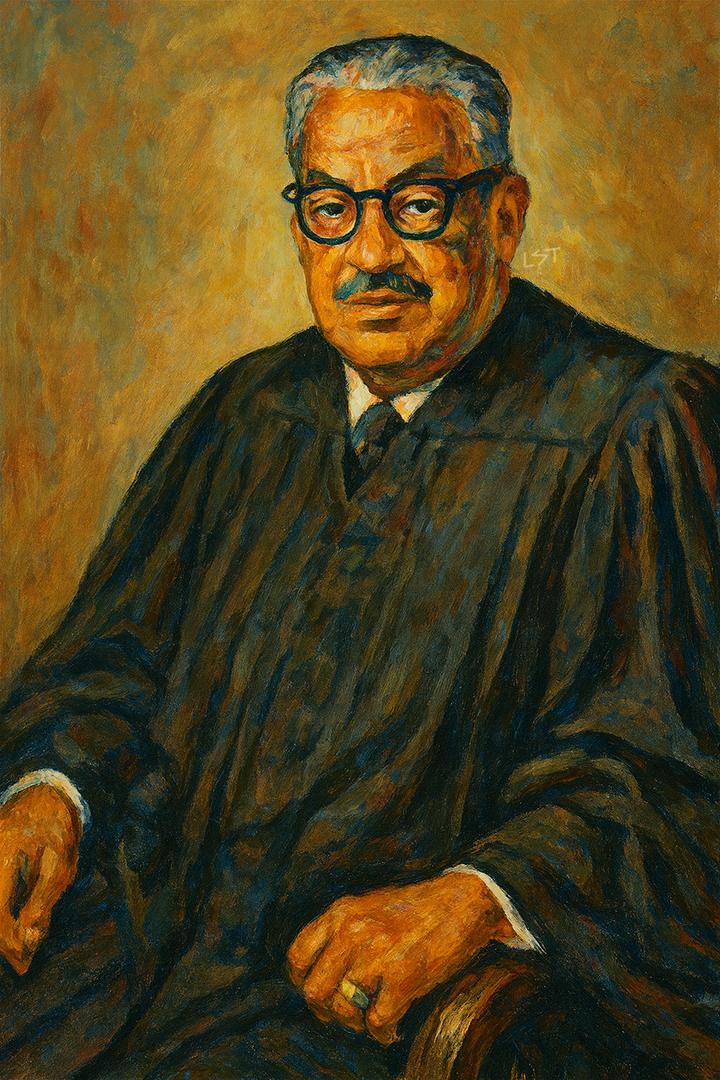
December 8, 1953 was one of those quiet days in American history that ended up shaking the whole system. Thurgood Marshall walked into the Supreme Court for the re-argument of Brown v. Board of Education, carrying the weight of generations who had been sidelined by a school system built on separation. The country had been tiptoeing around the truth for decades, but Marshall didn’t tiptoe. He drew a line. He broke down the cost of segregation with facts, legal precedent, and the lived experiences of Black children who were expected to learn in unequal environments. He challenged the Court to stop hiding behind tradition and to face what equality actually looks like when it’s lived… not just written. His argument forced the nation to ask hard questions. Could a country built on the idea of fairness continue to defend a system that denied fair access to opportunity? Could separate schools ever offer the same future? Marshall pushed the justices to confront the gap between the promise of the Constitution and the reality families faced every day. That re-argument didn’t end segregation in a single afternoon, but it signaled a shift the country could not ignore. It showed that this fight wasn’t going away. It showed that moral clarity, strategic pressure, and undeniable truth would eventually force the system to bend. When we look at education today, December 8 stands as a reminder that progress never arrives neatly. It arrives because someone is bold enough to stand in front of power and say, “This isn’t justice… and we’re not backing down.” #HistoryMatters #AmericanHistory #EducationReform #ThurgoodMarshall #OnThisDay #LataraSpeaksTruth
2025-12-08

hydrant man
Thurgood Marshall was a great man from the days when the Supreme Court actually could do its job well.
12-09
Orinda, CA
Reply
18

Yvette Harrison
I am so happy that he had enough courage and shared one of the most valuable things in life that we have temporarily and that’s time. Can’t buy it, borrow it or get more. Once it’s gone it’s gone. So be careful with yours tomorrow isn’t promised spend your very wisely . I really appreciate him . Selfless.
12-09
Essex, MD
Reply
10

Juliann Thomas
What A Very Important Man. The Supreme Court Justices No Longer Think Like This. My Own Personal Opinion We Are In Free Fall 💯💯💯
12-09
Ossining, NY
Reply
10

orlando aka the goat
AMEN!!Thank you Mr.Thurgood Marshall for working tirelessly for inequality during my lifetime.
I am a witness to America installing 'YOU'as our 1st Black Supreme Court Justice .
Thank you Jesus Christ for his spirit resting peacefully in heaven 🙏...
Ida Woodard
Highpoint N.C.
12-11
High Point, NC
Reply
2

Jason
5/5ths of a human being.
12-09
Rochester, NY
Reply
2

Law_TheEnd
We sure could use a modern day Thurgood Marshall. The way the world is going segregation may not stay a thing of the past.
12-15
Carteret, NJ
Reply
1

CARROL T. BLAIR
Thurgood Marshall was a man that was not afraid to stand up against anyone. He will never be forgotten.
12-10
Portage, MI
Reply
1

SedyRedy
👼🎄🎁🌞🫡💯👊🙏⛄
12-09
Milwaukee, WI
Reply
More comments ...
write a comment...