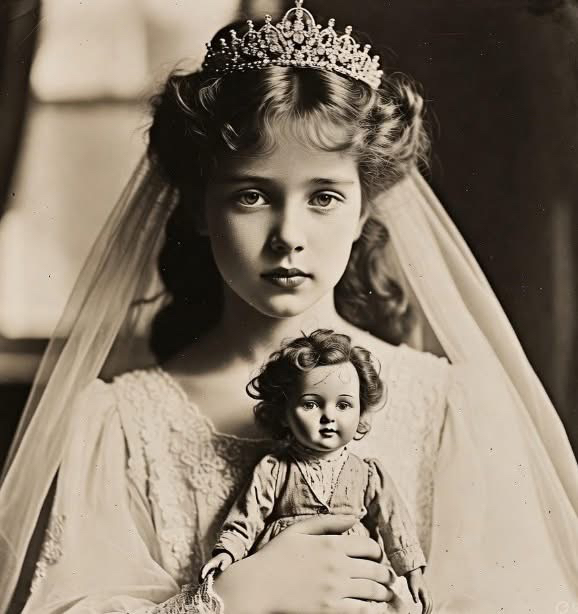
1/1

Thirteen-year-old Rosalie held her childhood doll at her wedding to forty-two-year-old William Stockton on July 15, 1904. Her parents had arranged the marriage—Stockton was wealthy, Rosalie's family was poor, this was "opportunity" they said. Rosalie had been playing with dolls three weeks earlier. Now she stood in a wedding dress, legally becoming a wife, expected to perform adult duties she barely understood, clutching her doll because letting go of it meant accepting this nightmare was real. Stockton had courted Rosalie with her parents' permission, brought gifts, spoken of the comfortable life he'd provide. He'd never asked what Rosalie wanted. No one had. Her desires were irrelevant—her father needed money, Stockton wanted a young bride, state law permitted marriage at thirteen with parental consent. Rosalie's opinion was never part of the equation. She was transaction, not participant. At the wedding, Rosalie refused to leave her doll behind. Her mother tried to take it—"You're a wife now, not a child"—but Rosalie held on desperately. The doll was the last piece of childhood she had left. Everything else had been taken—her freedom, her future, her right to grow up at her own pace. She'd surrender the doll when they physically pried it from her hands, but not before. The wedding photographer captured Rosalie at the ceremony—young face showing terror, wedding dress too sophisticated for her age, doll clutched against white satin like a life preserver. Stockton stands beside her looking satisfied. Rosalie's parents look relieved. Rosalie looks trapped. The juxtaposition of wedding dress and childhood doll perfectly captures the obscenity of child marriage—forcing children into adult roles while they're still children. Rosalie stayed married to Stockton for eleven years, had four children by age twenty-four, was widowed when he died in 1915.
2025-12-15

Benjamin Morrell
I think n you mean democRAT men.
After all, democRATs were the party that endorsed and promoted slavery.
12-15
Dartmouth, MA
Reply(87)
57

Brenda Rosengren
The day he died was probably the happiest day of her life
12-15
Yonkers, NY
Reply(2)
47

DENNIS T. MENACE
Arraigned and child brides has been going on since the beginning, when a girl hit puberty it was time to be married, and parents usually prepared her for that, it was expected, to help out her family or to cement alliances, and at times to bring peace!
12-15
Arlington, WA
Reply(26)
23

Nickie Lambert
this is disgusting and is what Trump is all about
12-15
Muskegon, MI
Reply(14)
28

Lori Rieth
You can expect this as Sharia law takes over our country. Thanks to the democrats.
12-17
Sprague, WA
Reply(11)
22

MJS
Explain what ANY part of this story has to do with current politics! I’ll wait.
12-15
Kill Devil Hills, NC
Reply(2)
26

stardust_memories
William Stockton must've been Trumpstein's great great uncle
12-16
New Castle, PA
Reply(5)
17

Janice S
It doesn't matter what party, race, or what religion a man is. If they are a predator, they don't care about the age of the child. They will pay for a child if they have wealth, poor men will obduct them. It's a sick world we live in, trafficking is an epidemic. They will have fun in HELL where they belong.!
12-15
Roscommon, MI
Reply(1)
17

Galaxy Stranger
Basically legal pedophilia
12-15
Reply
14
More comments ...
write a comment...