1/1

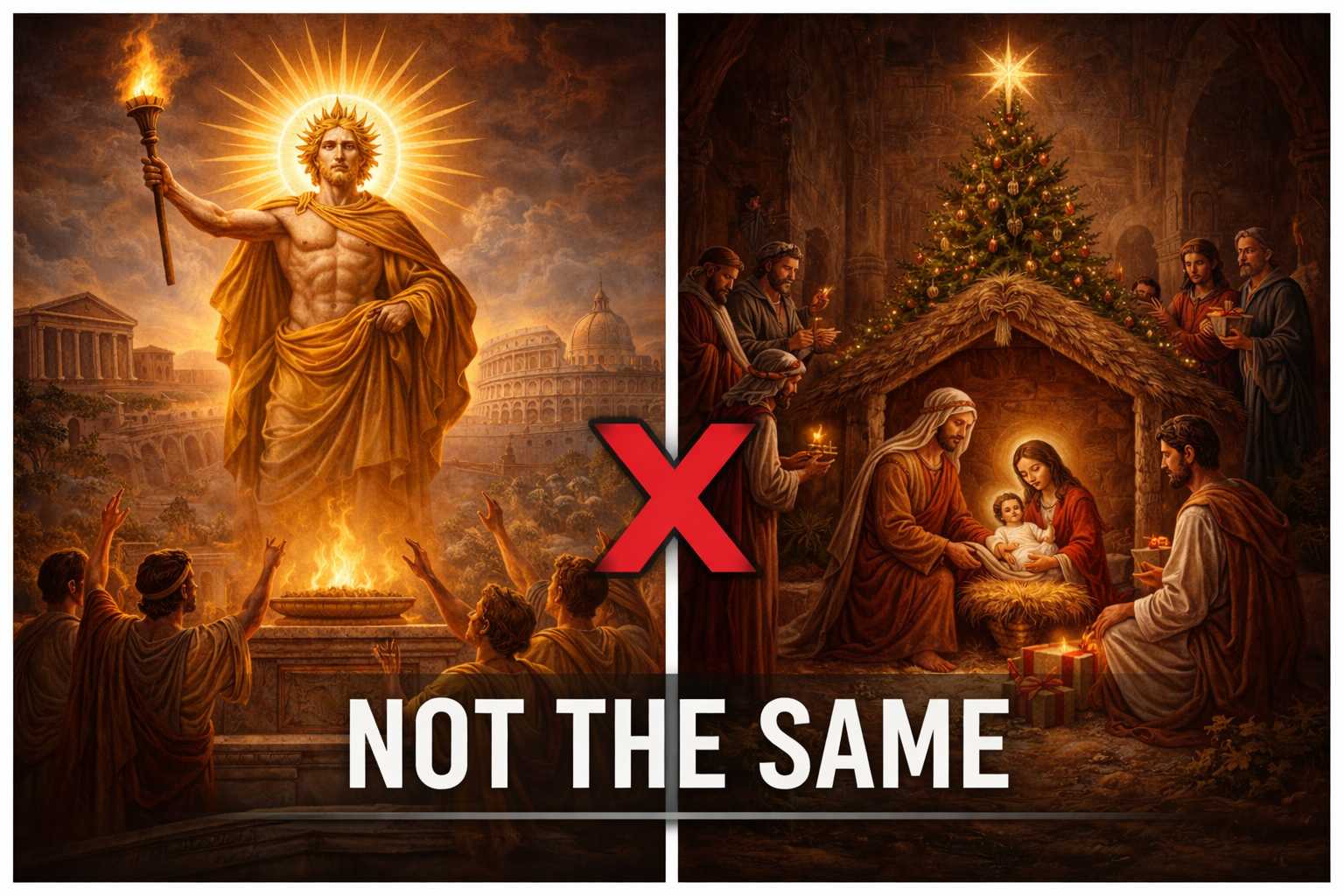
Sol Invictus: Who Copied Whom? (Part 2) The accusation that Christians borrowed December 25 from Sol Invictus depends entirely on one assumption. That the solar festival existed first. That assumption does not hold up under scrutiny. ❗The timeline problem❗ Emperor Aurelian elevated Sol Invictus as a state-supported cult in the late third century, around AD 274. This was not the continuation of an ancient holiday but a deliberate imperial policy aimed at unifying a divided empire. Christian references to December 25 appear earlier. Early Christian writers were already engaging in chronological reasoning tied to Jesus’ life. A widespread tradition held that Jesus was conceived and crucified on the same calendar date. Counting nine months forward placed His birth in late December, specifically December 25. This reasoning appears before Sol Invictus is clearly attested as an empire-wide December 25 celebration. That detail matters. Borrowing requires a source already in place. Direction matters Shared dates do not prove copying. Sequence does. By the time Sol Invictus was elevated, Christianity was no longer a fringe movement. It was growing rapidly, spreading across the empire, and refusing to disappear. Pagan Rome was searching for unifying symbols powerful enough to compete. A universal sun cult made political sense. So a serious historical question emerges. ❓If Christians were already marking December 25, is it possible that Rome adopted solar imagery in response to Christianity rather than Christianity borrowing from Rome? Only one direction can be true. This is where accusations often stall Most claims stop at similarity. Few examine chronology. But history does not work backward from assumptions. It moves forward through evidence. If the date appears first in Christian sources, then the burden of proof shifts. And that leads to the next question, which many skip entirely. #HolidayTraditions #Christian #ChristmasDecor #PaganTraditions #Christmas2025
2025-12-24
write a comment...