1/1
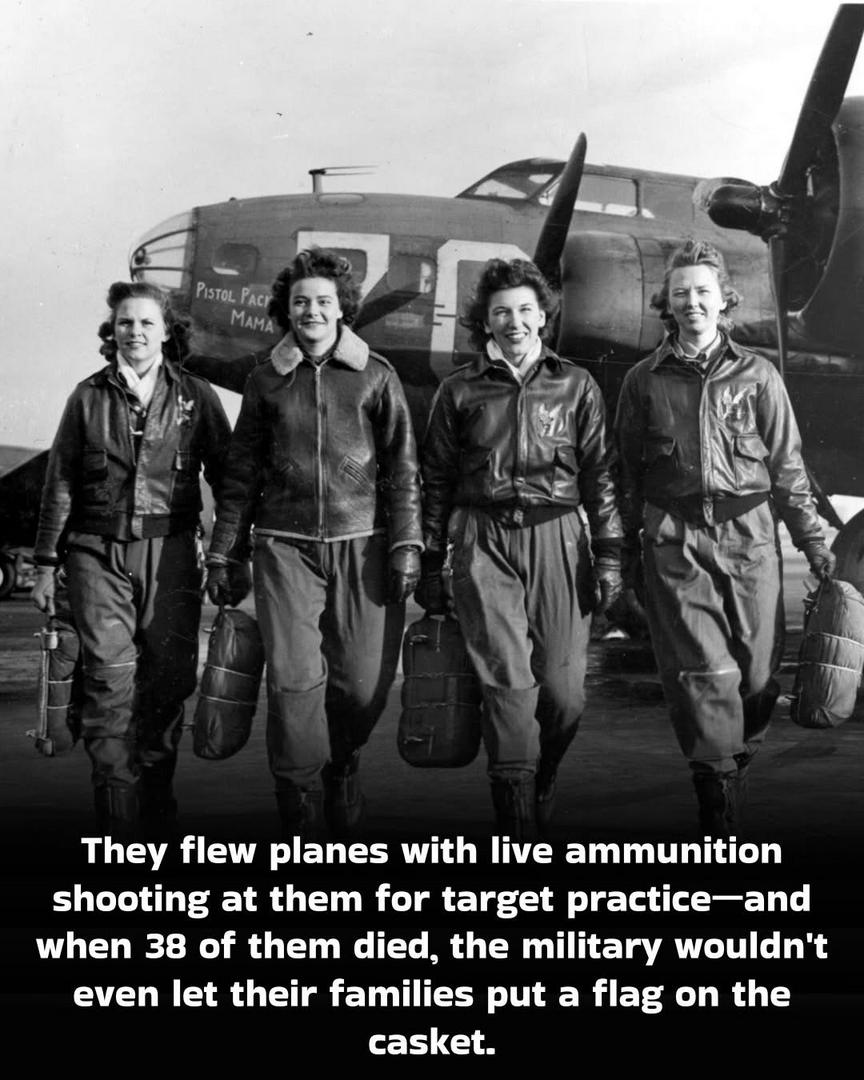
They flew planes with live ammunition shooting at them for target practice—and when 38 of them died, the military wouldn't even let their families put a flag on the casket. 1942. World War II. Male pilots were desperately needed for combat. The U.S. military had a problem: who would fly all the planes stateside? Someone suggested women. The idea was radical. Women weren't allowed in combat. Most people assumed women couldn't handle military aircraft. But necessity is the mother of invention—and the military needed pilots. They created the Women Airforce Service Pilots—WASPs. Over 25,000 women applied. These weren't novices learning to fly. The program required applicants to already be experienced civilian pilots. The military could afford to be selective. They chose 1,074 women. These women ferried brand-new planes from factories to military bases—sometimes across the country, sometimes across the Atlantic. They tested planes that had been overhauled and repaired, flying aircraft that might have mechanical failures at any moment. They towed targets behind their planes for anti-aircraft gunners to practice on. With live ammunition. Read that again. They flew planes while gunners shot at targets trailing behind them. With real bullets. Any miscalculation meant the woman pilot could be hit. The work was dangerous. Thirty-eight WASPs died during the program's two years of operation. And when they died, the military said: we're not paying for the funeral. Because technically, the WASPs weren't military. They were "civil service." A bureaucratic designation that meant when a woman died serving her country, her family had to pay to bring her body home. The military wouldn't cover funeral costs. The military wouldn't allow a flag on the casket. The military wouldn't acknowledge these deaths as military service.
2025-12-31

Bastard Claws
Time to put each of their faces on the stamp. A new collection: The Women Heros of WW2, lost but never forgotten.👍
01-02
Sedalia, MO
Reply
19

James Oneal
That’s one hell of a way to treat somebody that’s doing your job not too many people would do. They’re still military. They deserve the same respect as men
01-02
Columbia, MO
Reply(2)
16

Clyde Willard
This article hurt my feelings! No seriously, it’s is terrible how they were treated as well as how the black soldiers were treated.
01-01
Collinsville, OK
Reply
13
James Oneal
That’s just wrong was it because they were female and we’re at the same levels man they were military they should’ve got a flag a military funeral. God bless and we respect them.
01-02
Columbia, MO
Reply
13

Rosalind Johnson-Pezze
Unsung heroines.
01-02
Sarasota, FL
Reply
13

Ellice Berg
heart breaking 💔
disgusting
😔 sad
01-02
Lake Grove, NY
Reply
6

DCGuy
Thank you!
01-02
Lanham, MD
Reply
6

Wendy Seponski
some thing T was afraid to do in any way.
01-01
Pottstown, PA
Reply(1)
3

13666
They were the state of the art top secret desperates. we barely won that war because of Women for sure Bless you all Thank God.✝️🇺🇸
30d
Green Bay, WI
Reply
2

Jules Parent
Trump being the nudge he is needs to fix this issue for history's sake.
02-09
Forest Falls, CA
Reply
2
More comments ...
write a comment...