1/1

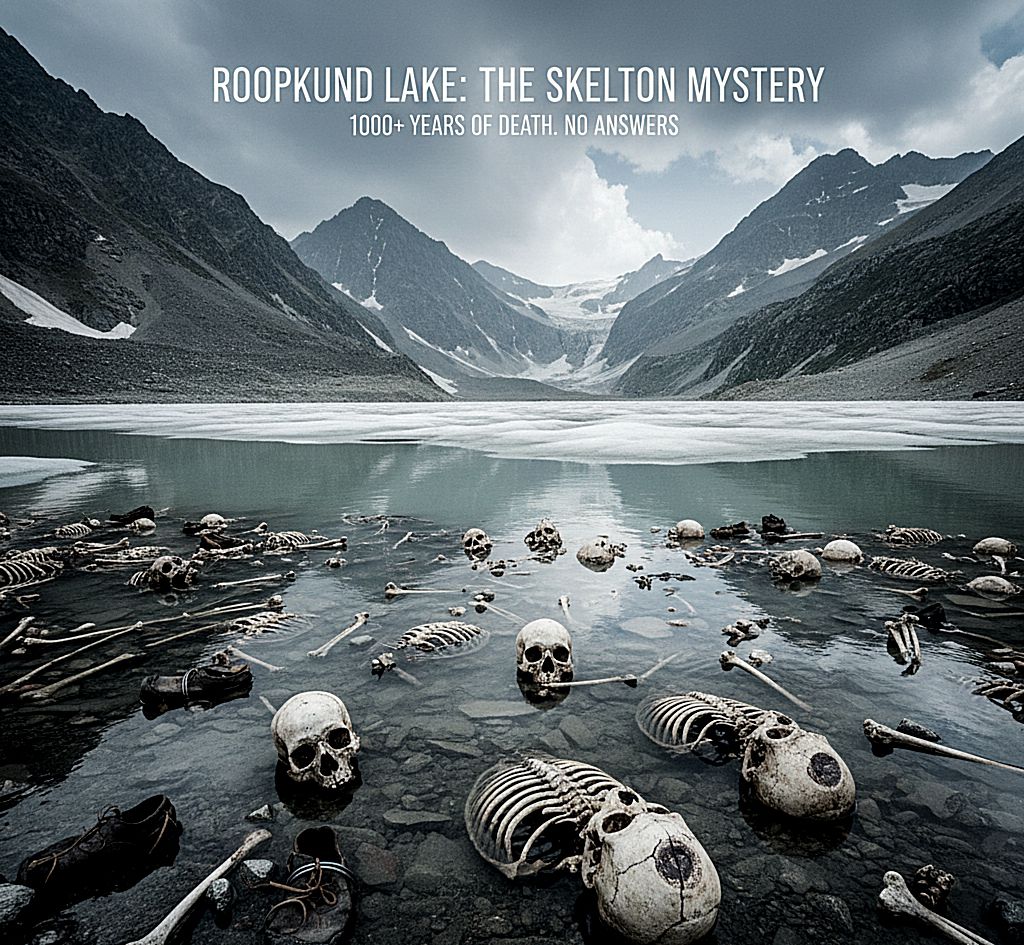
Roopkund Lake: The Skeleton Lake That Defies Science High in India’s Uttarakhand Himalayas, at nearly 16,500 feet above sea level, lies Roopkund Lake—a small, frozen basin that hides one of the world’s strangest mysteries. For most of the year it remains locked under ice, but when the snow melts, hundreds of human skeletons emerge along its shores and beneath its clear water. Discovered in 1942, the remains eventually numbered between 600 and 800, earning Roopkund the unsettling name “Skeleton Lake.” Early theories ranged from lost armies to epidemic outbreaks, but carbon dating quickly ruled those out. The skeletons were centuries old, and forensic studies revealed something chilling: many skulls showed round fractures on the top, as if struck from above. There were no signs of weapons or battle. This led scientists to a surprising conclusion—many victims likely died during sudden, violent hailstorms, where ice chunks at high altitude can become deadly projectiles. Local legends had long told a similar story: a royal pilgrimage angered a mountain goddess, who punished the travelers with a storm of “iron hail.” For years this was dismissed as folklore—until science began to echo it. The mystery deepened further with DNA analysis. The skeletons did not belong to a single group. Some were South Asian, likely local pilgrims, while others had Mediterranean ancestry, genetically closer to people from Greece. Even more puzzling, these groups died in different centuries. Roopkund was not the site of one tragedy, but many. Located along an ancient pilgrimage route to the Nanda Devi shrine, the lake may have acted as a deadly trap.Sudden storms, altitude sickness, and freezing temperatures could overwhelm unprepared travelers, preserving their remains in ice for generations. Despite modern science, Roopkund still refuses to give a single, clean answer. It stands as a frozen reminder of how unforgiving nature can be—and how easily human stories can vanish, leaving only bones.
2026-01-01
write a comment...