1/1
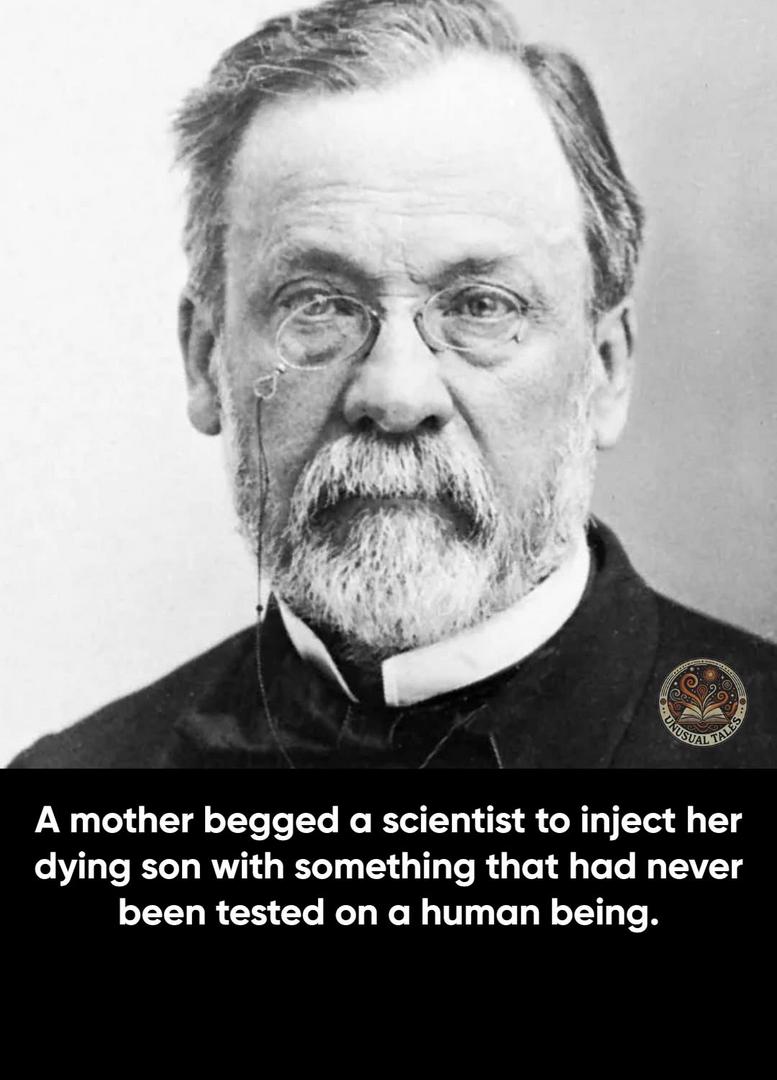
A mother begged a scientist to inject her dying son with something that had never been tested on a human being. It was July 1885 in Paris. Nine-year-old Joseph Meister stood trembling in Louis Pasteur's laboratory, his small hands and legs covered in deep bite wounds. Two days earlier, a rabid dog had attacked him in his village. The animal had been killed immediately afterward, and it was confirmed to have rabies. His mother knew exactly what that meant. In 1885, rabies was a death sentence. Once symptoms appeared—the terror of water, the violent convulsions, the hallucinations—no one survived. Not ever. The death was agonizing, sometimes lasting days, and there was nothing anyone could do but watch. But she had heard whispers about a chemist in Paris. A man named Louis Pasteur who had been experimenting with something that might help. She didn't know if the rumors were true. She only knew her son was going to die unless she tried. "Please," she said to Pasteur. "Save my son." Louis Pasteur was 62 years old and already one of the most celebrated scientists in Europe. His discoveries had transformed industries and changed how we understand the world. But he faced an impossible decision. He did have a vaccine for rabies. He had spent years developing it, testing it successfully on animals again and again. But it had never been given to a human being. Pasteur wasn't even a medical doctor—he was a chemist. If he injected this boy with an experimental treatment and the child died, Pasteur could be charged with murder. His career, his legacy, everything he had built could be destroyed. But if he did nothing, young Joseph would certainly die. Pasteur consulted with two physicians who examined the boy. Their conclusion was unanimous: without treatment, there was no hope. The vaccine was his only chance. Pasteur made his decision. They would try.
2026-01-07

Colleen King
my mom got bit by a dog who had rabies when she was little. The doctor gave her rabies shots in her stomach. my mom lived to be 84 years old. also, when we were kids we didn't have a choice on whether or not to get vaccinated. we had to get them to enter school. these days some parents choose not to vaccinate. I believe that is why some of our childhood diseases are coming back
01-09
Niles, OH
Reply
29

Robert Caruolo
He was a scientist that believed in God
01-09
Reply(12)
14

William Helmick
finish the fuckin story, tell us what happened 😒
01-08
Croydon, PA
Reply(1)
10

Linda Holland
key words that he had spent years developing not 2 months there's a difference
01-09
Township of Taylorsville, NC
Reply
7

Renee Spencer
AND? WHAT WAS THE OUTCOME???
01-07
Reply(6)
3

Kerry Durham
I'm guessing it DIDNT WRK?🤔Ud hv to put the human in a coma n make body Temps as low as possible without killing the human...if they can survive the deep coma for a few days n be revived I think they CAN combat the disease? 🤔..it's been done before w human surving but it's a big 'if' still 🤔
01-07
Davie, FL
Reply(7)
3

anonymousC
If you do not want a vaccine for yourself don't get one. If you die of some disease that was preventable, that is your choice. But don't take that protection from the rest of us, who want to live healthy lives. I can't take your guns (killing machines) from you, dont take vaccines (life giving) from me.
01-09
Amissville, VA
Reply
6

lost
All I got to say is I don't trust people to cure me who make there money off sick people 🤔. And guess what I don't get sick and haven't had a flu shot decades
01-09
Manteo, NC
Reply
4

Vincent Whitley
My understanding, at least from childhood, is that a series of 21 shots in the stomach was the cure for rabies...
02-20
Calhoun, GA
Reply
2

guest
I assume this is the first rabies shot and how we got a vaccine for rabbies. Sometime what it take is trial and error in order for us to get treatment for certain disease that has cause lots of deaths 🤔
02-14
Reply
1
More comments ...
write a comment...