1/2
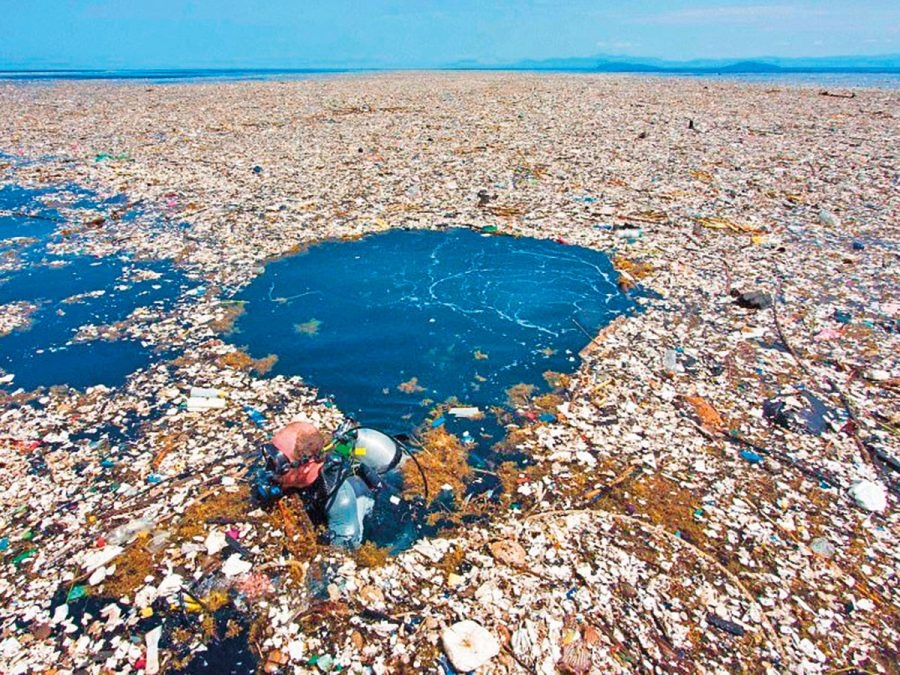

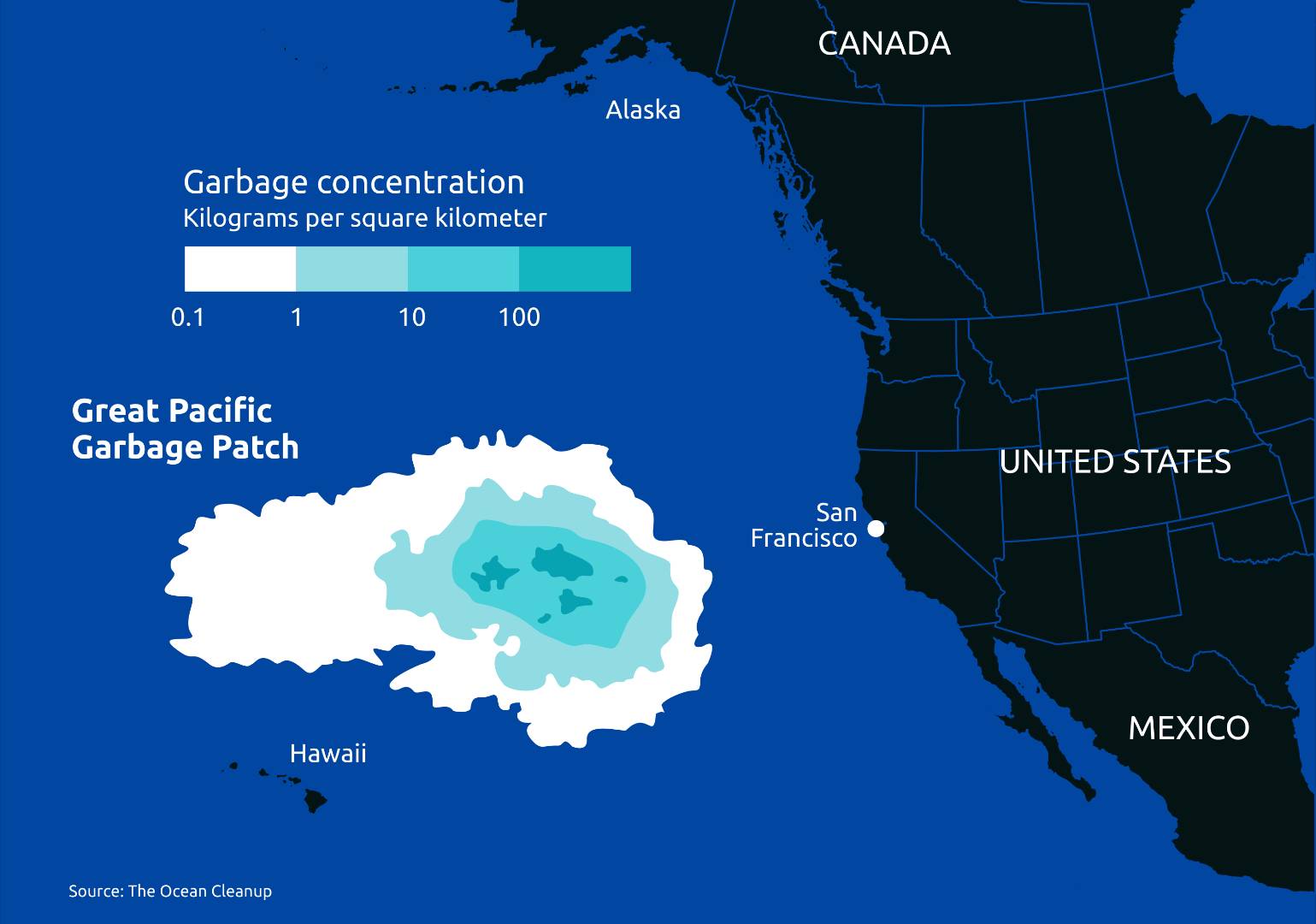
Twice the Size of Texas: The Pacific Garbage Patch The Great Pacific Garbage Patch is the largest collection of plastic in the ocean, but it is not a solid island of trash. It spreads across 620,000 square miles, about twice the size of Texas, in a floating web of debris carried by the North Pacific Subtropical Gyre between California and Hawaii. Scientists estimate it contains 79,000 to 87,000 tons of plastic, spread across 1.8 trillion pieces. Most of the pieces are tiny: microplastics smaller than 0.2 inches make up 94% of the pieces but only 8% of the weight. Bigger plastics over 2 inches, including hard plastics and discarded gear, make up over 75% of the weight, with lost fishing nets, ropes, and lines alone at 46%. About 80% of the plastic comes from land, including rivers, coastal trash, and poorly managed landfills, while 20% comes from ships and fishing boats. Much of it comes from Asian countries like China, Indonesia, the Philippines, and Japan. Debris from the 2011 Tohoku tsunami makes up about 20% of the larger trash. The patch is constantly moving. Currents carry debris from the surface to hundreds of meters deep, and studies show plastic concentrations in some areas exceed 1 million pieces per square kilometer. Multi-year monitoring reveals the total mass of plastic has grown by around 100% since the early 2000s, and microplastics now account for billions of pieces that penetrate marine food chains, including fish consumed by humans. Despite its size much plastic still sinks or drifts, meaning the patch represents only a fraction of global ocean plastic. Looking ahead, the patch is projected to expand as global plastic production rises, with an estimated 12 million tons entering oceans annually worldwide. Cleanup efforts are underway: projects like The Ocean Cleanup have removed over 100,000 pounds of plastic in pilot operations, and floating barriers and targeted microplastic filtration. #PlasticPollution #PlasticWaste #Pacific #OceanPollution
Texas • 2026-01-08

ice_ice_baby
We have found the perfect island to deport democrats. I mean, its fitting, a pile of trash on top of a pile of trash
01-09
Reply(8)
25

PHD.MD.BM
It’s not remotely true at all. Why do people believe this nonsense still.
01-09
Reply(10)
3

John
When you pull it from the ocean, then what do you do with it? Time to get away from plastic
01-08
Little Rock, AR
Reply
6

Edward Mitchell
why can't we get a couple of ships in there barges that have the open mouth and going and scoop this out we have the technology for that they use them in the dumps
01-08
Staten Island, NY
Reply
4

Huttoman from NY
Since we recycle plastics shouldn't there be a way to send in some ships to sweep up the area of plastics and recycle them?
01-08
Hutto, TX
Reply
3

William Balderson
This should be a grime to countries that created this and should have to pay to clean it up.
01-08
Reply
3

Cynthia Plamondon
We’re not in climate change and no amount of green energy or anything else will fix this. This is devastation by humanity. Where do you think our garbage is going because if it’s Washington state. All of these so-called recycling. Most of it goes in the garbage. With our technology there is no excuse for this kind of trash in the middle of our oceans.
01-09
Olympia, Washington
Reply(1)
2

Mr.J
It is actually crazy that thing thing exists.
01-08
Jackson, NJ
Reply(1)
2

Babe Truth
And It’s headed for America 😆
01-09
Beverly Hills, CA
Reply(2)
1

Paul Smith
Could be the new Somaliland.
01-08
Reply
2
More comments ...
write a comment...