1/1
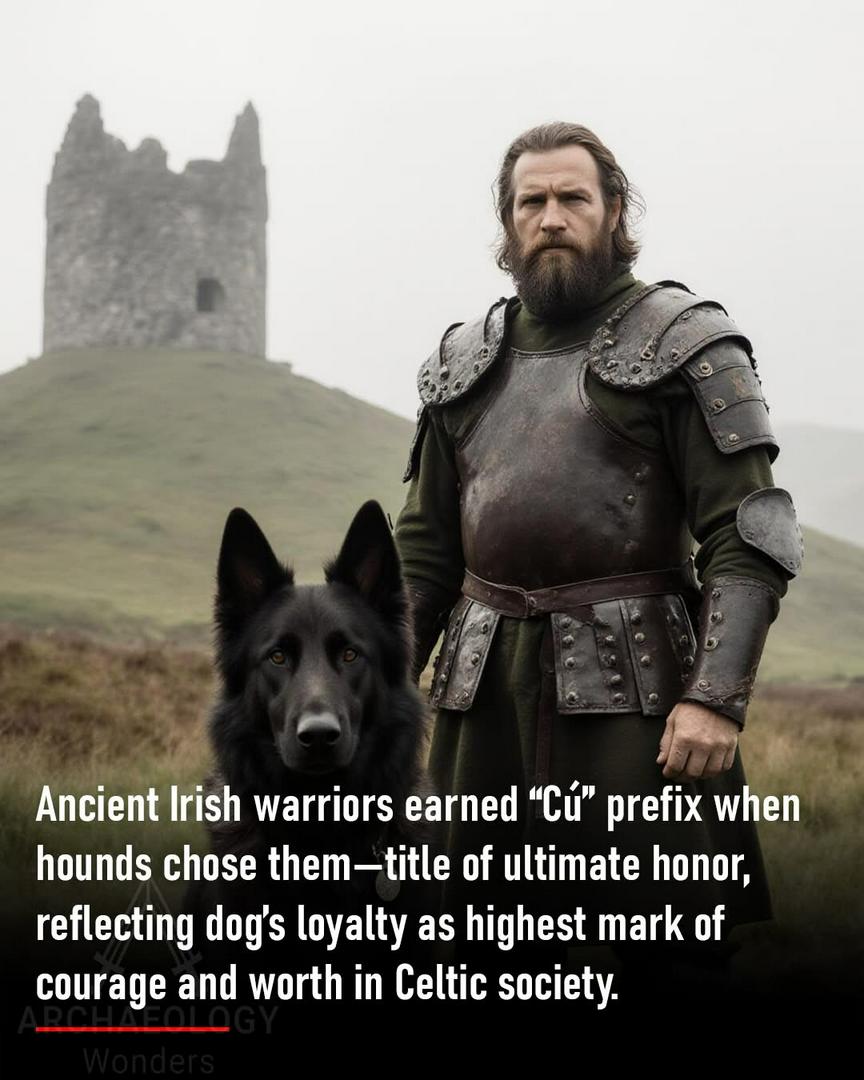
In ancient Ireland, dogs weren’t mere companions—they embodied loyalty, courage, and divine favor. Celtic society revered hounds as symbols of the warrior ideal: swift, fierce, and bound by unbreakable bonds. So profound was this respect that a king or hero proven worthy of a hound’s devotion earned the honorific prefix “Cú” (“hound”) before his name, marking him as one trusted by the noblest of beasts. This wasn’t casual flattery. The title reflected a cultural belief: only the truly valorous deserved a dog’s unwavering allegiance. Legends abound of hounds refusing food after their master’s death or fighting to the end beside fallen lords. The greatest hero, Cú Chulainn—“Hound of Culann”—earned his name after slaying a ferocious guard dog in youth, then offering to take its place until a replacement grew. “Cú” elevated men to mythic status: Cú Roí, Cú Faol—names echoing through sagas as paragons of honor. To bear it meant embodying the hound’s virtues: fidelity beyond reason, ferocity in defense, and a heart that chose its master freely. Ancient Ireland saw in dogs a mirror of the soul’s highest calling—loyalty not commanded, but given. #Facebookrepost
2026-01-12

tipbob
wow...I happen too have been blessed with an array of 4 legged companions. That article hit Home..My long life was/ has been a continuous battle of some sort.Rarely losing,I always had a fellow warrior or two beside me Standing there ground next to me,no matter the odds.I owe my life many times to these loyal friends.The Father chose dogs to be an example to humans Exactly what "Unconditional Loves" means...so far it hasn't worked🙏
01-12
Tucson, AZ
Reply
1
More comments ...
write a comment...