1/1

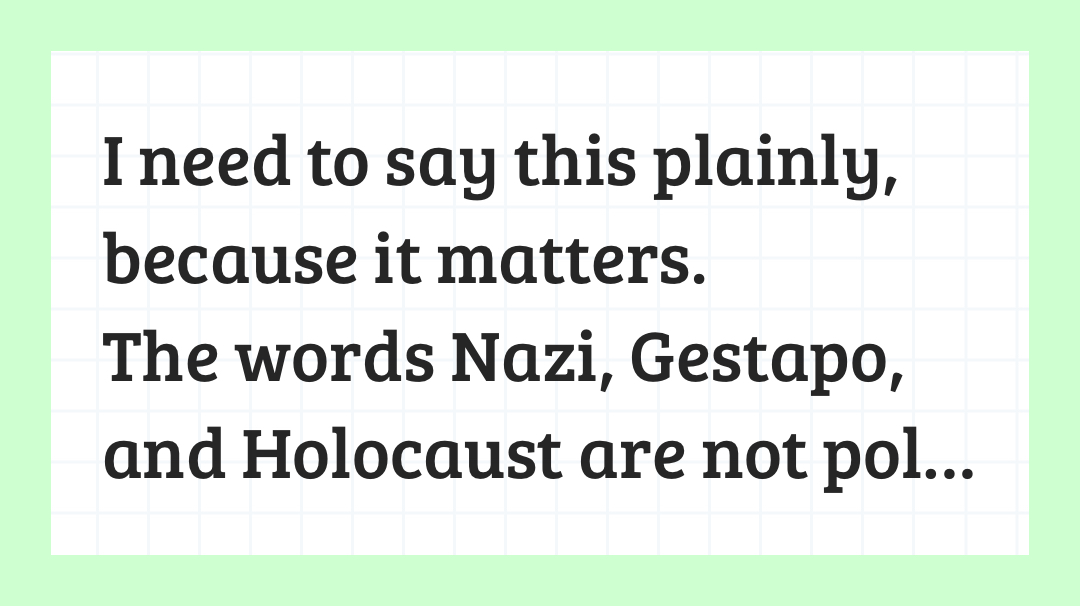
I need to say this plainly, because it matters. The words Nazi, Gestapo, and Holocaust are not political slogans. They are not metaphors. They are not interchangeable with “things I strongly disagree with.” They refer to a specific time in history — World War II — and to real, documented crimes committed against real people. My family lived this history. My mother never recovered from “the war.” Neither did her children. And neither have our children. Trauma does not end when a war does. It is carried forward — in memory, in silence, and in pain. My family is Sinti. My grandparents and relatives were persecuted by the Nazi regime. Members of my family were taken by the Gestapo, beaten, tortured, imprisoned in death camps, and murdered. My grandfather survived, but survival did not mean peace. Years later, he would still hold my hand with trembling fingers and tears in his eyes and tell me how lucky we were to be born in America. That is what these words mean to me. So when people casually invoke Nazis, the Gestapo, or the Holocaust to score political points, it is not passionate advocacy — it is profound disrespect. It uses the suffering of murdered families as rhetorical fuel. It flattens genocide into a talking point. It erases history rather than honoring it. If there are abuses of power, they should be confronted with facts, evidence, law, and moral seriousness. That work does not require — and should never rely on — false historical analogies that trivialize mass murder. My family’s tragedy is not a tool for anyone’s political agenda. History deserves accuracy. Victims deserve respect. And some words carry a weight that should never be used lightly — if at all — outside the context where they belong.
2026-01-16

Mark
Unfortunately, Trump and his administration want to bring on a dictatorship to this country. Trump would love to be the next Hitler.
01-16
Ridgeway, VA
Reply(88)
78

Derpy
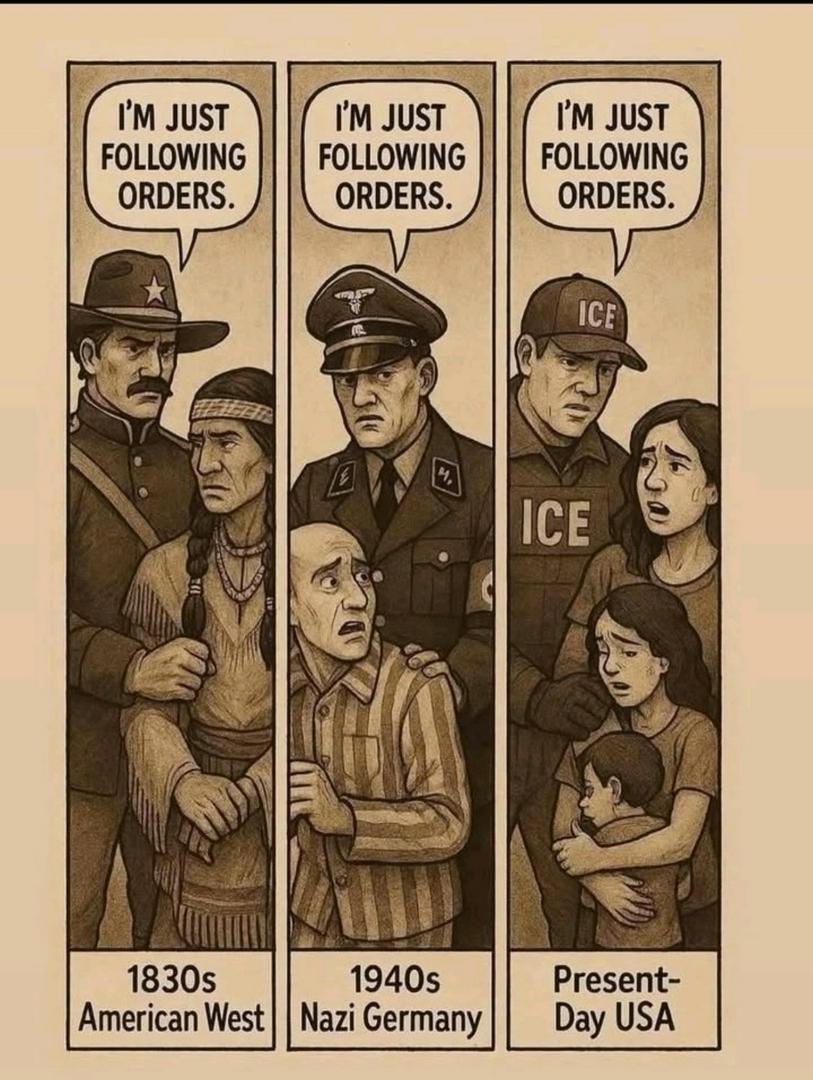
"My feelings are hurt because you told the truth!" 😭😭😭😭😭
01-16
Reply(67)
48

Rosie
01-17
Reply(7)
38
LiberalRnutZ
KNOW THE FACTS
This is where a lot of you've got it twisted. There is no Constitutional Right in the United States to protest, that's right. You heard me. There is no Constitutional, right that protects you to protest. What does exist is the right to peacefully assemble. That's it. No riots, no chaos, no burning s*** down, no intimidation, no blocking roads, no screaming obscenities. Peacefully assemble. You have the right to stand there. You have right to hold a sign. You have the right to assemble peacefully. Quietly lawfully without trampling everyone else's rights. The moment it becomes loud, destructive, coercive or threaten, it stops being protected and it becomes lawlessness. I'm glad we could clear that up.
Praying for ICE & Good people of MPLS Stuck in this MESS
BE GOOD
BE KIND
BE RESPECTFUL
BE LAW ABIDING
STUPID SAD HORRIBLE HORRIFIC SENSELESS DEATH - makes you want to throw up
ANGRY because SHE should have listened, had respect, let the police do their job, not been in that wrong place
FAFO is a horrible truth
STOP THE CRAZY
Protesters /City & State Leaders - STOP The rhetoric you are CAUSING these problems
YOU CAN'T PLAY THESE GAMES
Quit listening to your little organizer friends/ ORGANISED crime who is paying you - encouraging you to stand in harm's way
RESPECT authority- police allow way too much in an attempt not to escalate
But you run the RISK - if you put yourself There of things POSSIBLY going badly- is it worth it???
SAD SENSELESS DEATH
HORRIBLE decision s
01-18
Topton, PA
Reply(14)
13
Rosie

01-17
Reply(6)
18

Myrdinn_Wyltt
Liberals talking over someone's lived experiences because it doesn't fit their narrative like usual. God forbid they shut up and listen for once.

01-21
Beaverton, OR
Reply(14)
13

Billp2828
I knew this lady was a quack when she started talking about grandchildren being traumatized. some people are just losers looking for something to blame.
01-16
Reply(13)
12

Cheryl Robertson
I'm sorry for your family, but I do see things happening today that were the beginning of Hitler regime we are not fully there yet. Do you know that we are using people as experiments to see about diseases letting them live with it not helping them on purpose. people are dying in detention camps from starvation and maltreatment aka torture. people are being papered in their homes and on the streets, they are being shot at and murdered by ice because their different or protest yes this is living the beginning of the Hitlers regime again
01-16
Paragould, AR
Reply(11)
13

Paul Andrews
Your family's personal tragedy doesn't give you a patent on use of the Nazi labels. There's an old saying that those who ignore the lessons of history are doomed to repeat them
01-16
Corpus Christi, TX
Reply(3)
9

Jay Freeman
Totally disagree with this. My mother was a Holocaust survivor. She was in tears watching Trump's rallies in '24 saying she never thought she'd hear the exact type of speech she did by the Nazis. This administration IS using Nazis propaganda and the ICE agents ARE using Gestapo tactics. Pointing this out is NOT about scoring political points. Instead it points out the very real danger this administration is putting our once great country in.
01-19
Gresham, OR
Reply(1)
8
More comments ...
write a comment...