1/1

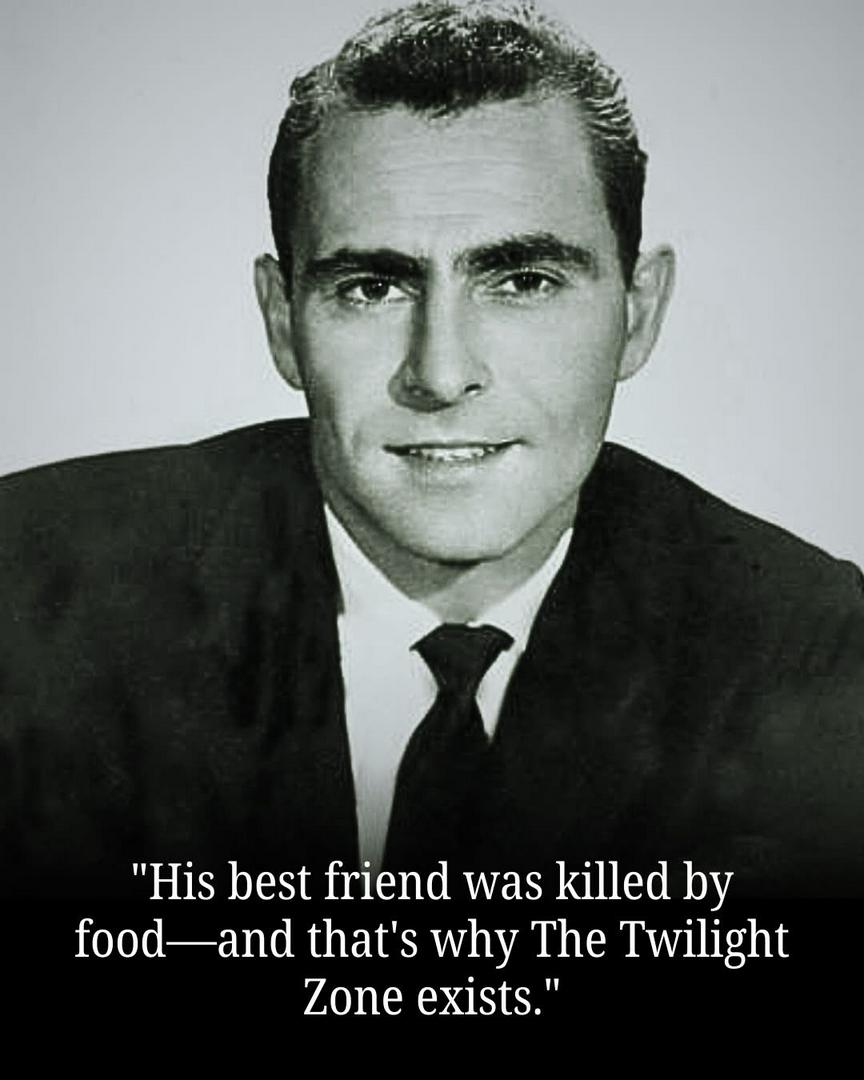
His best friend was killed by food—and that's why The Twilight Zone exists. Rod Serling was born on Christmas Day, 1923, in Syracuse, New York. As a kid, he was that child—the one who never stopped talking. He'd narrate entire radio dramas in his basement, performing every character for hours. His family learned to stay quiet during car rides just to see if he'd notice the silence. He never did. By high school, he was 5'4", wiry, relentlessly energetic. The day after graduation in 1943, he walked into an Army recruiting office. He wanted to fight Nazis. He dreamed of being a tail gunner on a B-17, raining destruction from the sky. His eyesight wasn't good enough. So he chose the paratroopers instead. Even that was a fight—at 5'4", he was considered too small. The rules were clear. Serling talked his way in anyway, convincing officials that courage had nothing to do with height. They sent him to Camp Toccoa, Georgia—a place designed to break men. Every morning at five, soldiers ran a seven-mile hill at a 45-degree angle in full gear. The ones who couldn't make it got sent back to regular infantry. Private First Class Serling made it. More than that—he thrived. He took up boxing, fought 17 bouts as a flyweight with a wild, berserker style that terrified opponents. He broke his nose twice. He picked fights with tankers and infantrymen just to prove his size didn't matter. In April 1944, his orders came. He'd be shipping out—not to Europe, but to the Pacific. He'd be fighting the Japanese, not the Nazis. He was disappointed. But he went. What Serling didn't know was that his commanders had a problem with him. He was creative, mouthy, bad at following orders he thought were stupid. He wandered off. He didn't take care of his equipment properly. He got on people's nerves. So they transferred him to the demolition platoon—nicknamed "The Death Squad" .
2026-01-17

Marion Marcetic
Rod Serling Was The Greatest Most Genius Writers Of Sci-fi And Fantasy Together In The Whole World!!!🙏🙏🙏👼👼👼🥰🥰🥰❤️❤️❤️⚔️⚔️⚔️‼️
01-17
Allen Park, MI
Reply(3)
22

Lorraine Lafond
that doesn't make any sense to me .it never mentioned is friend dying of food .
01-18
Jackson, MI
Reply
18

yourmom
thank you for this info! never knew any of this 👍5'4" is wild!!!!
01-17
Maumee, OH
Reply
12

Colleen Moore
WOW who knew very interesting … I always liked his voice !!
01-17
The Villages, FL
Reply
11

Carolyn T
who writes this crap... title has NOTHING to do with the actual story and it just stops. wth? go back take some writing courses before publishing another article
01-19
Tyler, TX
Reply(1)
9

Kenneth Tsyitee
What was it? Death by 🌭🌭🌭🌭🌭🌭?
01-17
Albuquerque, NM
Reply
7

Carmen De
Wheres the rest of the story?
01-20
Cincinnati, OH
Reply(2)
5
Marion Marcetic
Correction Rod Serling Was Born In 1924!!!
01-17
Allen Park, MI
Reply
6

Darreal Ruble
a crate of supplies that was parachuting down crushed his buddy🙏
01-18
Bloomington, IN
Reply(1)
5
More comments ...
write a comment...