
1/2
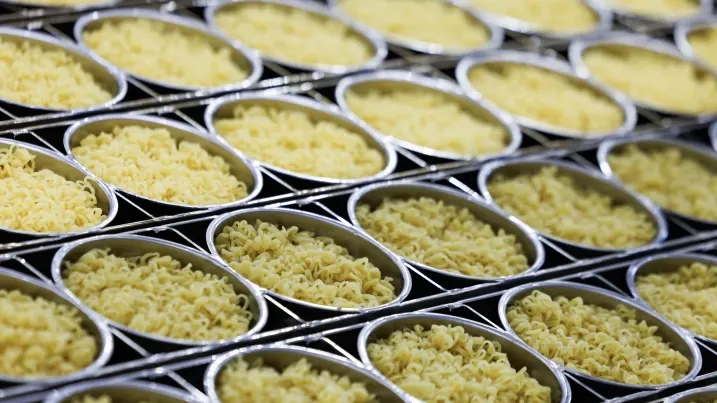
That’s a 5.1% increase from a year earlier and marked the tenth consecutive year of growth. Instant noodles, or ramyeon, were the standout. Exports jumped nearly 22% to $1.52 billion, making it the first single food category to surpass $1 billion in overseas sales. Cheese-flavored spicy noodles and other new products resonated with consumers in China, the U.S., and emerging markets in Central Asia and the Middle East. “Global demand for Korean noodles continues to expand, and companies have scaled up production and stabilized supply chains to meet it,” the ministry noted in a late‑2025 report. Other categories also gained traction overseas, with Korean sauces benefiting from the demand for spicy and sweet flavors, while ice cream and fruit exports rose too. Riding K-pop’s coattails What makes the humble pack of South Korean instant noodles so popular? Analysts say culture plays a big role. The massive appeal of K-pop and Korean television dramas has helped fuel demand, with food frequently featured on screen. Characters are often shown eating ramyeon in dramas, variety shows and advertisements. Just as K-pop companies are looking overseas for growth, Korean food makers, especially those selling ramyeon, are doing the same, said Oh Jiwoo, analyst at brokerage CGS International. Nongshim CEO Cho Yong-chul told employees at the start of 2026 that the company’s business principle for the year was “Global Agility & Growth,” urging staff to expand its overseas footprint. Otoki CEO Hwang Sung-man said at a shareholder meeting in March 2025 that the company, best known for its Jin Ramen, would prioritize “exploring global markets” and aim for an overseas sales revenue of 1.1 trillion won ($746 million) by 2030. CGS’ Oh said companies are looking beyond South Korea’s shores because the domestic market is saturated. For example, Nongshim, best known for its Shin Ramyeon brand, holds over 60% market share in South Korea. “Their main product was first invented in 197
5 days ago
write a comment...