1/1

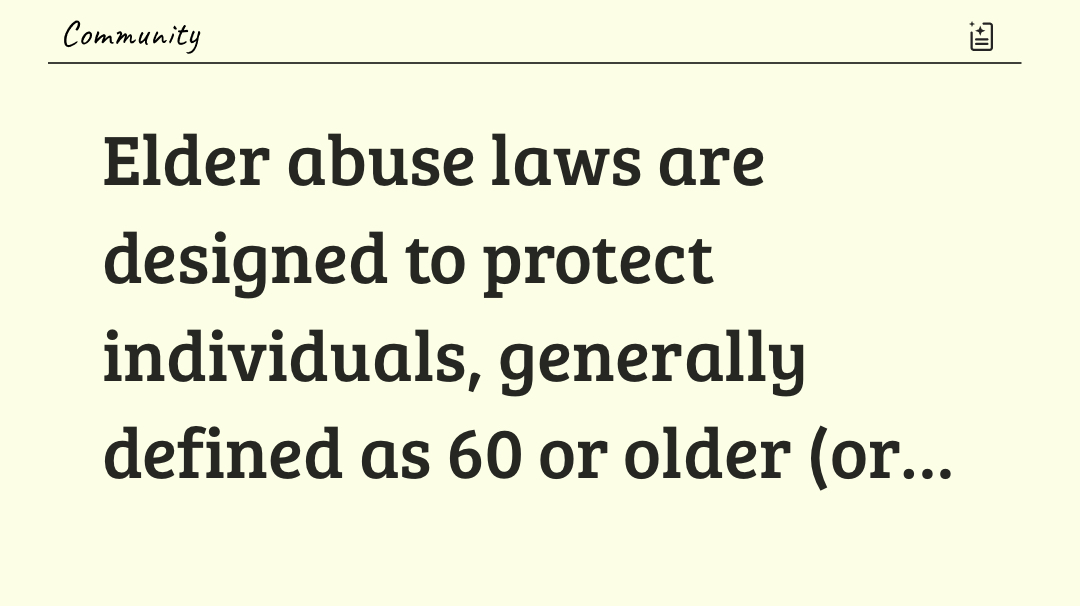
Elder abuse laws are designed to protect individuals, generally defined as 60 or older (or sometimes 65+ depending on the state), from physical, emotional, financial, and sexual abuse, as well as neglect and abandonment. In Pennsylvania, the Older Adults Protective Services Act (OAPSA) mandates reporting of abuse for employees in care settings, while providing voluntary, anonymous, and protected reporting for the general public. [1, 2, 3] Key Aspects of Elder Abuse Laws (PA Focus): • Definition of Abuse: Includes inflicting injury, unreasonable confinement, intimidation, punishment, and willful deprivation of necessary care by a caretaker. • Target Population: Adults 60 years of age or older. • Mandatory Reporting: Employees and administrators in care facilities must report suspected abuse. • Penalties: Abusive conduct, including the misuse of chemical/physical restraints or financial exploitation, is illegal and punishable. • Reporting Hotline: 1-800-490-8505 is the 24-hour hotline in Pennsylvania to report suspected elder abuse. [1, 4, 5, 6, 7] "Dependent Adult" Protection (Younger Adults):While "elder abuse" specifically refers to older adults, laws often cover younger, disabled adults under "dependent adult" or "vulnerable adult" statutes. • Definition: A dependent adult is generally defined as an individual aged 18-64 who has physical or mental limitations that restrict their ability to carry out normal activities or protect their rights. • Coverage: These laws, such as in California, provide similar protective services to those 18-64 who are functionally dependent. [11, 12] Financial Exploitation (PODO/POA):A significant focus of new legislation is preventing financial exploitation, often by family members or those holding power of attorney (POA), now commonly referred to as PODO (Power of Designated Officer or similar, often relating to financial exploitation cases). • New Task Forces: Pennsylvania has launched an Elder Exploitation Section
Pennsylvania • 2026-01-23

Robby spyde
that's not true that don't do anything we have made report after report the person being reported is a cop my mom made him power of attorney he is stealing every thing she has and charges her 600$ to live in her own house stalks her ever move. but him being a cop no one does anything
01-23
Panama City, FL
Reply
More comments ...
write a comment...