1/1

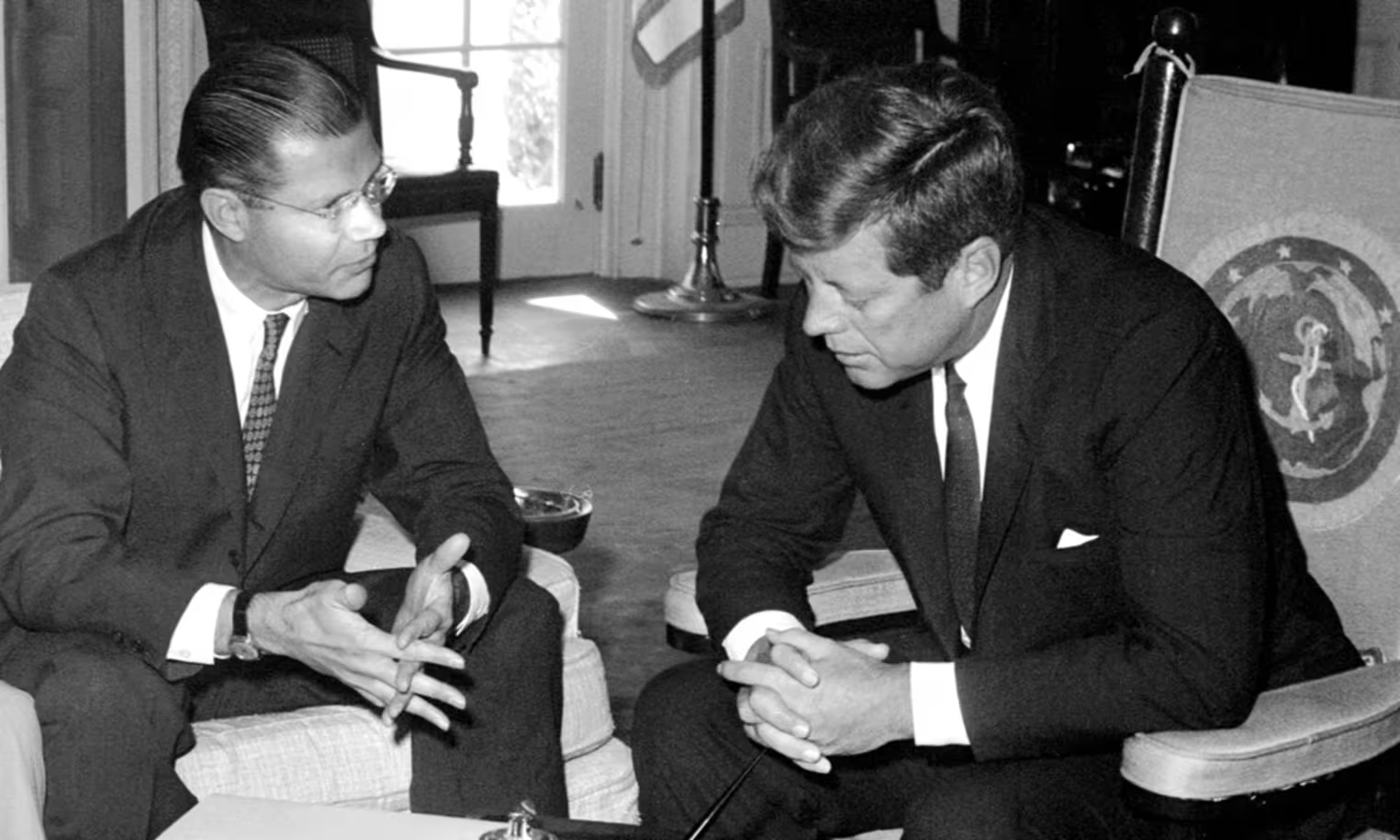
Assured Destruction: The 1961 Plan That Made Nuclear War Unthinkable Robert McNamara created Assured Destruction after becoming U.S. Secretary of Defense in 1961 under President Kennedy, proposing it after reviewing nuclear plans. The U.S. had about 1,200 strategic warheads aimed at the Soviet Union, China, and Eastern Europe. Major cities were targeted with multiple warheads. A full nuclear exchange could kill 200–300 million civilians and destroy 60–70% of industrial capacity, making war unthinkable. Assured Destruction aimed to prevent nuclear war by ensuring any attack on the U.S. could be met with a retaliatory strike capable of destroying much of the Soviet Union. It set limits for deterrence. The U.S. had to survive a first strike and retaliate to destroy 20–25% of the Soviet population and 50% of its industry. Analysts mapped cities, factories, rail hubs, and power centers and found 75% of Soviet heavy industry in 10% of cities, ensuring retaliation. U.S. nuclear forces were redesigned to survive. Missile silos could withstand 50–70% of strikes. Submarine-launched missiles carried 16–20 warheads each, while B-52s carried 2,000+ bombs, with about 400 on continuous alert. Missile defenses could stop only 10–15% of incoming warheads and risked encouraging first strikes. Assured Destruction rejected limited nuclear war. Modeling showed 100–200 warheads could escalate rapidly. During the Cuban Missile Crisis, the Soviets had 100+ warheads in Cuba and 300+ strategic warheads elsewhere. Assured Destruction differs from Mutually Assured Destruction (MAD). Assured Destruction defined U.S. deterrence. MAD, emerging around 1967, described the situation once both sides had secure second-strike forces. Any first strike guaranteed self-destruction. By turning catastrophic numbers into limits, Assured Destruction made nuclear war with the Soviet Union unthinkable. Even 150 warheads could destroy the country, showing restraint was the only safe choice. #History #USA
2026-01-23

non negotiable
they make nukes bigger than that today but even assured kill look like Overkill Ronald Reagan and Gorbachev in agreement destroyed a lot of all those old Cold War weapons that have been in storage
01-24
Bethel, PA
Reply

Michael T
The world learned nothing as EVERY Communist leader continues to threaten NUCLEAR WAR on an almost daily basis!
01-25
Pueblo, CO
Reply

ANGEL OF DEATH 1986
one of the best days in America 11/22/63
01-24
Reply
More comments ...
write a comment...