1/1

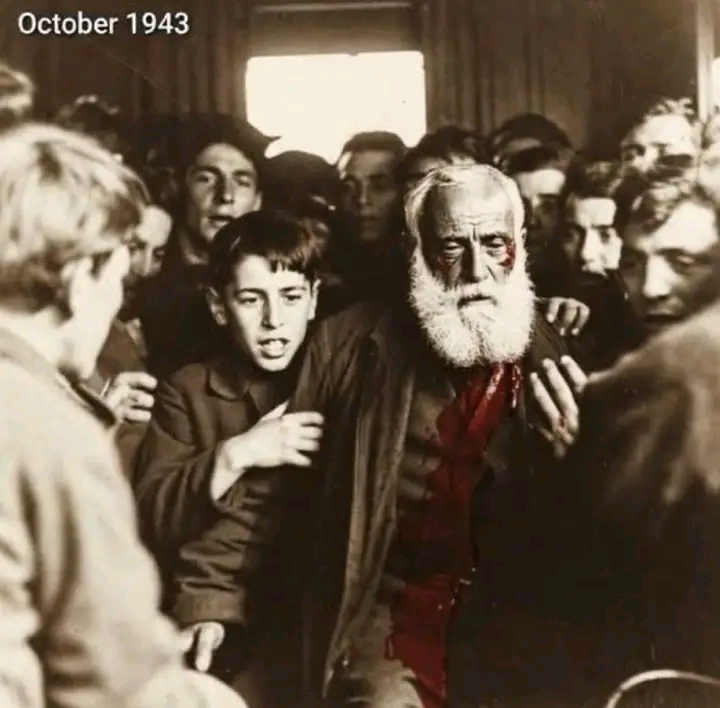
In October 1943, a Nazi death train carrying 800 Jewish prisoners from Belgium to Auschwitz was traveling through the French countryside. Among the prisoners was a fifty-six-year-old rabbi named Moshe Weinberg and a fifteen-year-old boy named David Rosenberg, unrelated but packed into the same cattle car with forty other people. The conditions were hellish - no food, no water, no sanitation, barely any air. People were dying from suffocation and dehydration. On the second night, three young men in the cattle car managed to pry open a ventilation slat, creating a small opening - barely eighteen inches wide - through which people might escape if they were small and flexible enough. The men began organizing an escape. They decided to send the children first - anyone under sixteen who could fit through the opening. David, at fifteen and thin from starvation, could fit. But there were seven children younger than David, and the train was speeding up. They might only get a few people out before guards noticed. Rabbi Weinberg, despite being fifty-six and too large to fit through the opening himself, helped organize the escape. He lifted children to the opening one by one, helping them squeeze through, dropping them onto the tracks as the train moved. It was incredibly dangerous - children were hitting the ground at high speed, risking death or injury from the fall or being run over by following cars. But it was their only chance. Seven children under twelve were pushed through. David, at fifteen, was next. Rabbi Weinberg lifted David toward the opening. But before David could squeeze through, Nazi guards noticed what was happening. They began shooting into the cattle car. Bullets ricocheted off metal walls. People screamed. Rabbi Weinberg, still holding David, made a split-second decision. Instead of pushing David through the opening where he'd be shot while escaping, Rabbi Weinberg pulled David down and covered him with his own body, shielding David from the bullets. Three
2026-01-23

Linda Kiki
Apparently the people making these stupid comments don't believe that the Nazi party killed over 6 million people. These same stupid people believe all of the lies that are fed to them by their hero who is distroying this country.
01-23
Spokane Valley, WA
Reply(145)
280

Allen Kranawettrr
Democrats were cheering
01-23
St. Louis, MO
Reply(80)
39

engineersteveo
The democrat party is nearly identical in policy to the NAZI party of WW2
01-25
Stone Lake, WI
Reply(25)
39

Kathy Lindstrom
Nazi’s sound alot like the crazy leftists
01-24
Kalamazoo, MI
Reply(15)
33

dmadland2
Never forget
01-24
Park Ridge, IL
Reply(9)
35

Ronald Dodrill
barack Obama did the same thing....barack Obama sent more immigrants back than Donald Trump has...barack Obama has sent more immigrants out of this country than Donald Trump. barack Obama has deported more immigrants than Donald Trump!!! say it again...Barack Obama has deported more immigrants than Donald Trump.
02-09
Ormond Beach, FL
Reply(23)
25

vmm
Thanks to those trying to protect immigrants from ICE. Let’s be humane about this. Democrats save Americans from the felon and his goons!
01-24
San Antonio, TX
Reply(5)
32

William Fredericks
It takes a lot of courage to help someone when you know your outcome is death.
01-24
Pottsville, PA
Reply(2)
26

possum
Democrats want to do that again
01-25
New Orleans, LA
Reply(16)
17
More comments ...
write a comment...