1/1

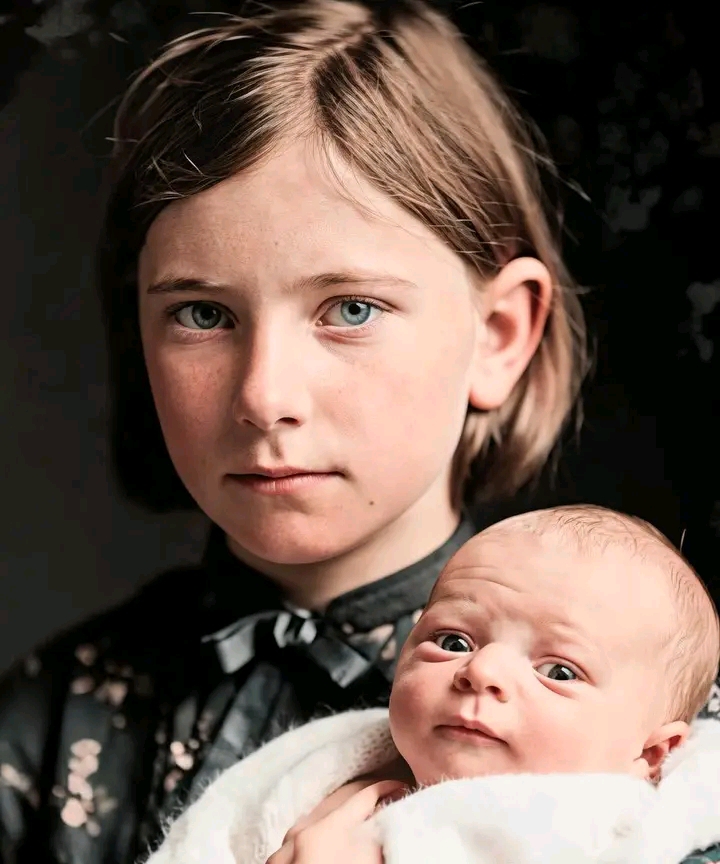
In the summer of 1905, fourteen-year-old Ruth Patterson faced a choice no child should ever have to make — and the decision she made would shape the next seventy years of two lives. After a deadly tenement fire took the lives of their parents, Ruth and her six-week-old brother, Daniel, were sent to a New York orphanage. It didn’t take long for Ruth to learn the truth: the institution would not keep an infant and a teenage girl together. Daniel would be sent elsewhere, and Ruth would be placed alone. Separation was unthinkable. On the morning Ruth was scheduled to board an Orphan Train to Nebraska, she made her plan. She slipped Daniel from the nursery, tucked him into a large leather carpetbag, and buttoned the top shut. For days she had quietly cut tiny air holes in the bottom so he could breathe. The matron believed the bag held only clothing. Ruth knew it held her entire heart. During the three-day journey, Ruth kept Daniel hidden at her feet. She soothed him when the train clattered, fed him when they made night stops, and changed him in the small bathroom whenever she could. Every minute was a battle against discovery. If anyone looked inside the bag, she and Daniel would be sent back to New York — and separated forever. But the secret stayed safe. When the train reached Nebraska, a farming couple named Johnson chose Ruth from among the children. They saw something steady in her, something brave. They loaded her and her carpetbag into their wagon and brought her to their home. Only once the door closed behind them did Ruth open the bag. Baby Daniel lay inside. The Johnsons were stunned. Ruth, shaking, told them everything: the fire, the orphanage’s rules, the train, her fear of losing the only family she had left. Her voice cracked as she begged them not to send Daniel away. The couple looked at the baby, then at Ruth — pale from fear, exhausted from three days of vigilance — and their decision became clear. “We were sent two,” they said softly. “We
2026-01-23
Jtelercat
How did she feed him?
01-24
Saint Paul, MN
Reply(32)
25

Luigi
14 year olds back then were like 20 year olds, unlike today where 20 year olds are like 12 year olds.
01-25
Reply(3)
30

Annabelle123
What an amazing sister!
01-24
Bowling Green, VA
Reply
31
Jtelercat
How did this baby survive? How did she feed it? It was her brother, not her son. No breast milk to feed him. 🤔
01-25
Saint Paul, MN
Reply(18)
14

Rachael
So heartwarming! God guided her to that wonderful family and provided protection on their journey 💕🙏🏼
01-24
Meriden, CT
Reply
16

Shayla58
What An Amazing Big Sis.... Kudos To The Johnson's Too, And Prayers For Them All 🙏👍🥰
01-24
Reply
13

Josephine Marzullo
Why do these stories stop mid sentence? It’s maddening.
01-27
West Warwick, RI
Reply
13

Charles Palmer
at 6 weeks a baby could suck liquid out of a rag if worse comes to worse it wouldn't have to be milk either it would keep the baby hydrated is most important,juice flour and water bread dissolved in water would work for awhile broth maybe. people have been in worse situations. at the orphanage I pretty sure babies weren't being breastfed if they were adopted they weren't either. so don't make this harder than it has to be.
01-26
Lebanon, PA
Reply
10

Shirley Vangilst
GOD BLESS THE JOHNSONS FOR KEEPING BOTH. 🙏🏼🙏🏼🙏🏼🙏🏼🙏🏼🙏🏼🙏🏼 I WOULD HAVE DONE SAME HAD BEEN IN HER SHOES.💕
01-27
East Wenatchee, WA
Reply
10

Teensey Kay
What an ending!!!
01-24
Kevil, KY
Reply(2)
8
More comments ...
write a comment...