1/1

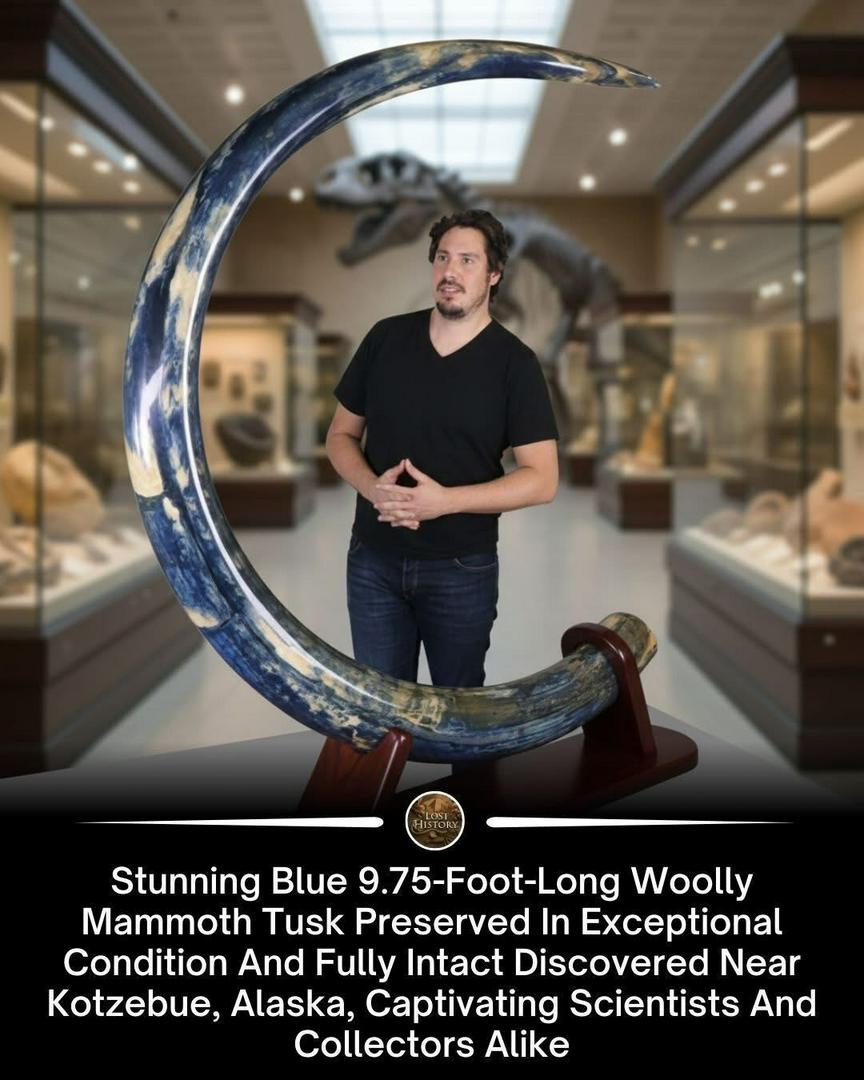
Remarkably blue woolly mammoth tusk, measuring 9.75 feet long, has been discovered near Kotzebue, Alaska, preserved in extraordinary condition and fully intact. Its immense size, pronounced curvature, and dense ivory make it one of the most extraordinary specimens ever recovered. The striking blue coloration comes from rare vivianite mineral present throughout the tusk, interwoven with soft creamy tones. Vivianite forms when apatite in bone and ivory reacts with iron, creating vivid green-blue hues. The result is a color reminiscent of Earth viewed from space, making the tusk visually stunning as well as scientifically significant. Experts note that the fossil’s preservation is exceptional. Dense, solid ivory and complete integrity allow for detailed study, while Schreger line angles distinguish it from modern elephant ivory. This level of preservation is rare, and such tusks are often refined, polished, and collected due to their aesthetic and scientific value. Weighing 119 pounds with a circumference of 18.5 inches, this tusk stands out not only for size but also for its rarity and visual impact. Mammoth ivory of this quality can be traded legally without CITES restrictions, making it a unique specimen in both paleontology and private collection circles. This blue woolly mammoth tusk reminds us that the Ice Age continues to reveal remarkable treasures. It connects modern observers with creatures that roamed Alaska thousands of years ago, preserving both scientific insight and awe-inspiring beauty. #losthistory #fblifestyle #history #iceage #archaeology #mammoth #facebookrepost
2026-01-27

Michael Neiman
That is so beautiful
01-28
Virginia Beach, VA
Reply(1)
2

GenX
Amazing find
01-28
Duff, TN
Reply(1)
2
More comments ...
write a comment...