1/1

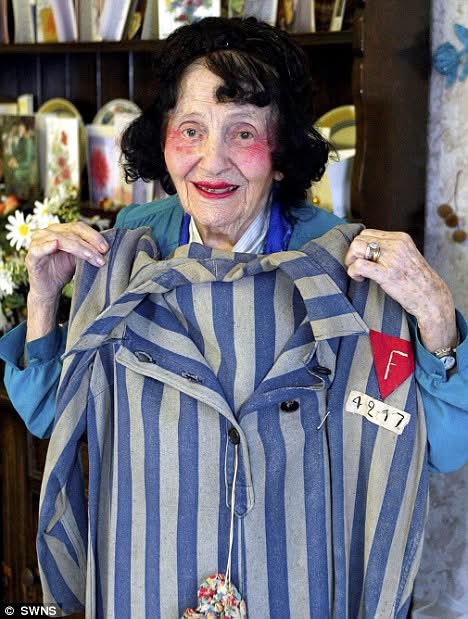
The photograph is striking: an elderly woman holds a faded blue-and-grey striped prison uniform -- the one she was forced to wear in the Nazi concentration camps. A red triangle on the fabric marks her as a political prisoner. Her name was Andrée Peel -- known to the French Resistance as "Agent Rose" -- and she kept this garment for the rest of her life as a reminder of what she endured fighting for freedom. When German soldiers marched into the port city of Brest in June 1940, the 35-year-old beauty salon owner committed her first act of defiance: she hid fleeing French soldiers and found civilian clothes for them so they wouldn't be captured. Days later, when General Charles de Gaulle declared on the radio that "France has lost a battle, but she has not lost the war," Peel and her friends typed out his words and slipped copies through letterboxes across the city. Within weeks, she was leading an under-section of the Resistance. Under her code name "Agent Rose," she passed intelligence on German naval movements and troop positions to the Allies. Her most dangerous work came at night: she and her team used torches to guide Allied planes to improvised landing strips, then smuggled downed British and American pilots through a network of safe houses to remote beaches, where they escaped on submarines and gunboats. Over three years, she saved the lives of 102 Allied airmen. In 1943, when the Gestapo closed in on the Brest network, Peel fled to Paris and assumed a new identity. But shortly after D-Day, a fellow Resistance member broke under torture and revealed her location. She was arrested and taken to Gestapo headquarters, where she was stripped and interrogated. The Gestapo tortured her, using methods that included simulated drowning and beating her throat; the damage she suffered from their interrogation would cause her pain for the rest of her life
2026-02-14

MrWicked98
Who knew it would be republicans who brought back concentration camps and Gestapo police.
02-15
Florissant, MO
Reply(25)
27

Robert Chapman
We best not forget people like her and more who stood against evil.
02-15
Warren, MI
Reply
33

i dont care66
And soon we will all be wearing one if we don’t get this administration out
02-16
Roswell, NM
Reply(7)
28

Caitlin Rothwell-Jones
In this day and age… be like Agent Rose.
02-14
Cuyahoga Falls, OH
Reply
31

Marsha Brenner
A True Hero🙏🏼👍🏼
02-14
Jamestown, TN
Reply
31

Frank Silver
amazing women, God bless her!🤔
02-14
Montrose, PA
Reply
27

Yvonne Mikulencak
She is a hero and needs to be remembered for all she did💕
02-14
Houston, TX
Reply
26

Ibascary1
I would hope I could stand as strong as she did! 💕
02-15
Glouster, OH
Reply(1)
25

LilBidd
02-15
Paducah, KY
Reply
23

Patty Thompson
I'm so sorry about what you went through
02-14
Springfield, MO
Reply
21
More comments ...
write a comment...