1/1
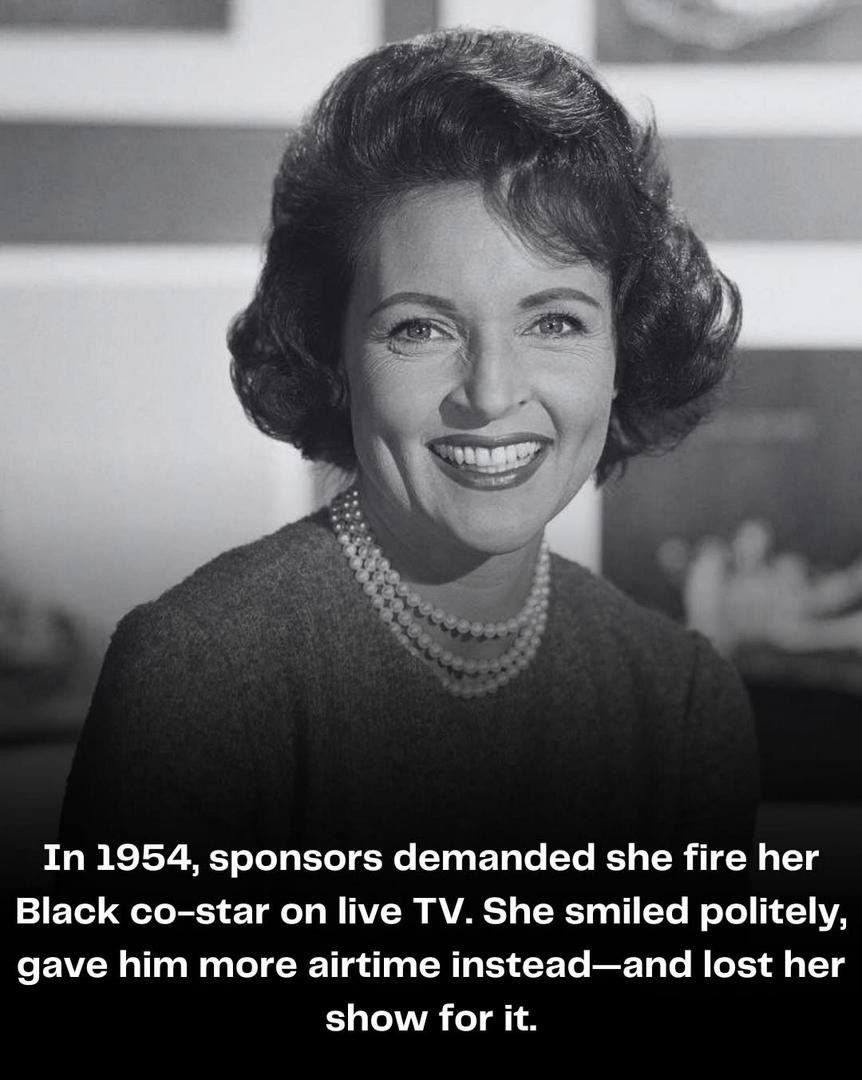
In 1954, sponsors demanded she fire her Black co-star on live TV. She smiled politely, gave him more airtime instead—and lost her show for it. Betty White spent eighty years making America laugh—and just as long dismantling every boundary Hollywood placed in her way. Before she became America's grandmother, before she was the nation's sweetheart, before the memes and the late-career renaissance, Betty White was a 1940s television insurgent doing things women were simply not allowed to do. She wasn't just acting on television. She was writing scripts. Producing segments. Running entire shows. Making creative decisions that were supposed to be reserved exclusively for men. At a time when women weren't welcome in writers' rooms, when female perspectives were considered commercially unviable, when actresses were expected to smile, say their lines, and defer to male authority on every creative question, Betty White controlled her own content. While other actresses waited passively for roles to be offered, Betty built them herself—armed with impeccable comedic timing, sharp intelligence, and a smile that could disarm and devastate in equal measure. Then came 1954, and the moment that revealed exactly who she was beneath the charm. Betty was hosting her own variety program, The Betty White Show, on NBC. It was a daily talk show—live, ambitious, and entirely under her creative control. One of her regular featured performers was Arthur Duncan, a gifted Black tap dancer whose performances lit up the stage every week with genuine joy and extraordinary talent. Then the letters started arriving. Angry viewers—especially from Southern affiliates—demanded Arthur Duncan's immediate removal from the show. They didn't want to see a Black performer featured regularly on their television screens. Sponsors echoed the complaints, threatening to pull advertising support. . #
2026-02-15

Fuddy Duddy
Now it has swung so far to the left that every commercial, sitcom, and drama has a mixed-race couple…or is solely portrayed as a totally black caste? That isn't reality…no it’s propaganda! It is pushing an agenda and is no better than it was in the 1950’s. What hypocrisy!
02-15
Barrington, IL
Reply(26)
27

Kate
Betty White was one hell of a class act and she was so loved by a lot of people and she was an animal rights activist. Loved her on The Golden Girls! She was an amazing actress and a great comedian
02-16
Cinnaminson, NJ
Reply(1)
28

Mountain@man
A true American Cultural icon
02-15
Littleton, CO
Reply(3)
24

Tonae Sting
Betty brought joy and laughter every where she went/she is the only person that I can think of that got better with age💕
02-15
Jackson, MS
Reply
24
Hay TuAwl
Betty White was an absolutely amazing human being. I never liked watching Golden Girls, just not my kind of show, but Betty was still hilarious, a gifted actress and genuine person off screen. lake placid is still one of my favorite movies. I used to joke with my wife telling her that if I ever had a "hall pass" it could only be with Betty White. say what ever you like, I really don't care what anyone thinks. lmao
02-15
Rapid City, SD
Reply(1)
21

Gwendolyn Humphries
Betty White said no. Learn the lesson and speak up.
02-15
Victorville, CA
Reply
19

Claudette Flanagan Jones
Love Betty💕
02-15
Dallas, TX
Reply
19

Joe M
She was the foundation of single white upper class liberal women with no children fighting for issues that she has no business fighting for. I believe she left her money to her pets… why didn’t she donate it to some worthy cause like child cancer foundation or orphans. More concerned about pets. Goes to show where she really stood.
02-15
Windham, NH
Reply(11)
11

Reginald Oates
Betty White fought for humans right and how blacks cultures was treated in her era until her death, real life history is not woke are fairytales, people's lives it and experiences. Just like in 2026, we living in history be made all over the world's, weather you like it are not, it the truth cause you are living it and experiences, you can't suger coat real live and real people's, those whose are racist talking about woke, DEI etc. Have a serious problem with life's and people's. Need to check themselves, how would they feel if it hit them, same way were they treated other's with they racist feelings.
02-15
Tampa, FL
Reply
18

Danish girl 🇩🇰
Good for her. Love Betty.
02-16
Carpentersville, IL
Reply
18
More comments ...
write a comment...