1/1

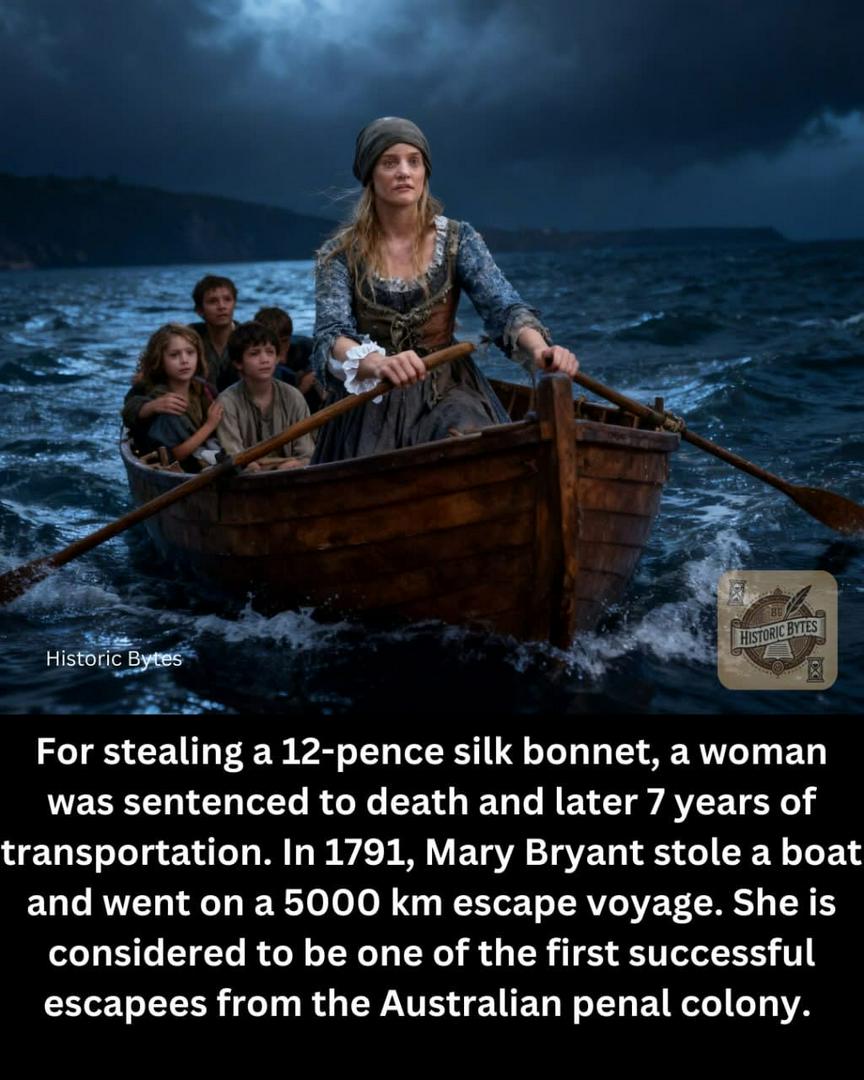
In eighteenth century Britain, even small theft could carry a brutal sentence. In 1786, a young Cornish woman named Mary Bryant was convicted of stealing a silk bonnet worth just twelve pence. Under the harsh criminal code of the time, the penalty was death. Her sentence was later commuted to 7 years of transportation to Australia, part of Britain’s expanding penal colony system. Bryant was sent aboard the First Fleet to New South Wales, arriving in 1788. Life in the early colony was unforgiving. Food was scarce, discipline was strict, and escape seemed impossible. Yet in March 1791, Mary Bryant, her husband William, their two small children, and 7 other convicts carried out one of the boldest prison breaks in Australian history. They stole the colony’s governor’s six oared cutter, a small open boat not meant for ocean voyages, and loaded it with provisions. Their goal was staggering. They planned to sail north along the Australian coast toward the Dutch East Indies, a journey of roughly 5,000 kilometers through largely uncharted waters. Over ten weeks, they navigated reefs, storms, and hostile shorelines. They survived by fishing and rationing supplies, hugging the coastline when possible. Against all odds, they reached Timor, where they posed as shipwreck survivors. For a brief moment, they had escaped the British penal system. But their identities were eventually discovered, and they were arrested and returned to England. The voyage had taken a heavy toll. Both of Mary’s children and her husband died during the ordeal. Public sympathy in Britain grew once details of the escape became known. In 1793, she received a full pardon. #survival #australia #fblifestyle
2026-02-15

Andrew Robertson
I remember reading the novel, Lorna Doone in high school and in that period of history, Britain had more than 100 death penalty offenses
02-17
Cascade, MT
Reply

Halfmilekiller
We need to bring this form of justice back!
02-18
Salt Lake City, UT
Reply
More comments ...
write a comment...