1/1

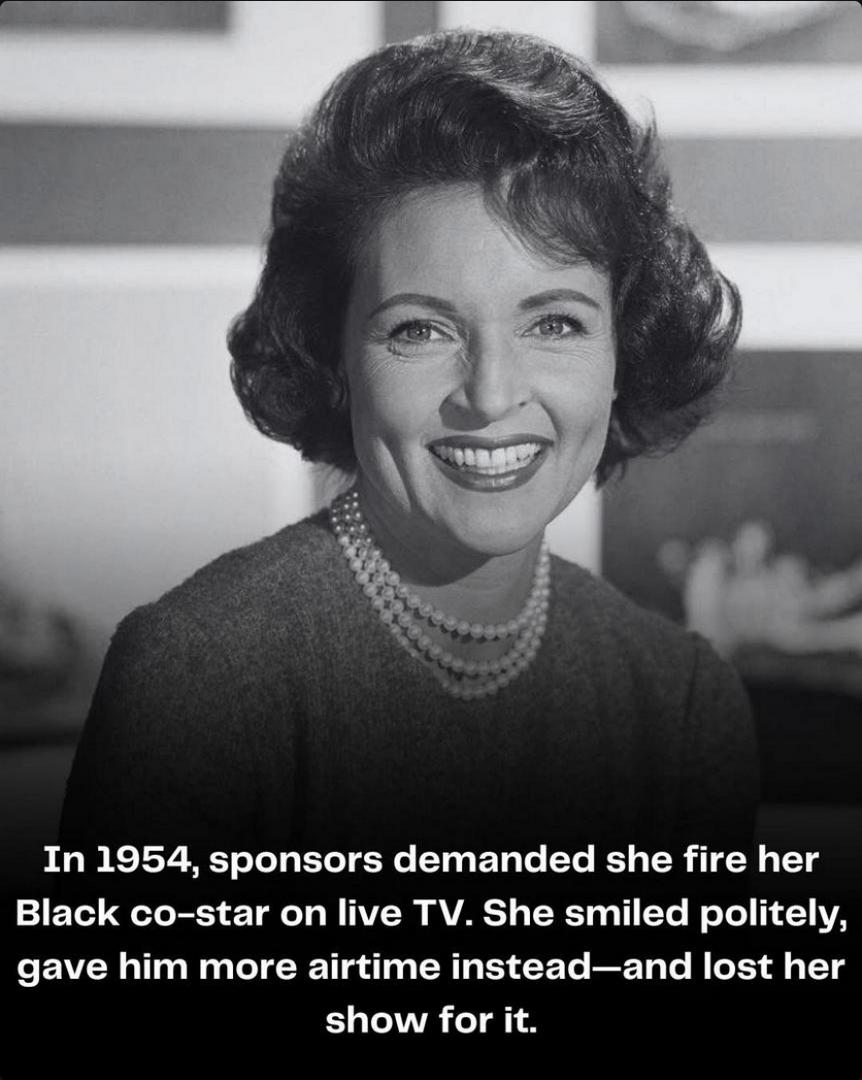
In 1954, sponsors demanded she fire her Black co-star on live TV She smiled politely, gave him more airtime instead-and lost her show for it Betty White spent eighty years making America laugh-and iust as long dismantling every boundary Hollywood placed in her way Before she became America's grandmother, before she was the nation's sweetheart, before the memes and the ate-career renaissance, Betty White was a 1940s television insurgent doing things women were simply not allowed to do She wasn't iust acting on television. She was writing scripts. Producinc segments. Running entire shows Making creative decisions that were supposed to be reserved exclusively for men At a time when women weren't welcome in writers` rooms, when female perspectives were considered commerciallv unviable, when actresses were expected to smile, say their lines, and defer to male authority on every creative question, Betty White controlled her own content While other actresses waited passively for roles to be offered, Betty built them herself-armed with impeccable comedic timing, sharp intelligence, and a smile that could disarm and devastate in equal measure Then came 1954. and the moment that revealed exactly who she was beneath the charm. Betty was hosting her own variety program, The Betty White Show, on NBC It was a dailv talk show-live, ambitious and entirelv under her creative control One of her reqular featured performe was Arthur Duncan, a gifted Black tap dancer whose performances lit up the stage every week with genuine joy ana extraordinary talent Then the letters started arriving. Angry viewers-especially from Southern affiliates-demanded Arthur Duncan's mmediate removal from the show. They didn't want to see a Black performer featured reqularly on their television screens. Sponsors echoed the complaints, threatening to pull advertising support. .
2026-02-21

Janice Michael
She told them to stuff it she wouldn’t fire the man!
02-21
Gas City, IN
Reply
10

Kandice
I miss her!!
02-21
Reply
9

Terri Howie
great woman
02-21
Norton, MA
Reply
8

Ted Roney
Betty White was many things to many people, her warmth and humor paramount, but I will never forget her role as the foul-mouthed eccentric woman in Lake Placid! After years of playing loveable, goofy, pet-loving Betty White she decends into this darkness no one would EVER imagine possible!
From there on it seemed like she just kept us on our toes never quite knowing what to expect from her next, except that we'd love it!
Thanks Betty! I'm sure Allen Ludden is grateful to have you back!🙏💕😆
02-21
Houghton Lake, MI
Reply(1)
6

Linda Alred
Her beautiful soul shone through every role.
02-21
Tulsa, OK
Reply
6

Helen M Brennan
What a remarkable person 🙏👍💕
02-22
Dalton, NH
Reply
4

Margaret Risdon
this is my Betty White .
02-22
Bloomfield Hills, MI
Reply
3

LdyRed
I Loved her heart and soul, her smile was infectious, she was great in anything she did, best of all she loved people, and it showed!!💕
02-22
Jacksonville, FL
Reply
2

Dee Pfeiffer
Love this Lady!🌸
02-23
Cincinnati, OH
Reply
1

1st amendment only
shes not smart. you can be boycotted from the studios easy. no telling what she lost.
02-23
Bakersfield, CA
Reply
More comments ...
write a comment...