1/1
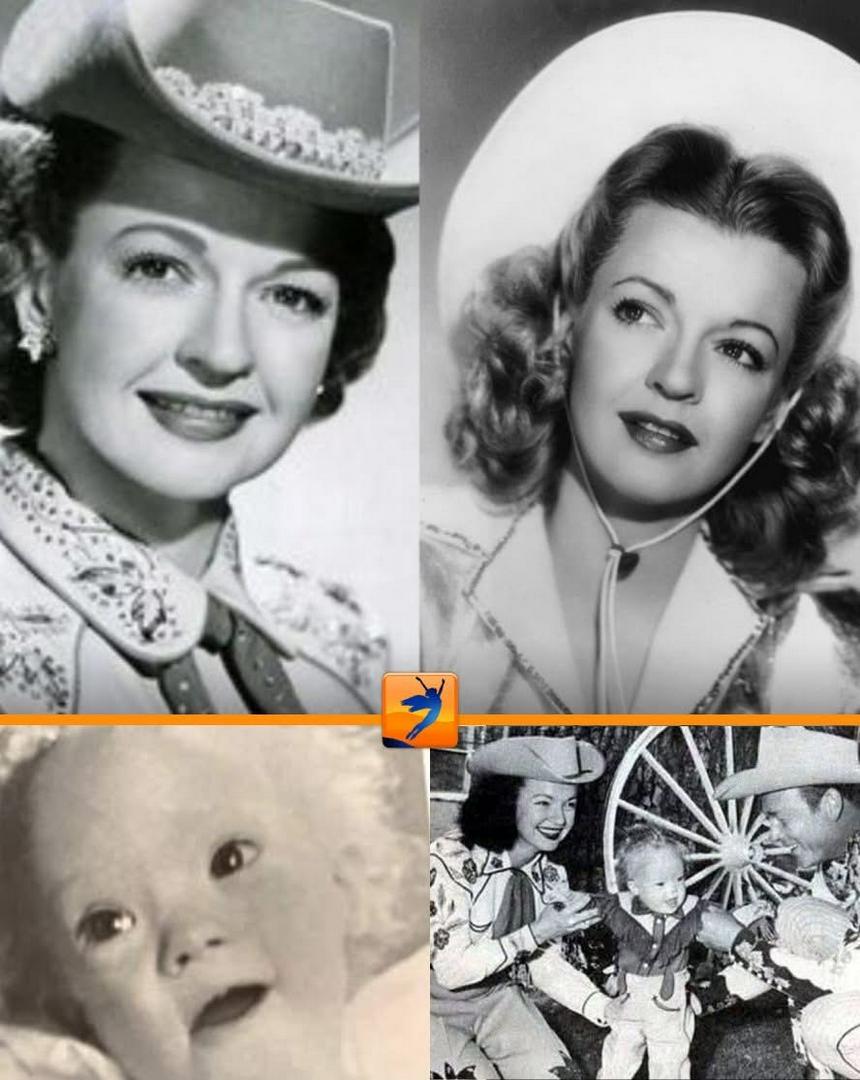
She lost her baby daughter and was told to hide the tragedy; instead, she wrote a book that changed how America saw children with disabilities forever. Before Dale Evans became known as the "Queen of the West," she was Frances Octavia Smith, a small-town Texas girl with a big voice and even bigger dreams. She sang her way through radio stations and small-town stages until she landed in Hollywood, reinventing herself with a name that would soon be etched in gold. When she met Roy Rogers, the “King of the Cowboys,” the world saw a perfect match. They were the ultimate power couple of the Golden Age, stars of the screen who embodied the American dream. They had the fame, the talent, and the love of millions. But in 1950, they faced a challenge that no amount of Hollywood magic could fix. Their daughter, Robin Elizabeth, was born with Down syndrome. Back then, the standard medical advice was brutal: send the child to an institution, forget she exists, and move on with your life. The world expected a star like Dale Evans to keep her “perfect” image intact by scrubbing this “imperfection” from her biography. But Dale and Roy were made of different stuff. They took Robin home. They loved her fiercely. They treated her like the blessing she was, rather than the burden society claimed she’d be. When Robin passed away just before her second birthday, the grief was suffocating. Yet, in that darkness, Dale found a revolutionary spark. She sat down and wrote a book called Angel Unaware. . At a time when disability was treated with shame and stigma, Dale Evans put it on the front shelves of every bookstore in America. She told parents it was okay to love their children exactly as they were. She told the world that a life isn’t measured by its length or its “productivity,” but by the love it leaves behind
2026-02-23

Ann Ainsworth
I remember reading that book while in elementary school and it wasn't an assignment. it was probably first book outside of schoolbooks. It touched my heart and Dale and Roy were probably real heroes to all of us even before. We also had a Robin Roger's school for students in our little town. What a lovely memory!
02-23
Grand Junction, CO
Reply(3)
26

Cheryl Wood
I never knew she had a daughter God bless her for keeping and loving her until she passed
02-26
Jonesboro, AR
Reply
15

Liz Blomstrom
always loved them
02-23
Escanaba, MI
Reply
12

Sue Maher
Beautiful 💕
02-23
Reply
11

Patty Thompson
I love adding Heroines🥰. They both are true heroes 🌸
02-24
Springfield, MO
Reply
10

Pickles
Wonderful. I love it
03-02
Venice, FL
Reply
10

dolphin
They were good people
02-24
Rockledge, FL
Reply
9

Rose Anable
I'm 86 years old. I loved Roy Roger and Dale Evans watched all of their movies I was aware when their daughter was born and when she passed on. I read the book that Dale wrote. I was a teenager then and swore that if I ever had a baby with a disability that I sure would keep that baby and give it all the love and care that I could possibly give it.
26d
Atlanta, NY
Reply
9

Clifton Young
Interesting, love
02-23
Stuart, FL
Reply
8

Ted Roney
I was unaware of this! Love truly has no boundaries. The love of a child is so important. TEACHING that child to love others unconditionally is just as important!
The greatest resource anyone can have is an over abundance of love, although I believe there is no such thing; the world is so hungry to be loved. That's what it IS to be HUMAN.
LOVE CONQUERS ALL! Grow yourself some today and share it with the world!💕🙏👍
02-24
Houghton Lake, MI
Reply
7
More comments ...
write a comment...