1/1

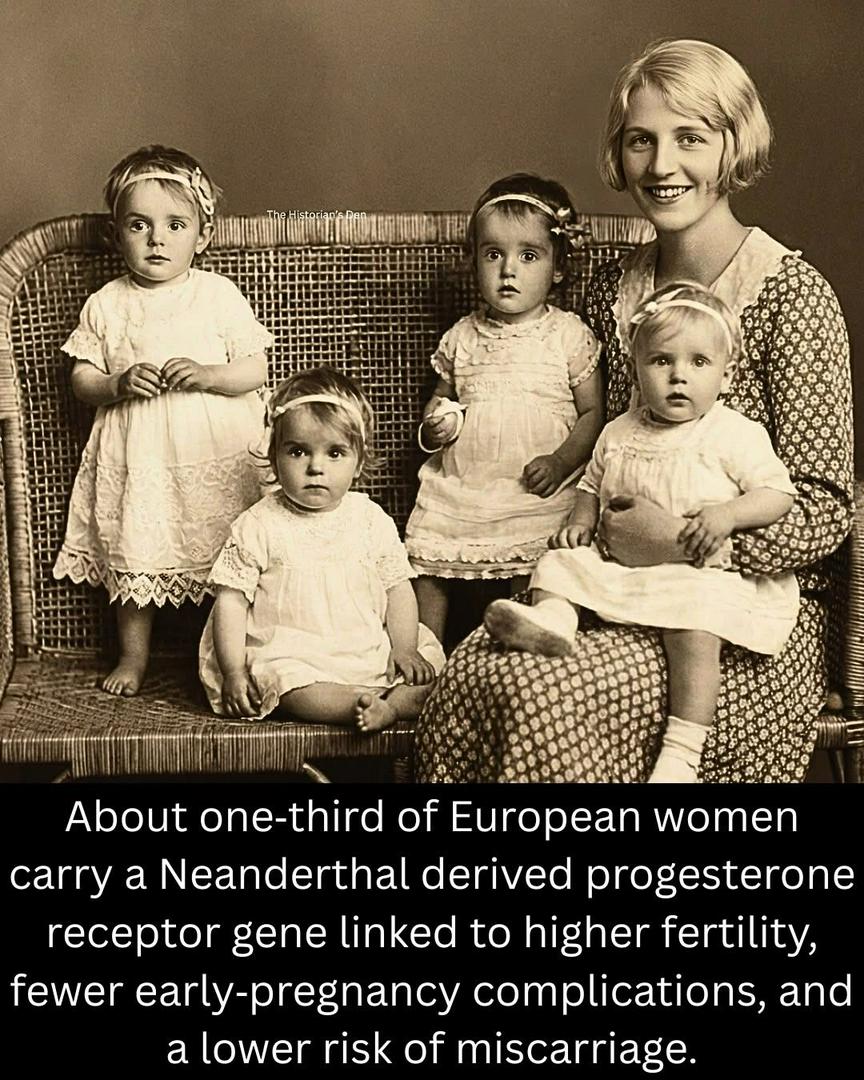
Modern humans migrating out of Africa encountered Neanderthals in Eurasia roughly 47,000–65,000 years ago, and the two groups interbred. That ancient contact left a genetic legacy still visible today: one in three European women carries a Neanderthal‑derived variant of the progesterone receptor. This receptor helps prepare the uterine lining for pregnancy and supports early gestation, making it one of the most biologically significant traits inherited from Neanderthals. Researchers from the Max Planck Institute and Karolinska Institutet identified this variant as V660L, which appears in several Neanderthal genomes but not in Denisovans. Large‑scale data from more than 450,000 European women show that carriers of this variant experience fewer early‑pregnancy bleedings, fewer miscarriages, and higher fertility overall. They also tend to have more children and more siblings, suggesting the variant was favored by natural selection because it improved reproductive success. This enduring gene highlights how deeply intertwined human and Neanderthal histories remain. Although Neanderthals disappeared around 40,000 years ago, fragments of their DNA continue to shape modern biology, with the progesterone‑receptor variant standing out as a powerful example of ancient interbreeding still influencing life today. #genetics
2026-02-26

Stephen Paul
iam yawning right now
02-27
Valdosta, GA
Reply
More comments ...
write a comment...