1/1

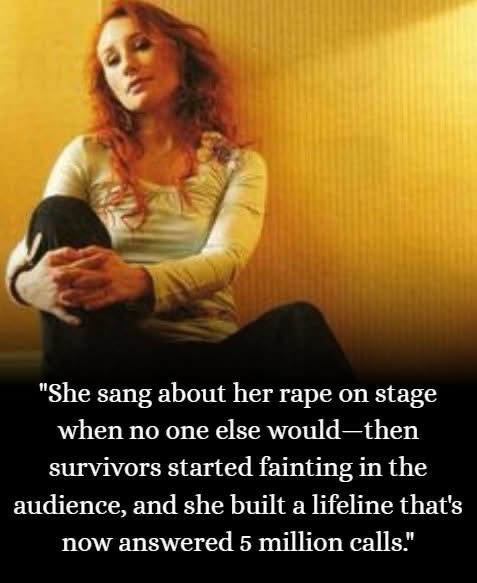
She sang about her rape on stage when no one else would—then survivors started fainting in the audience, and she built a lifeline that's now answered 5 million calls. Tori Amos releases "Me and a Gun"—three minutes and forty-four seconds of devastating truth with no instruments, no production, just her voice telling the story of being raped at knifepoint after giving a stranger a ride home from her performance. At 21 years old, she had trusted someone who asked for help. He held a knife to her throat. She survived by dissociating, her mind floating somewhere above her body, watching it happen like it was happening to someone else. For years, she carried that night in silence. Then she wrote a song about it. And everything changed. When "Me and a Gun" was released, nothing like it existed in mainstream music. Female artists didn't speak openly about sexual violence. Victims were expected to stay quiet, to feel shame, to protect their attackers through silence. Tori Amos refused. She decided to perform the song live on tour in 1994. Night after night, she sat at her piano and sang a cappella about the worst moment of her life in front of thousands of people. And something extraordinary happened. Survivors started reaching out. Letters arrived backstage. People waited after shows just to say, "Me too. I thought I was alone." Then one summer evening in the Midwest, Amos was performing "Me and a Gun" when a young woman near the front of the stage collapsed. She had fainted, overwhelmed by her own buried trauma finally being spoken aloud. That moment devastated Tori. She realized: survivors were finding her, trusting her with their stories, and she had nothing to give them except empathy. No resources. No professional help. Just a song and her own broken heart.
16 days ago

Gabe Mack
Thank you from lots of us👍
16d
Houston, TX
Reply(1)
4

Janice Michael
Was he ever convicted?
15d
Gas City, IN
Reply
1

HonestTrumper
good song, very sad.
15d
West Chester, PA
Reply
1

Sonya fagg
prayers & hugs ❣️🙏🤗💕
14d
Decaturville, TN
Reply
More comments ...
write a comment...