1/1

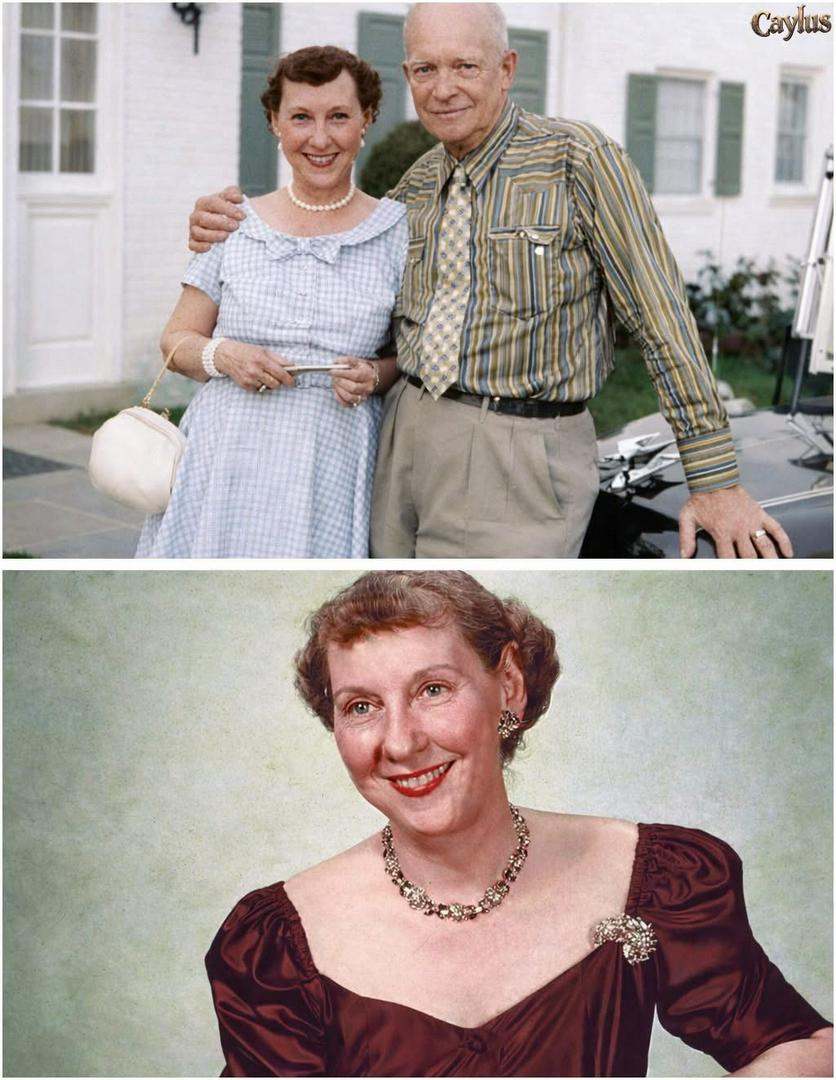
She was a wealthy meatpacker's daughter who grew up with servants. He was a broke Army lieutenant. Her father said if she married him, she'd get no family money. She married him anyway—and 37 years later, they moved into the White House. Denver, Colorado, July 1, 1916. Mamie Geneva Doud stood in the music room of her parents' mansion, about to make a decision that would change her life forever. At 19, Mamie was the daughter of a successful meatpacking executive. She’d grown up with all the comforts money could buy—servants, finishing schools, and a society lifestyle. Everyone expected her to marry well and have a grand wedding. But instead, she was marrying Second Lieutenant Dwight D. Eisenhower, a broke West Point graduate who had nothing but ambition and a modest military salary. Her father had made it clear—if Mamie married Dwight, she would lose access to her family's wealth. No financial support, no servants, no safety net. Did she understand what this meant? A life of cramped military housing, constant moves, and financial uncertainty. Mamie understood completely. But she said yes anyway. Their love story began in October 1915, when Mamie met Dwight at a party. She was struck by his good looks, and Dwight was immediately smitten. Despite her many suitors, Dwight’s persistence paid off—he waited on her porch after every date, determined to win her heart. On Valentine's Day 1916, Dwight gave Mamie a miniature of his West Point class ring, all he could afford but a symbol of their commitment. Mamie celebrated both Valentine's Day and St. Patrick’s Day as their engagement anniversaries, remembering that Dwight had asked her father for permission on March 17. Her father wasn’t convinced. Army life would be tough—low pay, constant moving, no luxuries. But Mamie was determined. She wasn’t marrying for comfort; On July 1, 1916, Mamie and Dwight married
2026-03-19

Greg Walsh
Trump is destroying our country and trying to the same in the Middle East
03-20
Cherokee Village, AR
Reply(19)
37
Judith Rogow
“Mr Ike” was a wonderful caring man and Mrs Mamie adored him, as did everyone who met him.
03-20
Ridgecrest, CA
Reply(5)
28

Mota Anthony
Trump is the most foolish idiot ever to have been elected to the presidency. Ike Eisenhower would roll over in his grave if he saw the horrible job that Trump is doing right now. Do you not realize that he is the least light president in the history of the presidency? He is a bum and a washout.
03-19
Henrico, VA
Reply(28)
9

D.Painter
A great General in WW11 but my favorite was Patton who was a actual war fighter and he could rally the troops like no one else. Eisenhower was a great Logistics man.
03-19
North Huntingdon, PA
Reply
25

Rosemarie George Lauria
Dems are to DUMB and STUPID to recognize the horrible situation Obama and Biden put our country in. God save Trump every day of the week!!!
03-23
Bonita Springs, FL
Reply(4)
17

dw
Trump is a great president l
03-20
Hot Springs, AR
Reply(1)
19

Black Frost
Now do Michael!!
03-21
Milwaukee, WI
Reply(14)
10

Judith Pillipd
This picture was in their mid-life. She may have been prettier when she was younger. There is a saying “Beauty is only skin deep.”
03-19
Ooltewah, TN
Reply(1)
18

Harry Zumbrun
Used to see MAMIE when I was a child at the 5 and 10 store downtown Gettysburg buying her hair nets with her secret service surrounding her.
03-19
York, PA
Reply
18
More comments ...
write a comment...