1/1

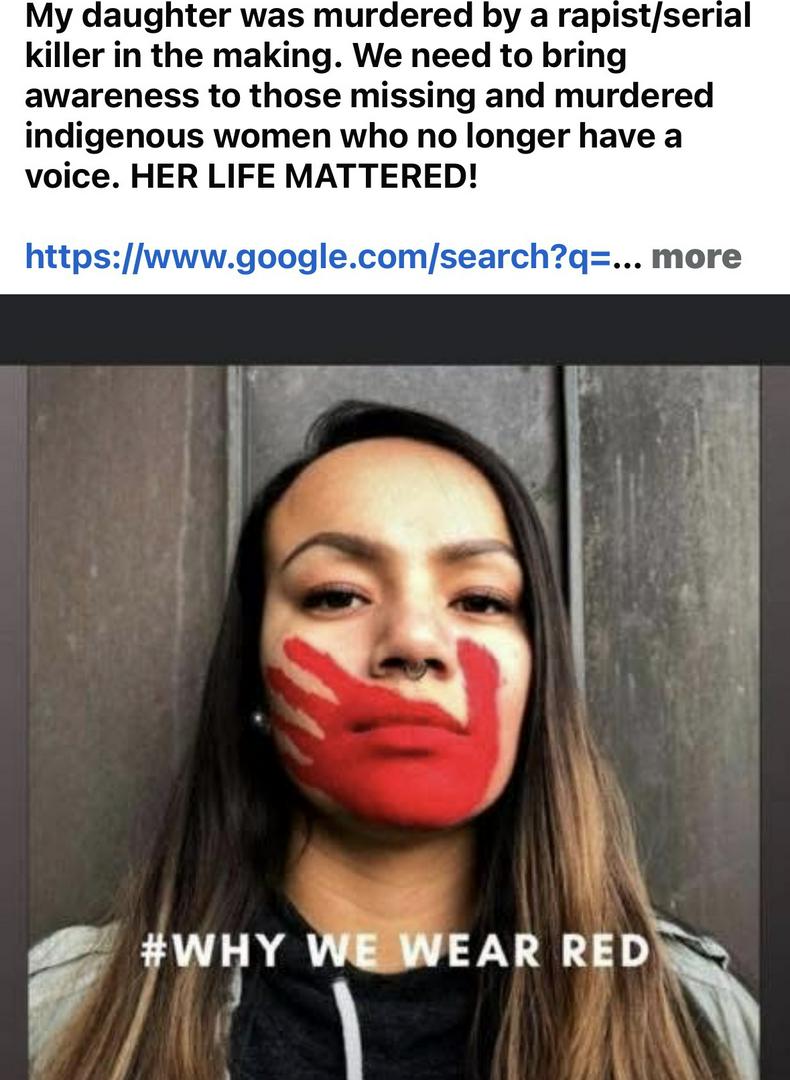
Across the United States, the issue of missing Native women has been consistently documented and reported by federal agencies, researchers, and Indigenous organizations. Data from the U.S. Department of the Interior and Bureau of Indian Affairs shows that Native communities face disproportionately higher risks of people going missing or experiencing violence compared to other populations.  In recent reporting, In 2023, more than 10,000 missing person cases involving American Indian and Alaska Native individuals were filed, with over 1,600 cases still active at year’s end.  Congressional reporting also noted that over 5,800 Native women and girls were listed as missing in a single year, with a large percentage involving minors.  Looking at longer-term patterns: The National Crime Information Center has historically recorded thousands of missing Native women cases, with estimates around 5,600 reported cases in past datasets — while experts caution that actual numbers may be higher due to underreporting.  The Urban Indian Health Institute documented 506 cases across 71 U.S. cities, showing that many cases involve young women, with a median age of 29 years.  Federal summaries also indicate that approximately 4,200 cases of missing and murdered Indigenous persons remain unresolved across reporting systems.  At the same time, multiple government and independent reports have noted that data gaps, misclassification, and inconsistent reporting practices mean the full scope is not always fully captured.  For Native communities, this is not only about statistics. It is about families still searching. Communities still waiting. Names that deserve to be remembered. This is why awareness continues to be raised — not to create fear, but to recognize what has been documented, reported, and too often overlooked. Sources: • U.S. Department of the Interior (MMIP data) • Bureau of Indian Affairs (missing persons estimates) • FBI / National Crime Information Cen
1 days ago
write a comment...