1/1

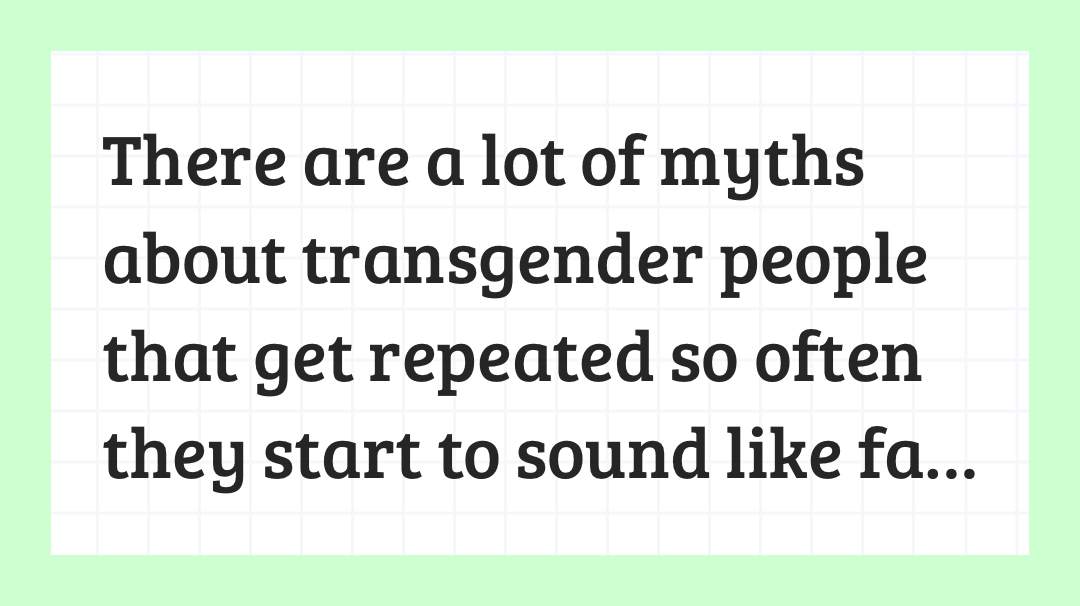
There are a lot of myths about transgender people that get repeated so often they start to sound like facts—but they aren’t. It’s important to separate misinformation from reality, especially when it affects real people’s lives. One common myth is that being trans is “just a phase” or a trend. In reality, gender identity is a deeply rooted part of who someone is. While people may explore their identity over time, that doesn’t make it fake—it means they’re learning about themselves in an honest way. Another myth is that trans people are trying to “become someone else.” That’s not true. Trans people are not changing into a different person—they’re expressing who they’ve always been on the inside. Transitioning is about alignment, not transformation into something new. Some people believe trans individuals are a threat in public spaces like bathrooms or sports. There’s no evidence supporting this fear. Trans people are far more likely to be harassed or harmed than to cause harm. These narratives often distract from real issues like safety, respect, and access to basic rights. There’s also a myth that you can “always tell” if someone is trans. You can’t. Gender expression varies widely for everyone, and assumptions based on appearance are often wrong. Respecting people’s identities shouldn’t depend on how well they “pass.” Another harmful idea is that being trans is caused by social media or peer influence. While visibility has increased, trans people have existed throughout history across many cultures. What’s changed is that more people feel safe enough to be open. Finally, some believe trans people are asking for “special rights.” In reality, they’re asking for the same basic respect and protections everyone else expects—safety, dignity, and the ability to live without discrimination. Challenging these myths matters. When misinformation spreads, it creates fear and misunderstanding. When people take the time to learn and listen, it creates space for empathy
26 days ago

DanStlMo
Can a man have a baby?
26d
Reply(10)
13

Birgit Hahn
Leave them alone & let them live the life they want.
In other words, MYOB.
25d
Corvallis, OR
Reply(2)
7

Lucy Mateo
Living your truth...simply put. 💕
25d
New York, NY
Reply(1)
7
Eminem'shotgf
I agree with this trans people and everyone are people to
26d
Central Point, OR
Reply
6

Brandon cook
all I know is we can all agree to disagree, my opinion is not important to the way one lives their life, however as I am required to speak truth here's one nobody wants to remember while deciding what God would or wouldn't do.. the Bible says to love. period, I don't agree with the trans movement but I'm not going to make a human being feel less than or ashamed.. now if the person wanted to discuss the gospel and asked for my leadership they will hear the truth of the Bible not my opinion. but to use the Bible as a weapon to hurt someone is probably more disturbing to God than someone living that way. you never won a soul for the cross beating them down with the word of truth . never and you never will.
22d
Atlanta, GA
Reply
1

Sarah
I don't care if a person is trans or anything else but, I'm Soo sick of having to hear about it. live your life, be happy but, people are sick to death hearing about it
24d
Mexico, MO
Reply(1)

John Ohnesorge
So, help me understand that trans men are wanting to be a woman, correct? So they are Gay right? So confusing!!!
24d
Cook, MN
Reply(1)

Janice Brooks
unless you personally know a Trans. you can never expect to understand, what it is that makes a person different from your limited knowledge of what you believe you know.
23d
Birmingham, AL
Reply

Sheree Ratliff
Really who cares I don’t I accept people the way they ste
23d
Dallas, TX
Reply
More comments ...
write a comment...