1/1
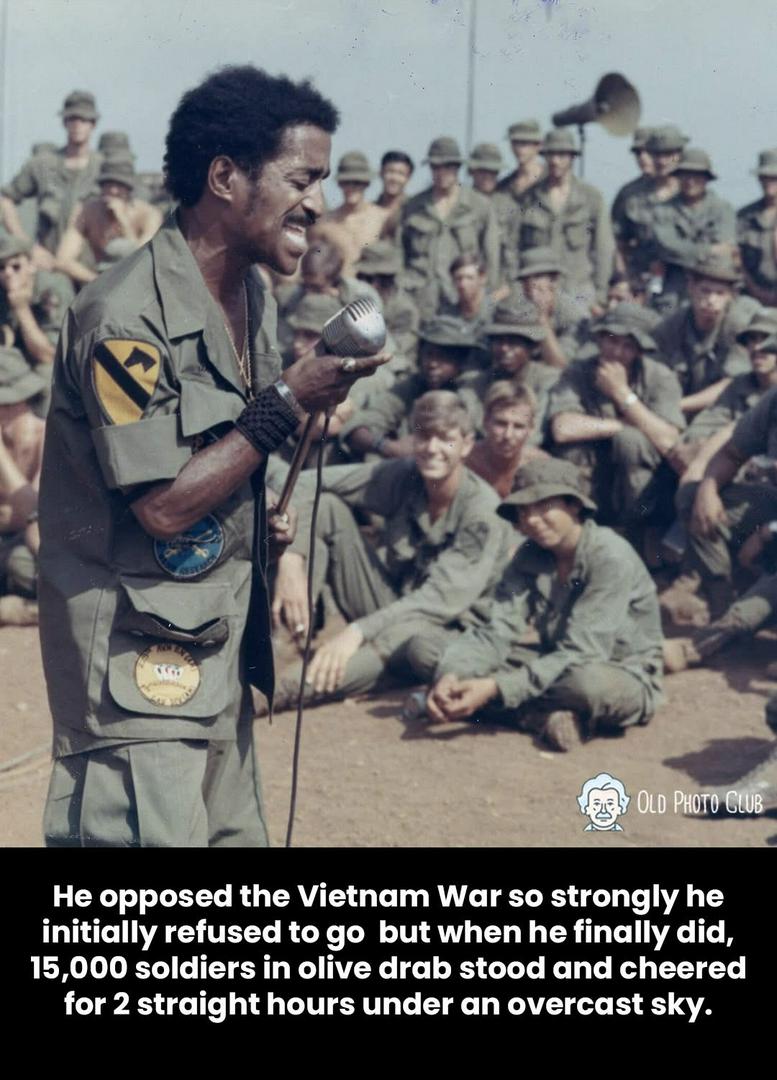
Sammy Davis Jr. had every reason to say no. He was one of the most famous entertainers in the world. He had opposed the Vietnam War openly and had initially turned down President Nixon's personal request to travel there. The war was dividing the country. Going meant walking a complicated line — between his deeply held beliefs about peace and racial equality, and the reality of young men far from home who had nothing to do with the politics that sent them there. In the end, it was those young men who changed his mind. On February 23, 1972, Sammy Davis Jr. stepped onto a makeshift outdoor stage at Long Binh, South Vietnam — with his wife Altovise by his side and a small troupe of singers, dancers, and musicians behind him. The sky was overcast. The crowd wore olive drab. There were 15,000 of them. For two hours, he gave them everything. He sang. He danced. He did impersonations. He made them laugh. He signed autographs in the middle of his own performance, moving through the crowd, stopping to look soldiers in the eyes, sitting with them as if there was nowhere else on earth he would rather be. The GIs surged toward the stage to get close to him, to shake his hand, to feel — for just a moment — that someone from back home hadn't forgotten them. When it was over, at a press conference drenched in sweat and barely standing, a reporter asked him how he felt. "I've never been so tired and felt so good in my life." That quote has been around for more than fifty years. It deserves to be. What most people don't know is that Long Binh was just the beginning. Davis spent an entire week touring rmilitary bases across Vietnam — performing, visiting fire bases, sitting with small groups of soldiers in quiet conversations the press was not invited to hear. He was also there as a representative of a national drug abuse prevention program,
2026-04-14
Russell
Sammy was one of those cats OG,
Did his thing, stay the course, stay
Out of trouble, he never went over
Board, never heard him say anything
Disrespectful. He’s a 10 in my book.
04-16
Merced, CA
Reply
1

Baijzah Angel
He was one of the sexiest, most talented, and well rounded me I've ever seen in my life. He was a great.....never late. R.I.PSammy 💕🕊
04-17
Dallas, TX
Reply

Brandon Lopez
b0💕
04-17
Lancaster, PA
Reply
1

T.A.
greatest in everything. most talented man in history
04-15
Beaufort, SC
Reply
More comments ...
write a comment...