1/1

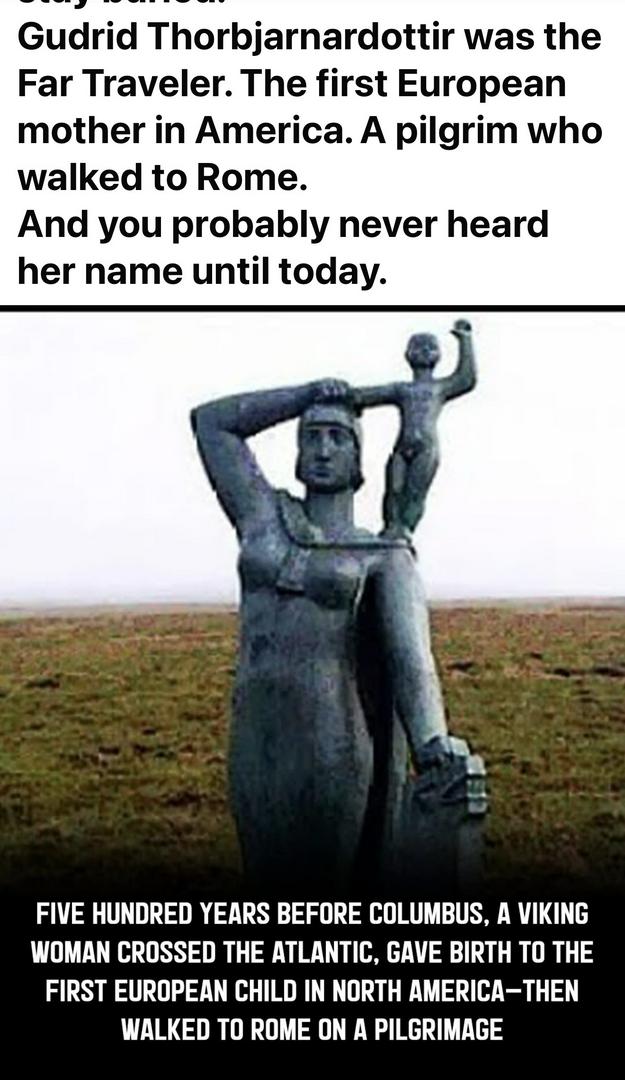
Five hundred years before Columbus, a Viking woman discovered America—and nobody remembers her name. Around the year 1000 CE, while most of Europe believed the Atlantic Ocean was an endless void leading to monsters and the edge of the world, a young Icelandic woman named Gudrid Thorbjarnardottir was already living in North America. She wasn't just visiting. She was settling, exploring, giving birth, and surviving in a land Europeans wouldn't "officially" discover for another five centuries. Her story—one of the most remarkable in exploration history Gudrid was born in Iceland around 980 CE, into a world of Viking expansion. Norse explorers had already settled Iceland and Greenland, pushing ever westward across the North Atlantic. Her early life was marked by tragedy. She married young, but her husband died during a terrible winter in Greenland. Widowed and alone in one of the harshest climates on Earth, she could have accepted a quiet life of survival. Instead, she chose adventure. Around 1003, Gudrid joined an expedition led by Leif Erikson's brother, Thorvald, to a mysterious land the Vikings called "Vinland"—North America. Archaeological evidence now confirms this was likely Newfoundland, Canada, at a site called L'Anse aux Meadows. The expedition was dangerous. The land was unfamiliar. And they weren't alone—Indigenous peoples already lived there, and relations were tense and sometimes violent. During one expedition, Gudrid married Thorfinn Karlsefni, another Icelandic explorer. Together, they decided to do something unprecedented: not just explore Vinland, but settle it permanently. Around 1005, Gudrid gave birth to a son named Snorri Thorfinnsson—the first known European child born in North America. Think about that. Five hundred years before Columbus. A thousand years before the Mayflower. Gudrid was raising a European child on American soil.
4 days ago
write a comment...