1/1

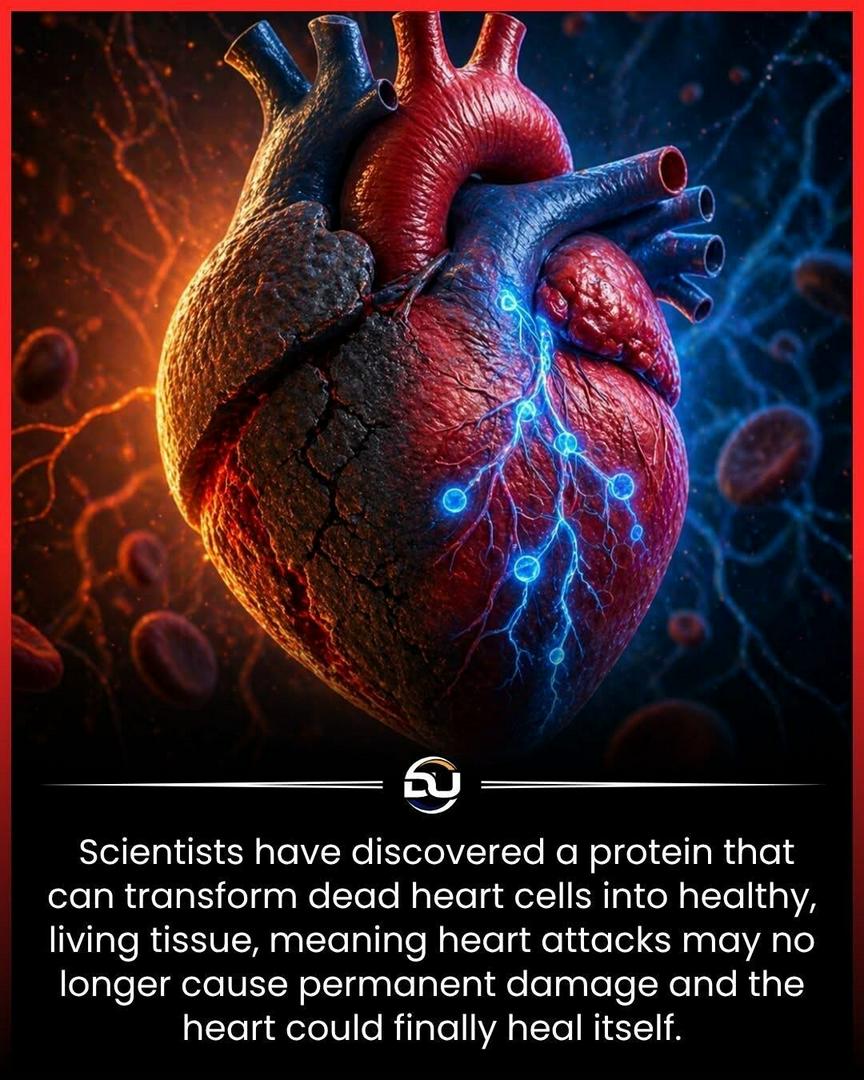
Scientists find a protein that could let hearts heal themselves naturally For the first time in medical history, researchers have discovered a protein that can transform dead heart cells into living, healthy tissue. This breakthrough means that the damage caused by heart attacks may no longer be permanent. Instead of leaving scar tissue and lifelong complications, the heart could potentially regenerate itself, restoring its full function naturally. Heart attacks occur when blood flow to the heart is blocked, causing cells to die. Until now, these damaged areas were considered irreparable, forcing patients to rely on medications, surgeries, or transplants. But this protein appears to trigger a remarkable regenerative process, reawakening dead cells and promoting the growth of healthy new tissue. Essentially, the heart begins to heal from within. The implications are enormous. Millions of people worldwide suffer from heart disease, often facing lifelong limitations, repeated hospitalisations, and reduced quality of life. By harnessing this protein, medicine could shift from managing heart damage to actually repairing it, reducing complications and potentially saving countless lives. This discovery also challenges what we thought was possible in human biology. It shows that even organs once considered incapable of regeneration can, under the right conditions, repair themselves. While human trials are still needed, the research opens the door to a future where heart attacks no longer define a person’s life. The heart has long been seen as a symbol of fragility—but this breakthrough suggests it may also hold the power to renew itself. Imagine a world where recovery after a heart attack is not just survival, but full restoration. Medicine may finally be catching up to nature’s potential for healing.
1 days ago
write a comment...