1/1

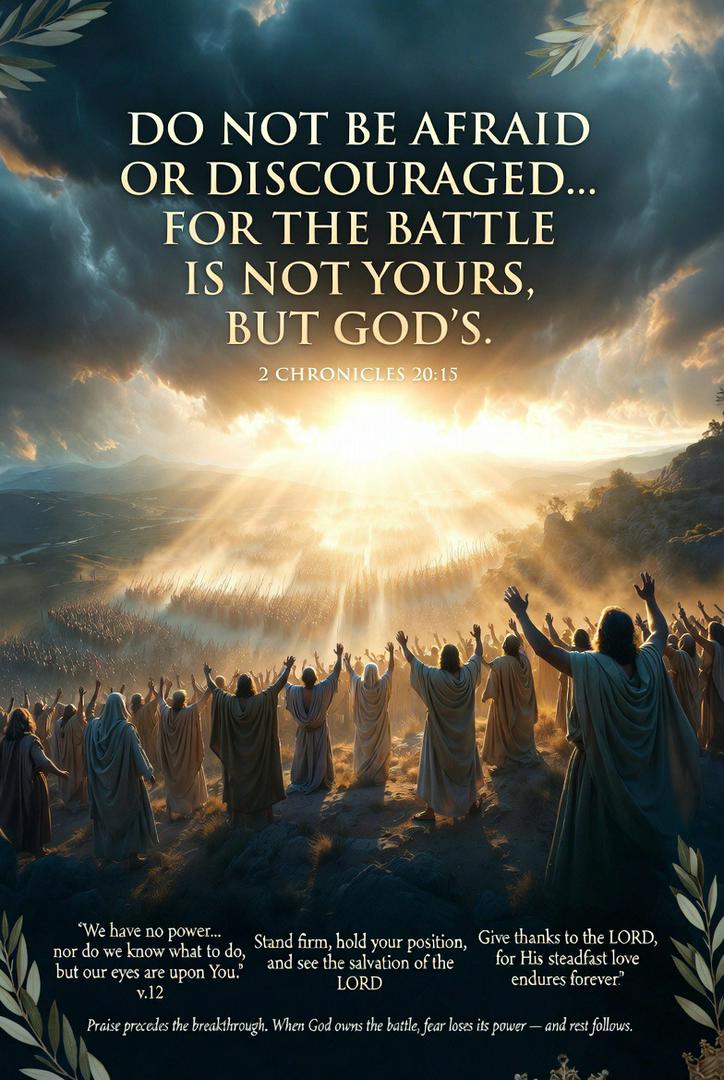
2 Chronicles 20:15 cuts directly into crisis: “Do not be afraid or discouraged… for the battle is not yours, but God’s.” Judah is not imagining danger. “A great multitude” is advancing (2 Chr. 20:2). Fear is present, but it is not allowed to govern. Jehoshaphat responds rightly: “He set himself to seek the LORD” (v.3). Before any human plan, he calls for fasting and gathers the people. In his prayer, he confesses dependence: “We have no power… nor do we know what to do, but our eyes are upon You” (v.12). Scripture frames this not as weakness, but as proper alignment under God’s sovereignty. Then God answers through Jahaziel: “Do not be afraid… for the battle is not yours, but God’s” (v.15). The issue is not the size of the enemy, but who owns the conflict. God then commands posture, not panic: “Stand firm, hold your position, and see the salvation of the LORD” (v.17). Their responsibility is obedience; victory belongs to God. The next morning they go out worshiping: “Give thanks to the LORD, for His steadfast love endures forever” (v.21). Praise precedes visible breakthrough. As they begin singing, “the LORD set an ambush” against the enemy (v.22), and the opposing armies destroy one another. The chapter ends: “So the realm of Jehoshaphat was quiet, for his God gave him rest all around” (v.30). The battle did not disappear first—ownership did. And when God is recognized as the true fighter, fear loses its authority and rest becomes the outcome. @Royal, Holy, Immortal Bible Study Series
5 hours ago

Julianna Dorsey
AMEN IT BEKINGS TO GOD 🙏🙏🙏
57m
Rockmart, GA
Reply
More comments ...
write a comment...