1/1

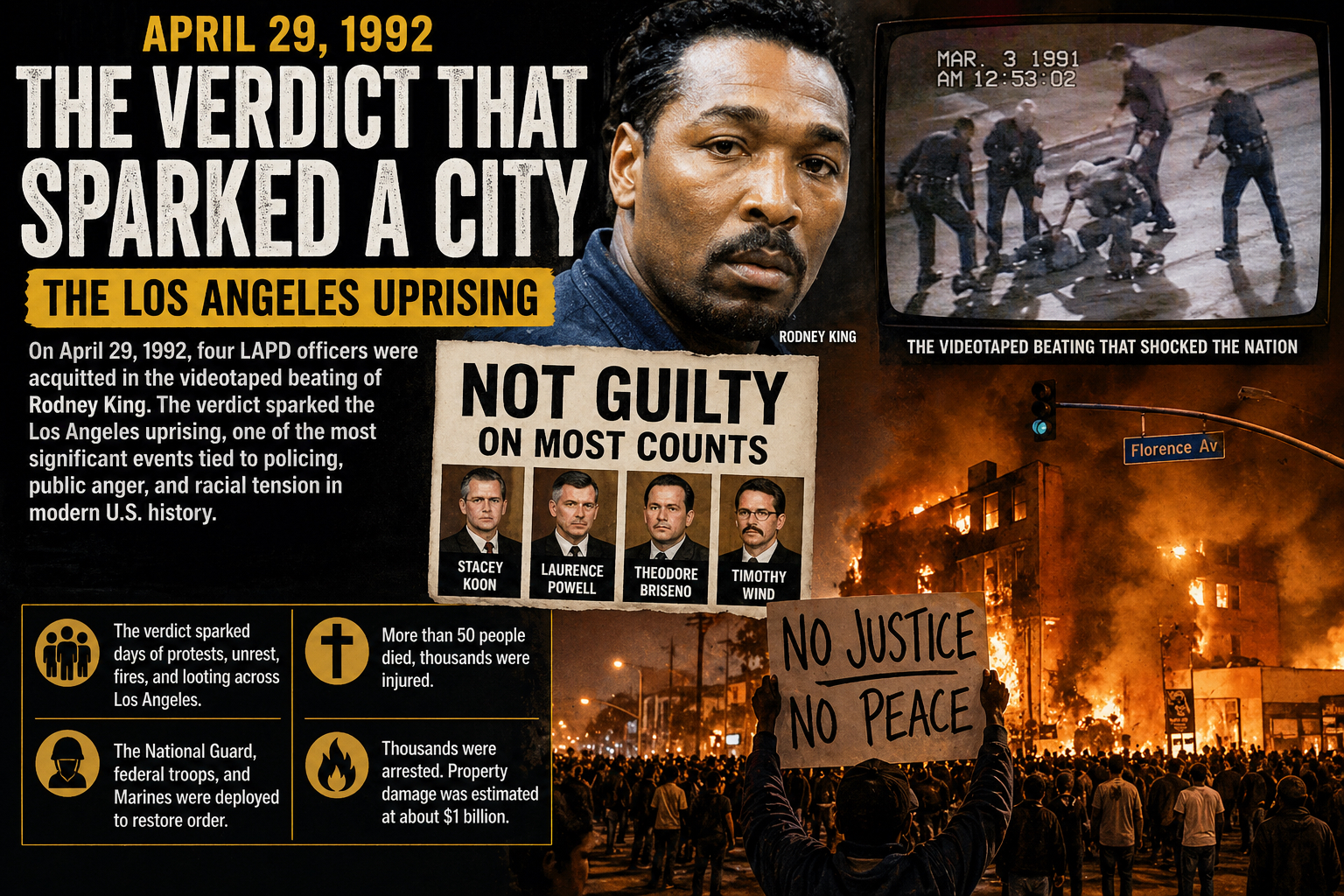
On April 29, 1992, a jury in Simi Valley, California announced its verdict in the state trial of four Los Angeles Police Department officers charged after the videotaped beating of Rodney King. King, a Black motorist, had been beaten by officers after a traffic stop and pursuit on March 3, 1991. The beating was recorded on video by a nearby resident, and the footage spread across the country. For many viewers, the video became undeniable evidence of police violence. For many Black residents in Los Angeles, it also confirmed concerns they had already raised for years about policing, force, and accountability. The officers on trial were Sgt. Stacey Koon and Officers Laurence Powell, Theodore Briseno, and Timothy Wind. On April 29, 1992, the jury acquitted the officers of most charges. The jury deadlocked on one excessive-force charge against Powell. The verdict sparked immediate anger in Los Angeles. Protests turned into several days of unrest, fires, looting, confrontations, and violence. The uprising was rooted not only in the verdict, but also in deeper frustrations over policing, poverty, discrimination, and long-standing tensions in the city. By the time the unrest ended, more than 50 people had died, thousands had been injured, thousands more had been arrested, and property damage reached about $1 billion. The National Guard, federal troops, and Marines were eventually deployed to help restore order. The Rodney King verdict became one of the most significant moments in modern American history. It forced the country to confront the power of video evidence, the limits of the justice system, and the anger that can build when communities believe their pain has been ignored. April 29, 1992 remains a date tied to protest, public outrage, and the demand for accountability after violence by those sworn to protect. #BlackHistory #RodneyKing #LosAngelesHistory #JusticeHistory #OnThisDay
Simi Valley, California • 2026-04-29
write a comment...