1/1
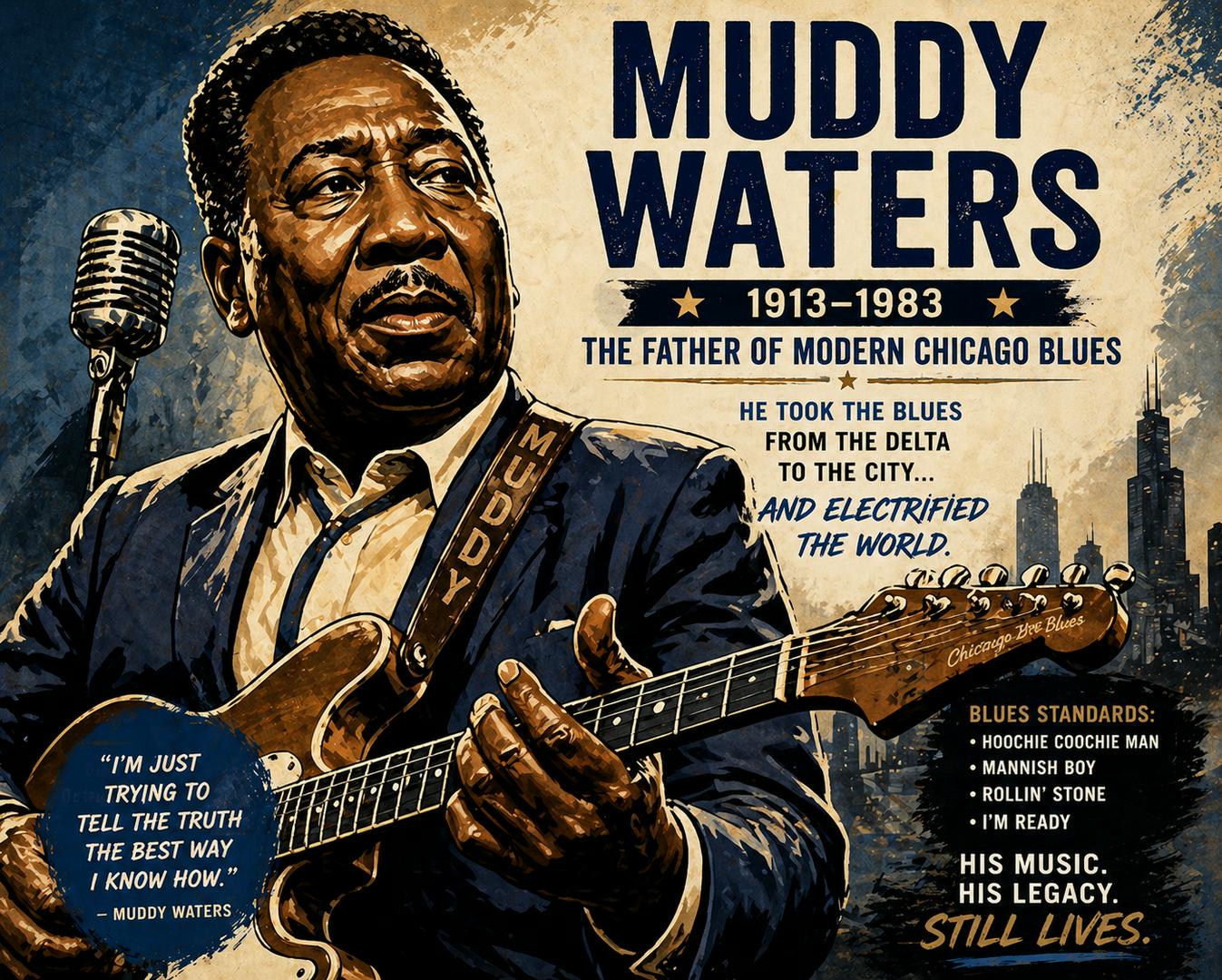
April 30, 1983: The blues lost one of its giants. Muddy Waters, born McKinley Morganfield, died at his home in Westmont, Illinois, at age 70. His death marked the end of a life that helped reshape American music from the ground up. Born in Mississippi in 1913, Waters grew up surrounded by the sounds of the Delta. He learned guitar and harmonica, drawing from the deep, raw style of country blues. But when he moved north to Chicago in the 1940s, he helped turn that sound electric. The city was louder, faster, and harder — and Muddy’s music rose to meet it. With his powerful voice, slide guitar, and commanding stage presence, he became the face of postwar Chicago blues. Songs like “Hoochie Coochie Man,” “Mannish Boy,” “Rollin’ Stone,” and “I’m Ready” became blues standards. His music carried the grit of the Delta into the modern city and gave Chicago blues its muscle. His influence did not stop with blues. Rock and roll owes him a heavy debt. The Rolling Stones took their name from his song “Rollin’ Stone.” Artists across blues, rock, soul, and popular music followed the road he helped pave. Without Muddy Waters, the sound of modern music would be missing one of its deepest roots. He was more than a performer. He was a bridge between old blues traditions and the electric future. That is why he is often called the father of modern Chicago blues — not as a slogan, but because the title fits. Muddy Waters died in 1983, but the sound he built still lives every time a guitar growls, a singer bends a note, or a band reaches back to the blues for truth. #MuddyWaters #BluesHistory #ChicagoBlues #MusicLegends #OnThisDay
Westmont, Illinois • 2026-04-30

Arlene Smith
My husband loves muddy waters one of his favorite singers and he could play the guitar and sing 👍🏼
05-05
Monroe, GA
Reply
1
More comments ...
write a comment...