1/1

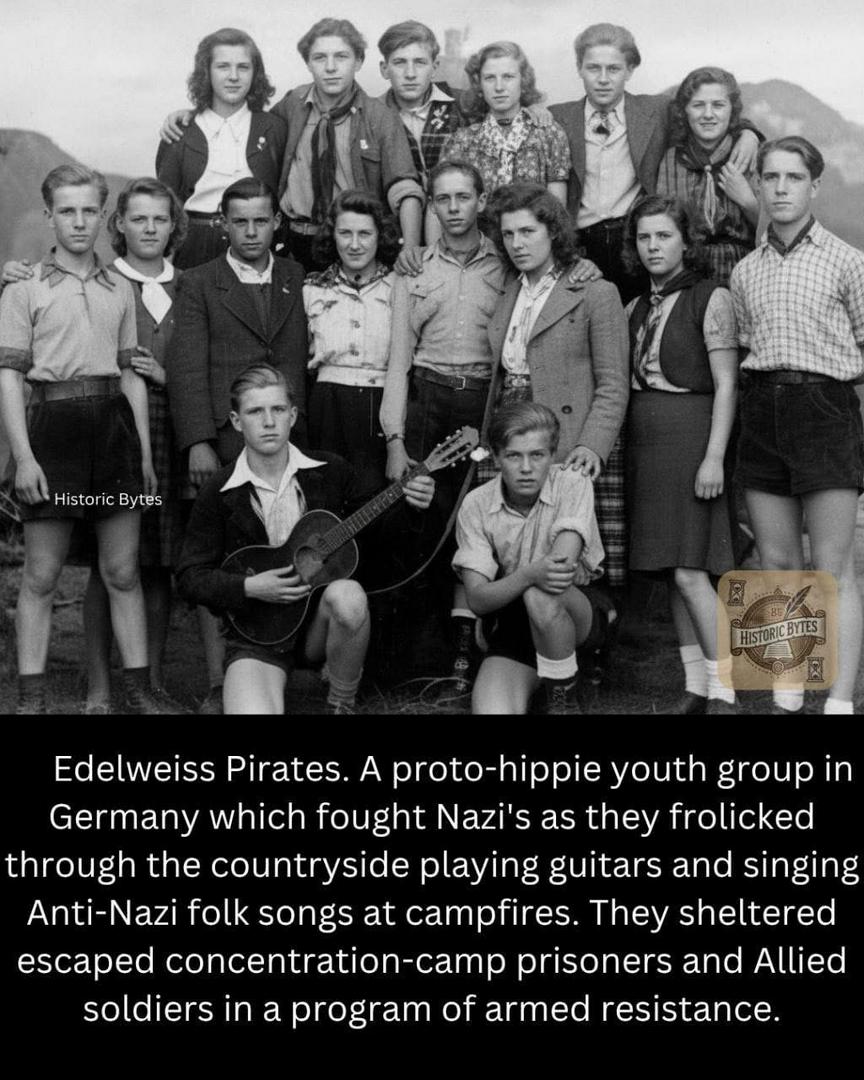
In the late 1930s, as the Hitler Youth consumed the lives of German teenagers with military drills, ideological lectures, and strict gender segregation, a different kind of group emerged in the working-class neighborhoods of western Germany. They were mostly 14 to 17 years old, the age gap between leaving school and military conscription. They wore their hair long, mixed freely with girls, pinned small edelweiss flowers to their lapels, and headed into the countryside on weekends to camp, sing banned songs, and beat up Hitler Youth patrols when they encountered them. Their slogan was simple: Eternal War on the Hitler Youth. The Nazis considered them a nuisance. A 1941 party report noted that every child knew who the Kittelbach Pirates were, that they were everywhere, outnumbering the Hitler Youth in their area, and that they beat up patrols without hesitation. As the war deepened, so did the resistance. Groups began distributing Allied propaganda leaflets, painting anti-Nazi slogans on city walls, hiding concentration camp escapees and army deserters, raiding army depots for weapons and explosives, and attacking Gestapo officers directly. The Cologne Navajos, one of the most active cells, were eventually linked to the killing of the city’s Gestapo chief. #ww2 #resistance #interesting
2026-04-30

Jack
My Dad "liberated" a Hitler Youth Knife from a dead SS officer during WWII. It's a creepy thing to hold. Swastika on the handle. The words Blut und Ehre (blood and honor) are etched on the blade. The former owner's name is on it too.
I have the knife now. I looked up the owner's name and found a small group in southern Germany with the same family name. For a moment, I considered attempting to find the owner's family and returning the knife. But then I thought, "Nah!...this guy was an SS officer."
05-01
Oak Brook, IL
Reply

American not a democrat
Just like democrats are doing now
04-30
Encino, NM
Reply(1)
2

william keller
and georey soros was right in that nazi mix
04-30
Baltimore, MD
Reply
1

Tim Ehrlich
Those people look wealthy, most of Germany was poor. Maybe a propaganda pic.
05-01
Reply
More comments ...
write a comment...