1/1

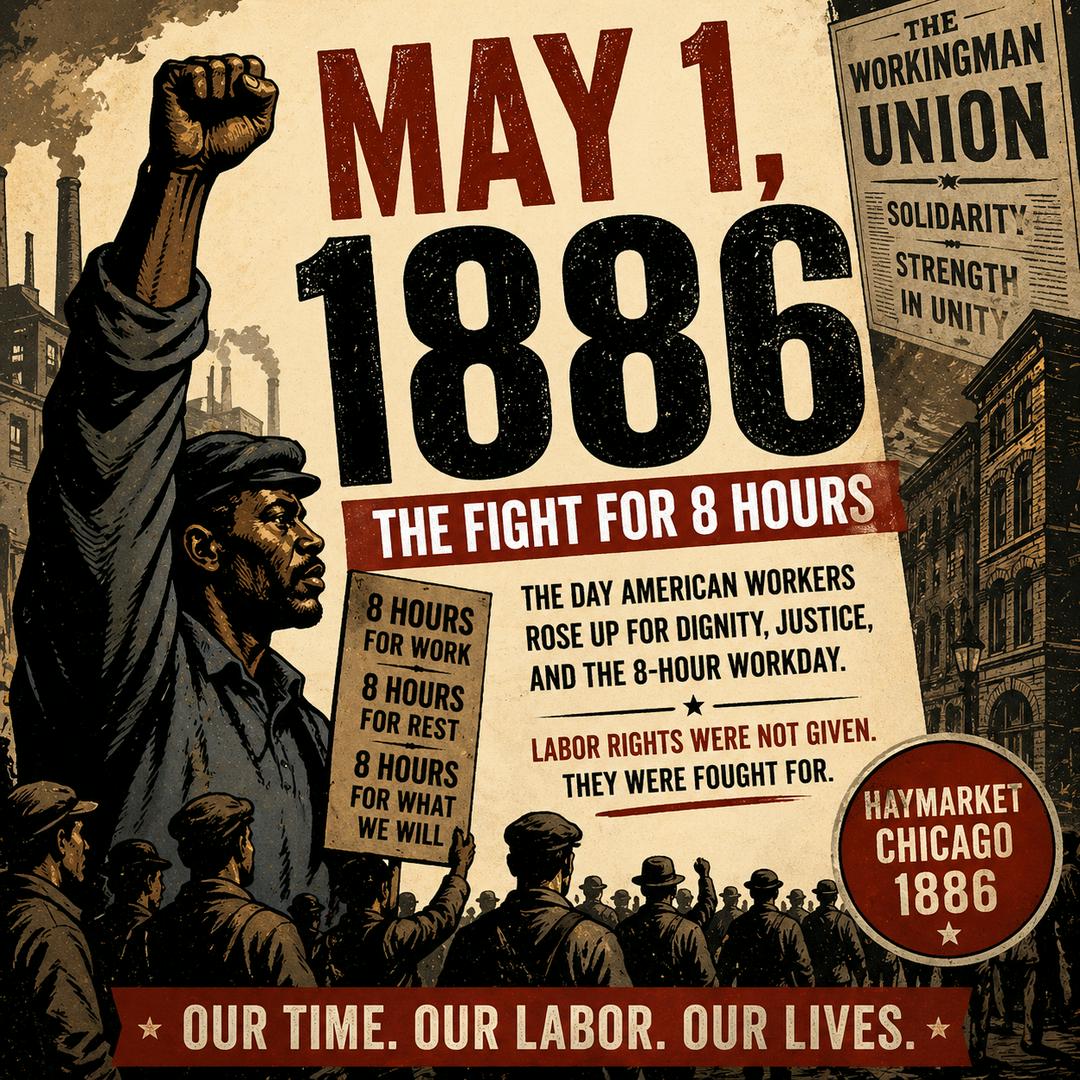
On May 1, 1886, hundreds of thousands of American workers joined a national strike demanding something many people take for granted today: an eight-hour workday. At the time, many workers labored 10, 12, or even more hours a day, often in dangerous conditions and for low pay. Labor organizations had chosen May 1, 1886, as the day to push for a new standard: eight hours for work, eight hours for rest, and eight hours for what they chose. The movement spread across the country, with estimates often ranging from 300,000 to 500,000 workers taking part. Chicago became one of the major centers of the strike. Just days later, the Haymarket Affair would turn the fight for labor rights into one of the most remembered moments in American labor history. This is not only a labor history story. It matters to Black history, too. Many Black workers were excluded from early unions, underpaid, overworked, and pushed into some of the hardest jobs with the fewest protections. Over time, Black labor organizers connected workplace justice to the broader fight for civil rights. Fair hours, fair pay, dignity, and safe working conditions became part of the larger struggle for freedom and equality. From the eight-hour workday movement to later organizing by Black workers, sleeping car porters, sanitation workers, domestic workers, and civil rights activists, the message stayed clear: economic justice and racial justice are connected. May Day 1886 reminds us that workplace rights were not handed out. They were demanded, organized for, and fought for by working people who believed their time, labor, and lives had value. #FactsOnly #LaborHistory #BlackHistory #MayDay #WorkersRights
29 days ago
write a comment...