1/1

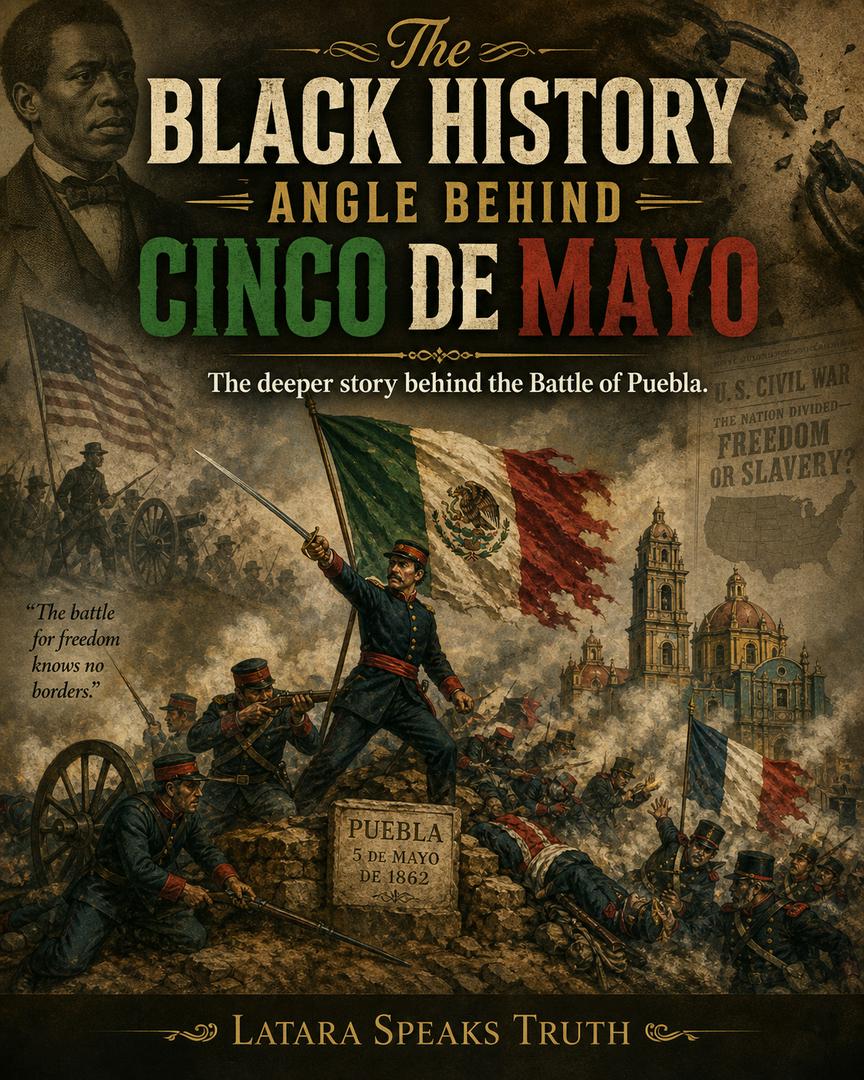
Cinco de Mayo is often treated like a party day, but the real history goes much deeper. The date marks the Battle of Puebla on May 5, 1862, when Mexican forces defeated French troops despite being heavily outnumbered. It is often mistaken for Mexican Independence Day, but that is not what it represents. Cinco de Mayo remembers a specific military victory against French invasion. The Black history angle comes from what was happening around that battle. In 1862, the United States was in the middle of the Civil War. The Confederacy was fighting to preserve slavery, while France under Napoleon III was trying to expand power in Mexico. France wanted to establish a monarchy under Maximilian of Austria and weaken U.S. influence in North America. That made Mexico’s resistance important beyond Mexico. At the same time, the Confederacy had pushed into New Mexico and Arizona and hoped to expand farther west. Some California Latinos supported the Union and saw the fight against French intervention in Mexico and the fight against the Confederacy as connected. That does not mean Cinco de Mayo ended slavery. It did not. But it does mean the Battle of Puebla happened inside a much larger struggle over slavery, empire, democracy, and power in North America. For some communities in California, Mexico’s victory became a symbol that freedom could stand against forces tied to slavery, monarchy, and domination. That is the part many people miss. Cinco de Mayo is not just food, drinks, and decorations. Its history reaches into war, resistance, and the politics of freedom during one of the most dangerous periods in North American history. The story is deeper than the celebration. #BlackHistory #CincoDeMayo #BattleOfPuebla #CivilWarHistory #HiddenHistory
28 days ago
write a comment...