1/1

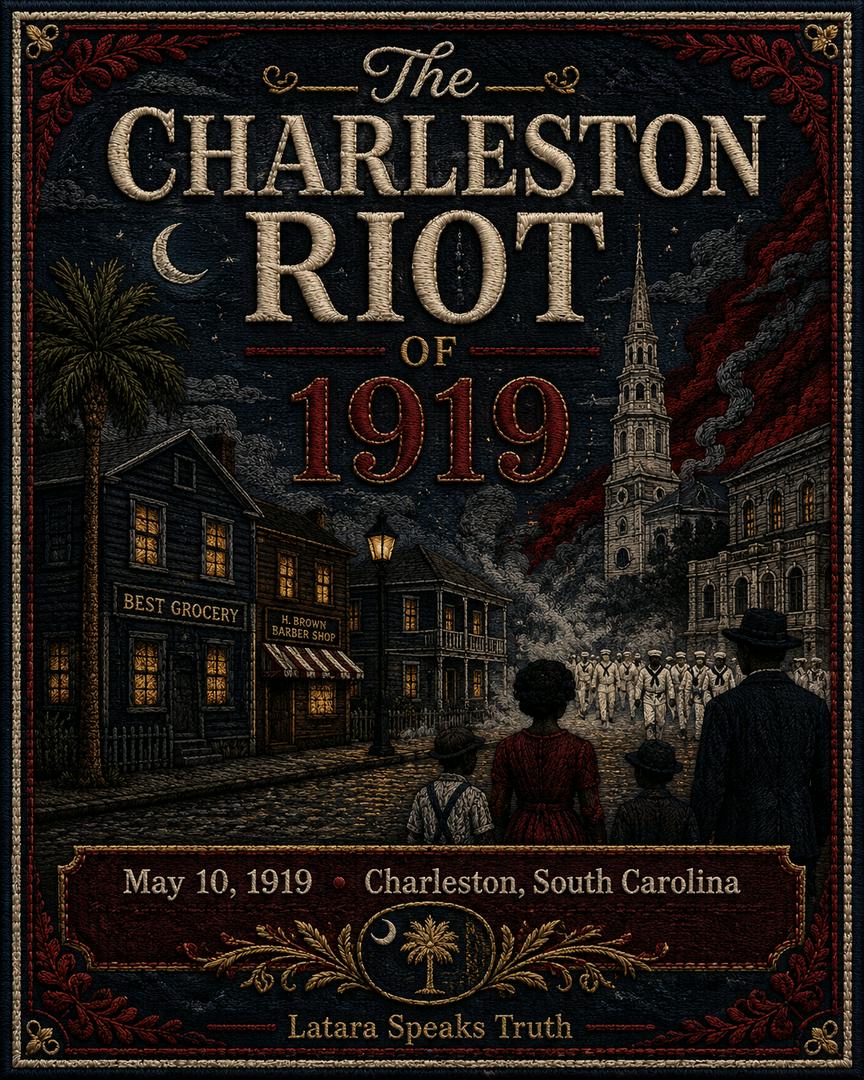
On the night of May 10, 1919, Charleston, South Carolina became the scene of one of the early violent outbreaks connected to what would later be called the Red Summer. White sailors from the Navy Yard, joined by some white civilians, moved through parts of the city attacking Black residents, damaging Black businesses, and spreading fear through the streets. What began with conflicting reports about a confrontation quickly turned into hours of violence aimed at the Black community. This was not just a random night of disorder. It happened in a country still adjusting after World War I. Black soldiers had gone overseas to fight for democracy, only to return home to segregation, hostility, and violence. Many came back expecting dignity. What they found was a nation still determined to remind them that their service did not protect them from racism. Charleston was one of the warnings. The violence damaged homes, businesses, and lives. Black residents were beaten, shot at, and forced to defend themselves while city authorities struggled to control the chaos. Marines were eventually brought in to help restore order, but by then, the damage had already been done. The Charleston Riot matters because it shows the contradiction of America after World War I. Black people had served the country. They had worked. They had built communities. They had fought for a freedom they were still being denied at home. The Red Summer of 1919 would spread across more than two dozen cities and towns, exposing how deep racial resentment ran during a time when Black migration, Black labor, Black veterans, and Black independence were seen as threats. Charleston was not just a footnote. It was part of a larger pattern. And when we remember May 10, 1919, we are not just remembering a riot. We are remembering a community that was targeted, a country that failed to protect its own citizens, and a history that still deserves to be told plainly. #BlackHistory #CharlestonHistory
Charleston, South Carolina • 22 days ago

John Bowers
😲 I never knew that until now and I don't understand why something like that happened after fighting together in a war. I was raised to respect everyone regardless of the color of their skin, religion or the country they are from. And I pray that one day we all will become one and live together in peace. 🙏🙏
20d
Murrells Inlet, SC
Reply
3

Johnny Williams
Racism goes back a long ways.It was not helpful back then.And it is not helpful.Now, racism needs to be abolished and never needs to be again
18d
Greenville, SC
Reply

Ken Benjam
still is..huh..
8d
Darlington, SC
Reply
More comments ...
write a comment...