1/1

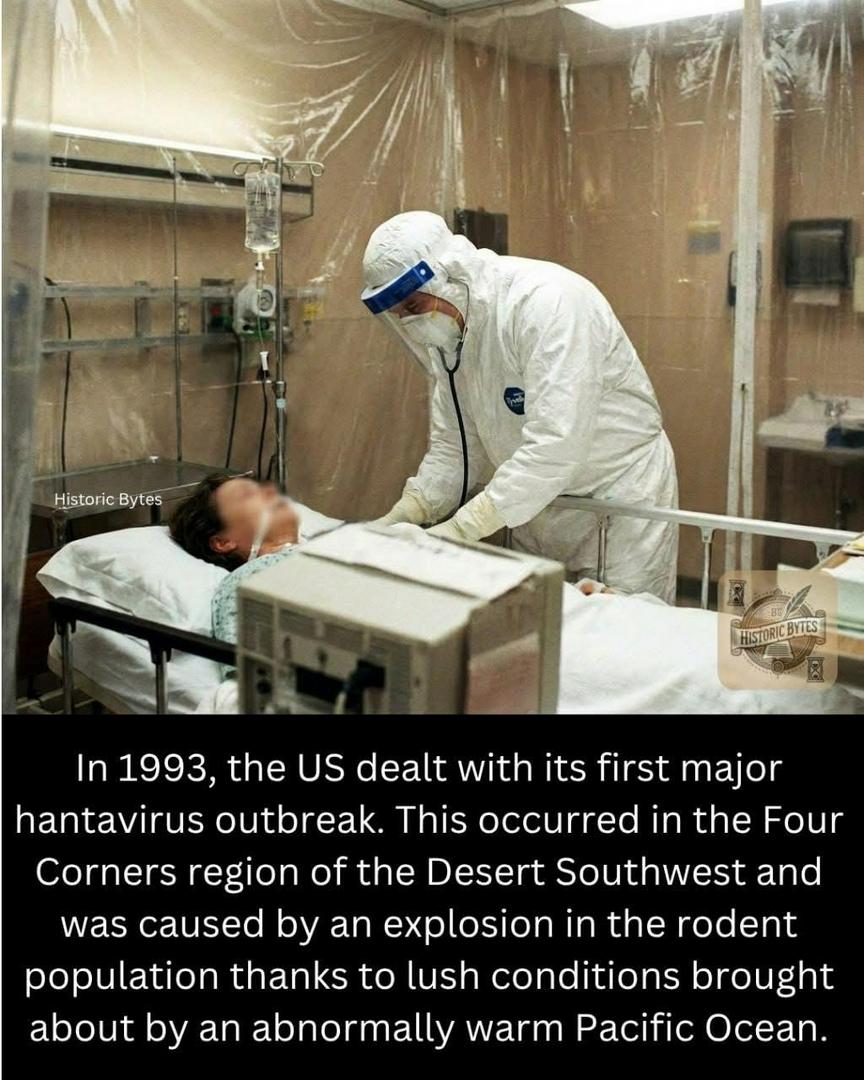
On the morning of May 14, 1993, a 19-year-old Navajo man who was a competitive marathon runner collapsed from acute respiratory failure while traveling through New Mexico. He had been healthy enough to start the trip. By the time an ambulance arrived he was dying. He was not the first case. Within weeks, a CDC task force was assembled to investigate a mysterious respiratory illness killing young, healthy people across the Four Corners region, where New Mexico, Arizona, Colorado, and Utah meet. The disease moved fast. Patients developed what appeared to be flu symptoms, then deteriorated rapidly as their lungs filled with fluid. Sixteen people died in the initial outbreak. The CDC identified a previously unknown hantavirus, later named Sin Nombre, meaning without name, carried by the western deer mouse. The question was why it had erupted so suddenly and so severely in 1993. The answer came partly from Navajo elders, who told investigators that similar outbreaks had struck the same region in 1918 and 1933, and that both preceded years of unusual rainfall and abundant piñon nuts. Biologists already studying the local deer mouse population confirmed it: the mouse population in 1993 was ten times higher than the previous spring. The 1991 to 1992 El Niño event had driven heavy snowfall and spring rains across the Southwest, producing an extraordinary crop of piñon nuts that the deer mice fed on explosively. As the mouse population surged, so did human contact with their droppings and urine, the primary transmission route of the virus. #hantavirus #epidemic #ushistory
New Mexico • 21 days ago

0667
I have lived in the Four Corners area since the 70s and I remember this case (and the resulting concerns and warnings) well.
20d
Reply
5
More comments ...
write a comment...