1/1
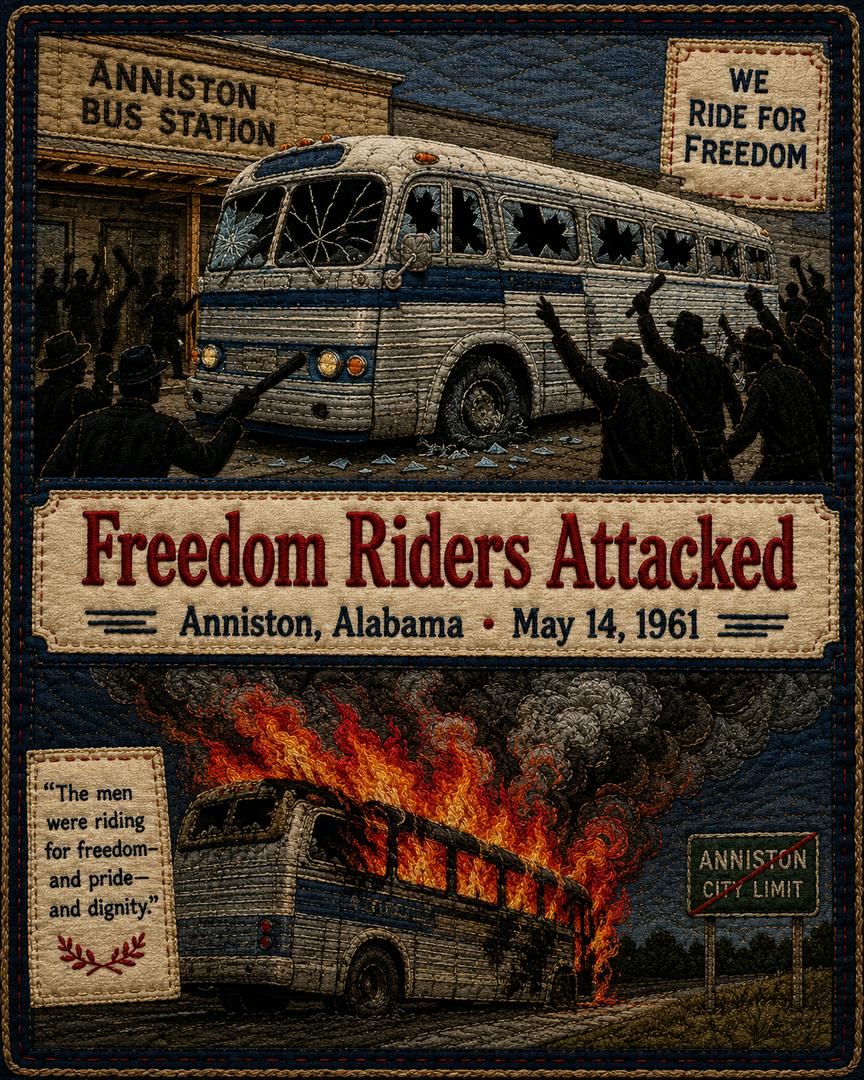
On Mother’s Day, May 14, 1961, a Greyhound bus carrying Freedom Riders rolled into Anniston, Alabama, and met the face of violent resistance. The riders were part of an interracial group challenging segregation in interstate bus travel and bus terminal facilities. They were testing whether the country would honor federal rulings that said segregation in interstate transportation was unconstitutional. What they found in Anniston was not law and order. It was a mob waiting. According to the Equal Justice Initiative, the bus arrived at the Anniston station shortly after 1 p.m. The station was locked. Outside, a white mob surrounded the bus. Some carried pipes, chains, and bats. They smashed windows, dented the bus, slashed its tires, and attacked the riders inside. Police had been warned hours earlier that a mob was gathering, but they did not arrive until after the assault had already started. Even then, real protection did not come soon enough. The bus was eventually escorted out of town, but once it reached the city limits, it was left vulnerable. With its damaged tires, the bus could not get far. Outside Anniston, the mob caught up again. The Greyhound bus was firebombed, filling with smoke as riders struggled to escape. When they made it out, some were beaten again. What happened in Anniston was not just an attack on a bus. It was an attack on the idea that Black and white citizens could travel together with equal dignity. It was meant to terrify people into silence. But the Freedom Riders did not disappear from history. Their courage helped force the nation to confront the violence behind segregation. The flames from that bus became one of the most haunting images of the civil rights era, but the riders’ survival became the stronger message. On a day meant to honor mothers, America was reminded that justice often has to be carried by somebody’s sons and daughters willing to risk everything. #FreedomRiders #CivilRightsHistory #BlackHistory #America
Anniston, Alabama • 19 days ago

BigMan
Thank God for the courage of those brave women and men. We should not take for granted the freedoms we enjoy today; they were earned by sacrifice like this.
17d
Odenville, AL
Reply
BigMan
❤️
17d
Odenville, AL
Reply
More comments ...
write a comment...