1/3
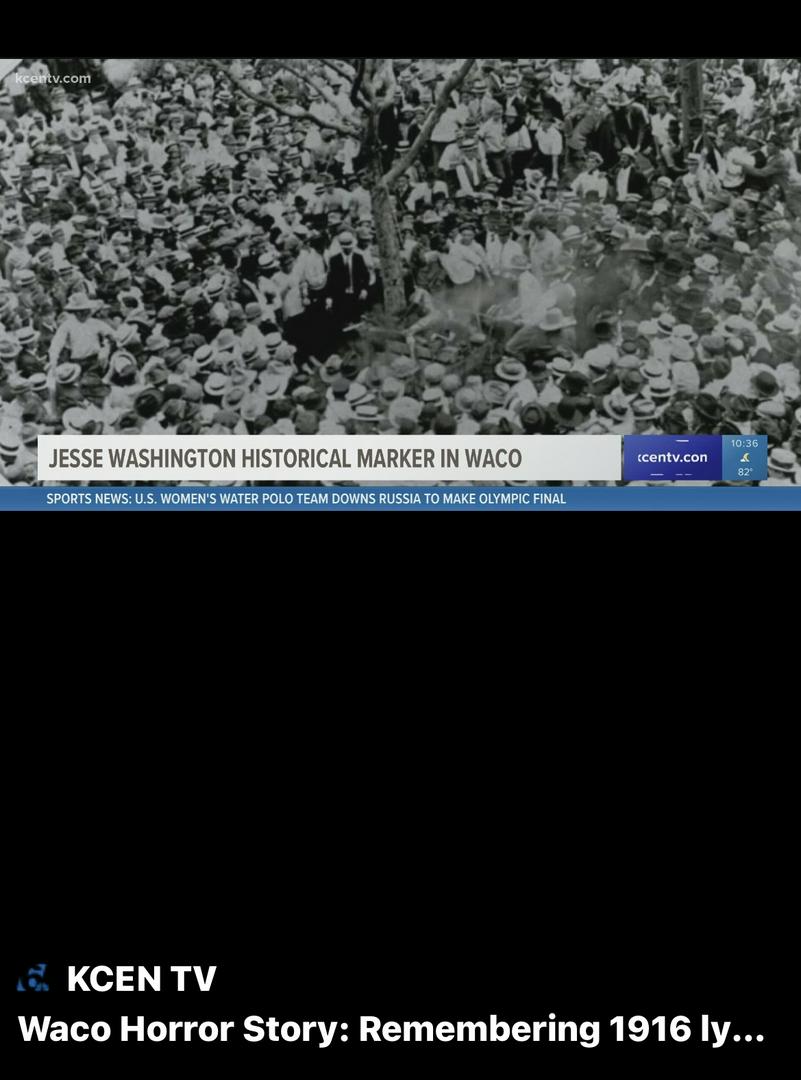
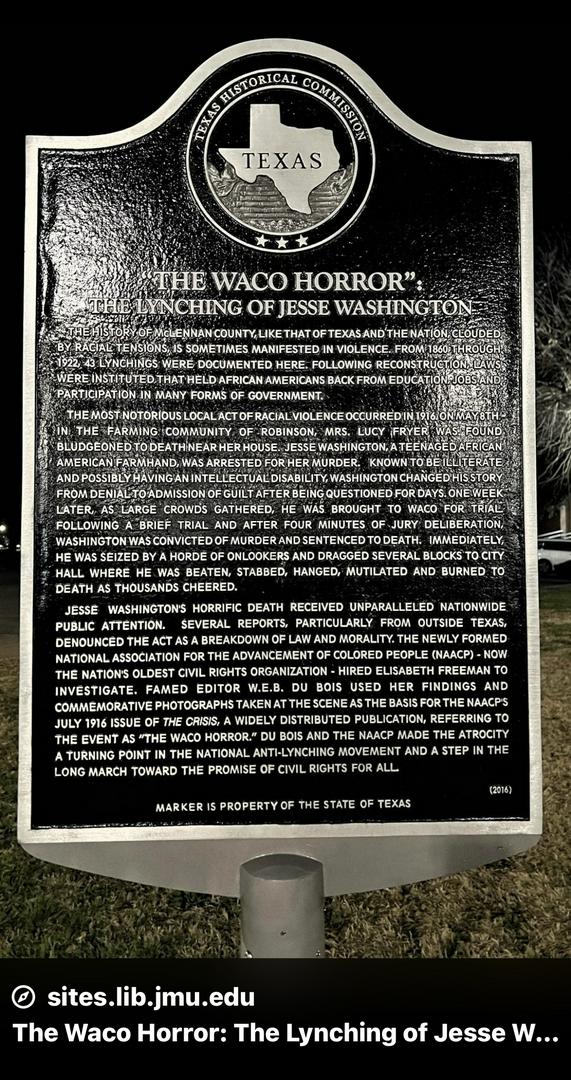

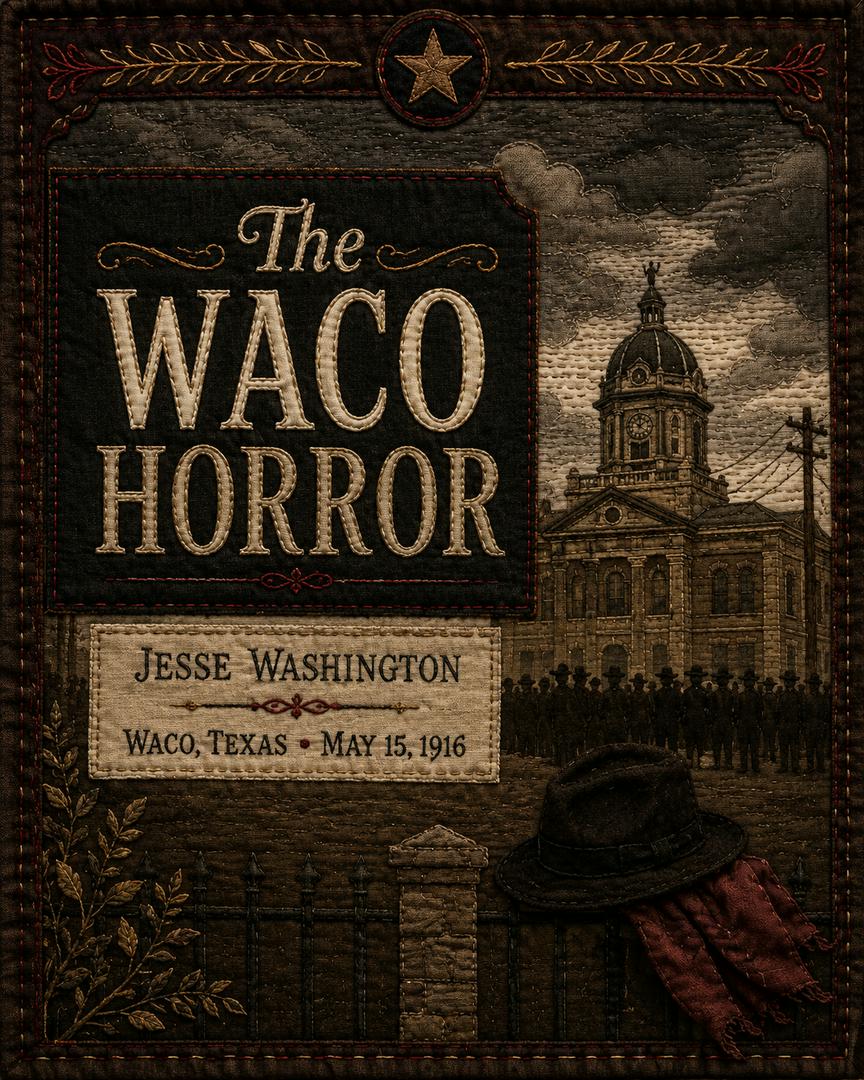
May 15, 1916, remains one of the darkest dates in Texas history. Jesse Washington was a 17-year-old Black farmhand in Waco, Texas, accused of killing Lucy Fryer, the wife of a white farmer in nearby Robinson. After a rushed trial on May 15, Washington was convicted and sentenced to death. But he never made it to a legal execution. A white mob pulled him from the McLennan County courthouse and dragged him through the streets. What followed became known as the “Waco Horror,” one of the most infamous documented lynchings in U.S. history. Thousands of people gathered near Waco City Hall as Washington was tortured and killed in public. Reports say city officials and law enforcement were present, yet no one stopped the mob. No one was punished for his death. The horror did not end there. Photographs were taken and sold as postcards, showing just how openly racial violence was displayed and normalized during that era. The NAACP later investigated the lynching, and W.E.B. Du Bois helped bring national attention to the case through The Crisis magazine. The images and reporting forced many Americans to confront the reality of lynching, not as rumor, but as public spectacle. Jesse Washington’s story is not easy to tell, but it should not be erased. It reminds us that history is not only what happened in courtrooms and government buildings. Sometimes history is what happened in the street while the whole town watched. And that is why his name still matters. #JesseWashington #WacoHistory #AmericanHistory #HiddenHistory #HistoryMatters
Waco, Texas • 15 days ago

don'tworryaboutit
Thank you. Miss. Latara.
8d
Reply
More comments ...
write a comment...