1/1

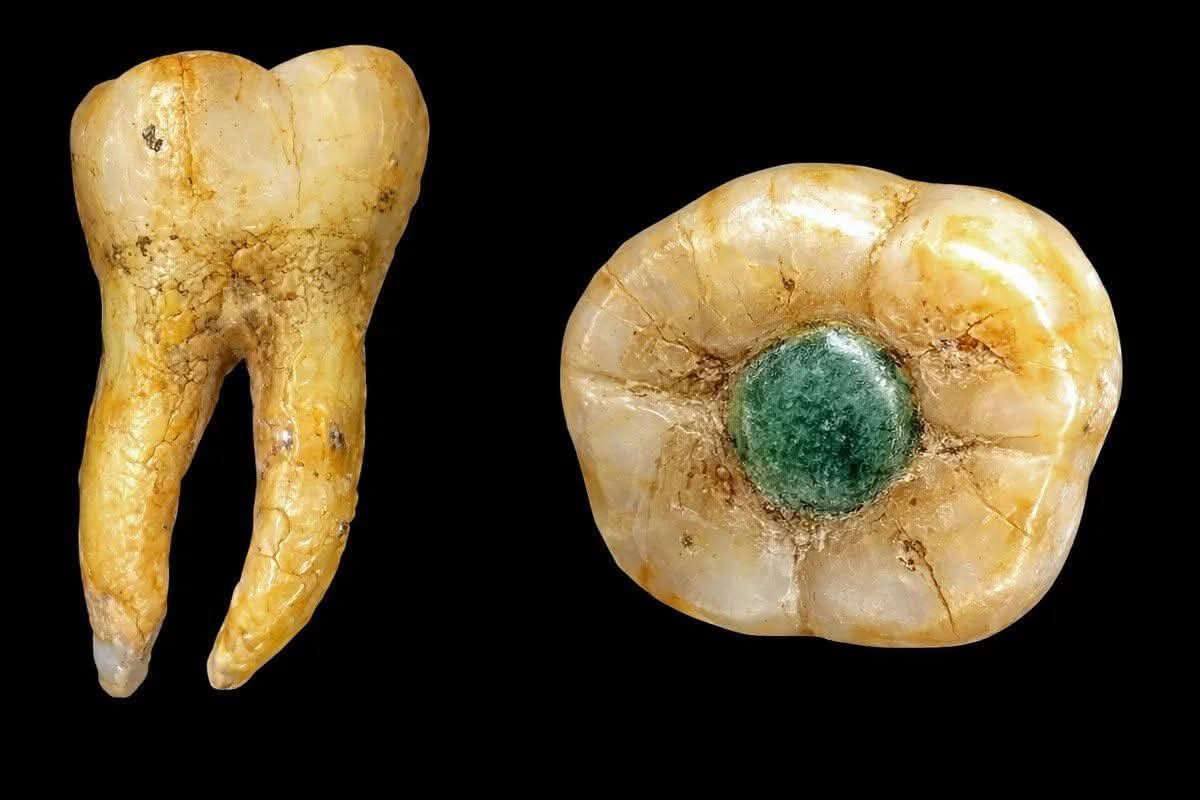
A single tooth from the Popol Vuh Museum is attracting the attention of researchers studying ancient Maya remains..... The specimen is a lower molar featuring a small green stone set into the centre of its occlusal (chewing) surface. The material has been identified as jadeite. While stone inlays are well attested in Maya contexts, they are almost exclusively found in anterior (front) teeth; placement within a molar appears to be previously undocumented. The tooth comes from a collection of archaeological material gathered in Guatemala during the 20th century. It is not tied to a specific excavation, but its characteristics match known examples of Maya dental work. The crown shows a shaped cavity where the stone sits, held in place by a bonding substance. Imaging was carried out using cone beam computed tomography. The scans show changes inside the tooth that occur in living tissue. The pulp chamber displays heavy calcification, a response that develops over time. This indicates the procedure took place while the individual was alive. The internal structure is intact, with visible pulp horns and root canals. These features point to a young adult. There is no sign of advanced wear that would suggest old age. The position of the inlay is notable. Molar teeth are not visible during speech or display. Known Maya dental modifications usually focus on visible areas and are linked to appearance or identity. This example does not fit that pattern. One explanation is that the stone was placed for practical reasons. Tooth decay and infection were common in ancient populations, especially where diets relied heavily on maize. In other regions, there is evidence of drilling or filling teeth to manage pain or damage. Cases from Europe and Asia show early attempts to treat dental problems, including the use of plant fibres, bitumen or wax. In the Americas, similar work has been recorded, though examples are few. Most involve drilling rather than filling.
2026-05-16
write a comment...