1/1
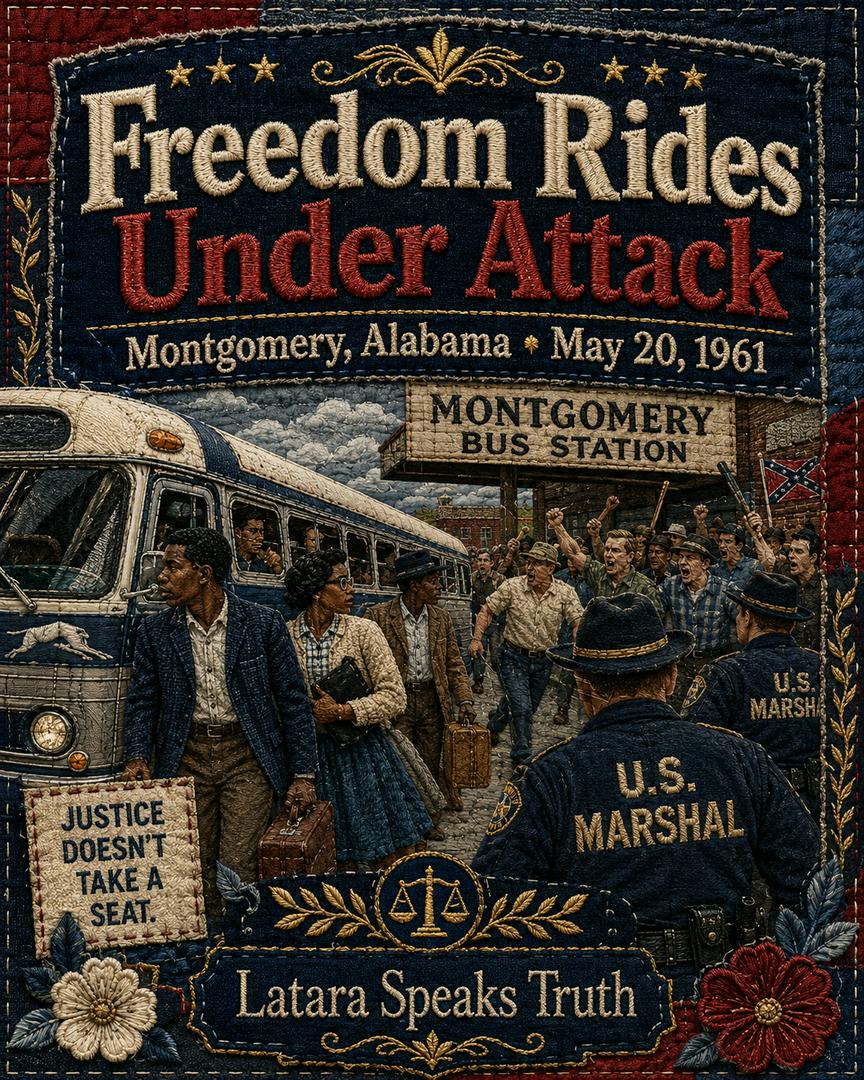
On May 20, 1961, the Freedom Rides reached one of their most dangerous moments in Montgomery, Alabama. The riders were challenging segregation in interstate bus travel and terminals. They were not carrying weapons or looking for a fight. They were testing whether federal law actually meant anything in the Deep South. When the Freedom Riders arrived at the Greyhound station, a white mob was waiting. The attack was brutal. Riders were beaten. Reporters and bystanders were targeted too. John Lewis and Jim Zwerg were among those assaulted. The violence was meant to send a message. Stop riding. Stop challenging segregation. Stop forcing the country to look at itself. But the Freedom Riders did not stop. The goal was fear. The answer was courage. The attack pushed the federal government deeper into the crisis. President John F. Kennedy issued a May 20 statement condemning interference with the Freedom Riders. Attorney General Robert F. Kennedy later sent federal marshals to Montgomery as violence continued, including the next night when a mob surrounded First Baptist Church while Dr. King and supporters were inside. This history is often softened into speeches and statues. But this was not soft. This was blood on pavement. These were young people risking their bodies to expose the gap between American law and American reality. The Freedom Riders were not asking for special treatment. They were demanding enforcement of existing federal rulings. Interstate travel had already been legally desegregated, but segregationists still resisted with intimidation, violence, and local cooperation. May 20, 1961 showed what that resistance looked like. It also showed what courage looked like. Peaceful protest was not passive. It took discipline, sacrifice, and people willing to walk into danger so the truth could no longer be hidden. Sources: EJI, Stanford King Institute, U.S. Marshals Service, JFK records. #FreedomRiders #AmericanHistory #BlackHistory #Montgomery
Montgomery, Alabama • 13 days ago
write a comment...