1/1

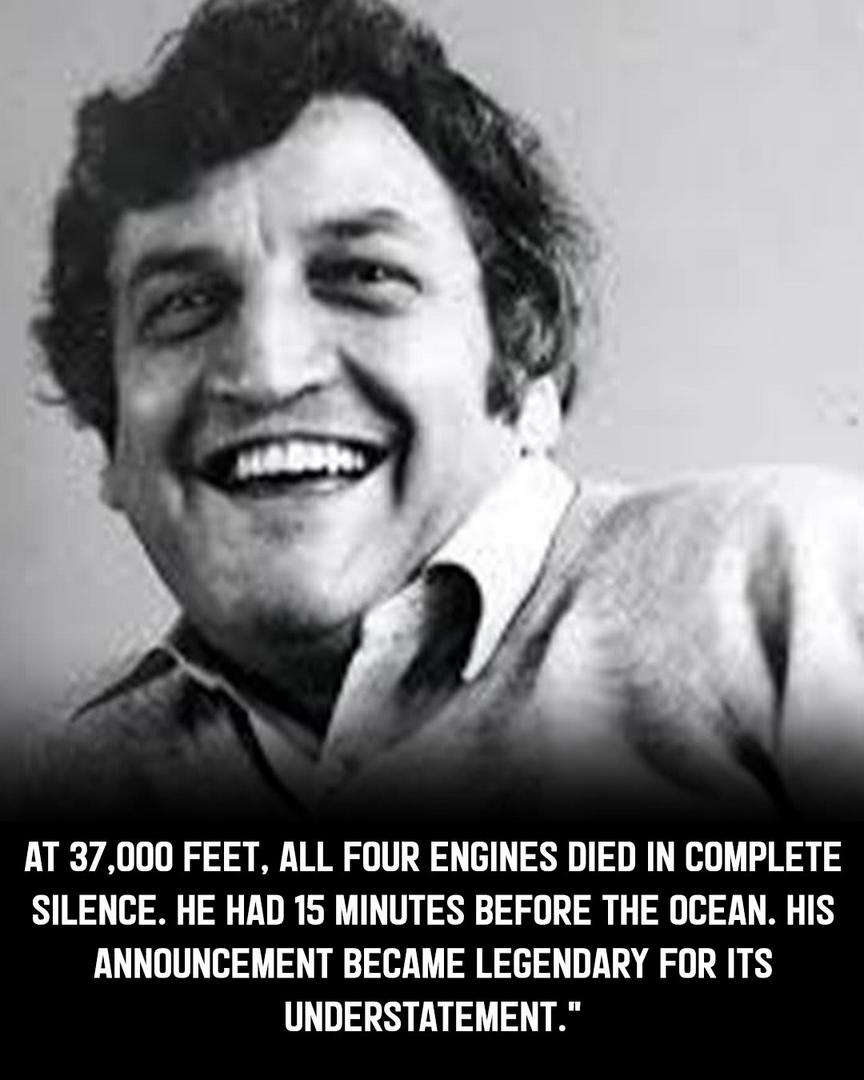
The plane went silent. That's what passengers remember most—the terrifying absence of sound. June 24, 1982. British Airways Flight 9 was nineteen minutes past the island of Java when Senior Engineer Barry Townley-Freeman noticed something odd on his instruments. The engine temperatures were climbing. Fast. Then passengers started pressing their call buttons. "There's something glowing outside the window." Flight attendants looked. Beautiful blue light was pulsing through the engine fans in a stroboscopic pattern. White sparks danced across the wings like fireflies. It looked magical. Almost peaceful. In the cockpit, Captain Eric Moody wasn't watching a light show. He was watching his number four engine die. The surging started first—violent coughing as the turbine struggled. Then complete failure. "Engine four is gone," Townley-Freeman said. Sixty seconds later, engine two quit. Then one. Then three. And suddenly, the Boeing 747—carrying 247 passengers and cruising at 37,000 feet—had no working engines. None. The plane didn't drop from the sky like a stone. That's not how physics works. It became a glider, descending steadily at 2,000 feet per minute, the only sound now the rush of wind against the fuselage. Passengers who'd been dozing woke up to eerie quiet. Something was very wrong. First Officer Roger Greaves grabbed the radio to declare an emergency. Static. The radios were barely functional, crackling with interference that made communication nearly impossible. They were gliding toward the Indian Ocean with no engines, no radio, and no idea what had just killed their aircraft. Moody ran through possibilities in his head. Fuel contamination? No—four independent fuel systems failing simultaneously was impossible. Bird strike? Not at 37,000 feet. Sabotage? The engines had failed in sequence, not all at once. Nothing fit.
2026-05-24

John Mcneill
So what the hell happened. Why not finish the story. I hate being left in suspense. I’m not going to start reading this stories any more since they have no ending.
05-24
Reply(7)
38

Marjorie Stradinger
Volcanic ash
Plumes of volcanic ash near active volcanoes are a flight safety hazard, especially for night flights. Volcanic ash is hard and abrasive, and can quickly cause significant wear to propellers and turbocompressor blades, and scratch cockpit windows, impairing visibility. The ash contaminates fuel and water systems, can jam gears, and make engines flame out. Its particles have low melting points, so they melt in the engines’ combustion chamber then the ceramic mass sticks to turbine blades, fuel nozzles, and combustors—which can lead to total engine failure.
In the past 40 years, several jet-powered commercial airplanes have encountered clouds of volcanic ash and suffered damage as a result.
In 1982, when Mount Galunggung volcano, Indonesia, erupted, several Boeing 747s encountered ash from this eruption.
British Airways Boeing 747 losing all four engines
The events around one British Airways Boeing 747 flight BA 009 reveal the potential dangers of this sort of dust.
05-25
Enfield, CT
Reply
9

Russ Lamb
The passengers were refunded there money. But it didn’t seem to matter. They knew they were going to die. But then when all was thought to lost the plane was pulled by an invisible force. Could this be real many could only pray it was.
05-25
Hinckley, UT
Reply
6

John S Rous
This was a good one. It's an episode on Air Disasters. The true story is almost too crazy to believe, though.
05-24
Bakersfield, CA
Reply
10

polemic
Good lord people, READ the first 3 comments and the story is told in full.
Don’t be those types that complain first and read second.
05-26
Pearland, TX
Reply
4

Larry Troutman
Where’s the rest of this.? I’m done with this game.
05-24
Channahon, IL
Reply(7)
11

Christine Longoria
My right ear is making some noised, pulsing .
05-24
Asheville, NC
Reply
8

Virginia Upshaw
💕
05-25
Reply
1
More comments ...
write a comment...